Now that we are two weeks past the International Women’s Day, and that McDonald's has flipped back its logo from W to M, it is time to stare facts in the eye, no matter how uncomfortable they are.
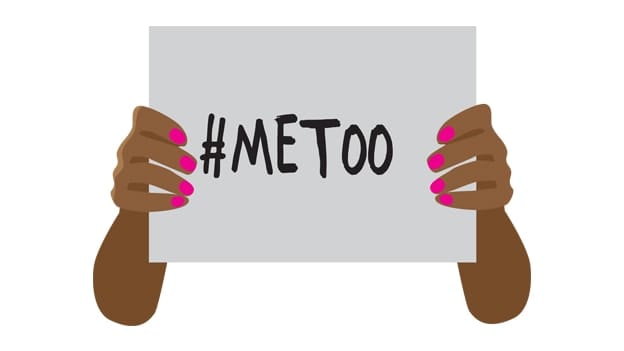
CARE, an international non-profit, commissioned a survey across workplaces in eight nations – including India – to understand how employees perceive notions of intimacy, sexual relationships, and harassment at work. The results suggest that if everyone affected were to start talking about their experiences; the #MeToo movement will probably accelerate exponentially.
What is the survey?
CARE, an international humanitarian non-profit based in Atlanta, undertook a survey among 9, 408 global adults in Australia (1,004), Ecuador (1,034), Egypt (1,116), India (1,029), South Africa (1,165), the United Kingdom (1,004), the United States (2,035) and Vietnam (1,021). Conducted by Harris Poll on behalf of CARE, the survey sought responses from adult men and women on a variety of issues related to sexual harassment. The findings of the survey were released with a new #ThisIsNotWorking campaign, which called on the International Labour Organisation (ILO) to create a new global convention around freedom from violence in workplaces.
What did the survey find?
The findings of the result are rather disturbing:
- 32% of all women respondents and 21% of all male respondents said that they had suffered sexual harassment or assault related to work.
- 23% of the men across all the eight countries are of the view that it is ‘sometimes okay’ or ‘always acceptable’ for an employer to ask or expect an employee to have intimate interactions, such as sex with them, a family member or a friend.
- The figure was the highest in Egypt, where 62% hold the view. Surprisingly, 38% of the women from Egypt also agreed to the same.
- In the US, 36% of the men are of the belief that it is ‘sometimes acceptable’ or ‘always acceptable’ to tell a risqué or sexual joke to a colleague, whereas only 20% of the women agree to the same.
- In the UK, 35% of the 25-34-year-olds think it is ‘sometimes’ or ‘always’ acceptable to pinch a colleague’s bottom in jest.
- In Ecuador, 21% of those between the ages of 18-24 years think it is ‘sometimes’ or ‘always’ acceptable to kiss a colleague at an office party without permission, compared to 6% of those between 45-54 years.
- 49%, nearly half the respondents think it is okay to ask a subordinate on a date, whereas 51% are against the idea.
- However, one can find solace in the fact that 65% of the respondents across all countries believe that the #MeToo movement will have a positive impact on the workplace in their countries.
- Another 56% think that sexual harassment scandals in Hollywood and other high-profile industries will lead to better workplace behaviors beyond the entertainment industry.
- Furthermore, 77% of all the respondents said that their employer takes harassment seriously, whereas 23% said otherwise.
What are some of the Indian findings?
- 21% of the women respondents from India agree that it is either ‘sometimes okay’ or ‘always acceptable’ for an employer to ask an employee to have intimate interactions with them, a family member or a friend.
- 33% of all Indian respondents said that it is either ‘sometimes’ or ‘always’ acceptable to cat-call/wolf-whistle at a colleague.
- More than half the Indian men (52%) stated that it is ‘sometimes’ or ‘always’ acceptable to rank a colleague based on their appearance, whereas 35% of the women agree to the same.
The fact that there are a number of men, and women, who have accepted that it is okay for an employer to expect sexual relations from their employees, is alarmingly in its own accord. This normalization of the abuse by the employer needs to be consciously reversed. That is where surveys findings assume importance. Important, not merely because a new survey with ghastly findings was released to reiterate just how serious the problem is; but also because, as pointed out by People Matters before we need to move from symbolic gestures to action based strategies. The results remind us, lest we forget, that the transformation to a fair an equitable society has just only begun.
Michelle Nunn, CARE’s president, and CEO says, “If we now know how difficult it is on the producers’ chair in L.A., imagine how difficult it is someplace like Bangladesh on the factory floor... Being expected to have sex with your employer -- that's not a job description, it's sexual abuse. And it speaks to the global epidemic of harassment and abuse in our workplaces…We still have such a long way to go in stamping out sexual harassment and abuse globally, whether it’s inside office buildings in the U.S., factories in India or the often-overlooked workplaces of housekeepers and caretakers in Latin America.”
____________________________________________________________________
Sources: