








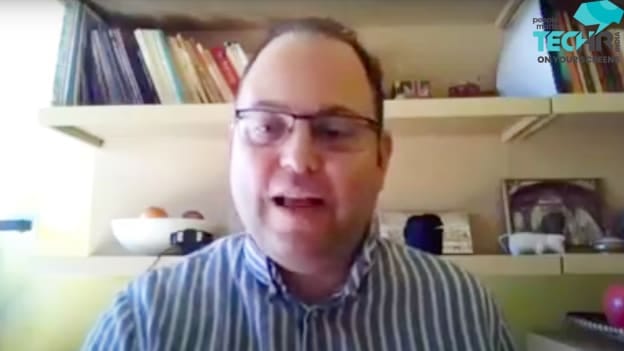
The COVID19 based disruption has not been smooth for many businesses. One among the many issues in this era of remote work is the question of culture and how to reinforce values. John Kostoulas, Senior Director - HCM & Product Management Analyst, Gartner in his address to the audience at TechHR2020 tackled the question and spoke about how companies can leverage the power of technology to enable the right behaviors.
There are three fundamental ways in which a company can navigate in response to change, uncertainty and disruption.
1) They can be at risk – Where the organization is unlikely to adapt.
2) They can be resilient – Whereby they can withstand the change and sustain.
3) They can be anti-fragile – The organization is poised to improve when there’s uncertainty and disruption.
In this context, companies, if they want to embrace a conducive workplace culture they need to be holistically agile, define a path towards anti-fragility and embrace values enabled performance. Gartner’s Study reveals that there isn’t one single type of culture that is a significant predictor of performance. While most leaders will vouch for the fact that their culture can navigate a crisis, why then are employees unable to demonstrate the culture?
Gartner’s research showed three key gap areas:
- Knowledge – Only 31 percent of organizations reported strong employee awareness of the desired culture
- Mindset – Only 13 percent of the organizations reported strong employee belief in desired culture
- Behavior – Only 10 percent of the organizations reported strong employee behaviors related to the desired culture.
It is only a combination of these three attributes together that can impact a workplace culture in terms of employee performance, reputation outcomes, and performance against revenue goals. According to another survey, 71 percent of the executive and board members believed that culture was a priority on the leadership agenda compared to only 48 percent of those in non-management roles. And this is a major gap.
What is the role of HCM technologies in reinforcing culture?
John notes that HCM technologies touch many points of an employee lifecycle. And they have an indispensible role in reinforcing workplace culture. They can be used to both, gather data and put to use actionable insights and behaviors. Without an accurate understanding of data, companies cannot be successful. There are different types of technologies that can help companies understand their employees.
- Voice of the employee: Conduct regular, pulse, and employee life cycle surveys that help understand common topics and sentiments around workplace culture.
- Cultural listening tools: They can help infer how employees actualize culture in their daily interactions.
- Culture assessments: It helps check whether individuals are aligned with the culture when making staffing or development decisions.
- Continuous employee performance feedback: Help companies gain insights on the desired behaviors that can be recognized as part of the culture.
- Micro-learning platforms: Used to reinforce adoption of culture hacks and leadership moments through continuous learning interventions
- Recognition and rewards systems: Which can help support peer and manager recognition for demonstration of cultural attributes in daily work
- Employee productivity monitoring: Technologies can help understand productivity impact of putting culture to daily work workers digital interactions.
- Employee experience : Using game style mechanics to increase adoption of people processes and help employees provide input on work related factors
- Workstream collaboration solutions: Used to improve team work, decision making and content sharing, which help lead to higher productivity
- Workforce optimization tools: It helps remove inconsistencies in capacity planning and work assignments across a large number of workers
- Internal talent marketplace: It can help break functional or local silos around work opportunities and team formation that help culture adoption.
It’s not just about behavioral change; companies need to work towards aligning processes and systems. The prevalence of remote work due to COVID 19 has introduced another level of complexity for companies. The key, John notes, is for leaders to enable actionable organizational intelligence of employees’ day to day culture experiences and empower employees to apply culture in their day to day operations and remove systemic barriers in processes and technologies.