








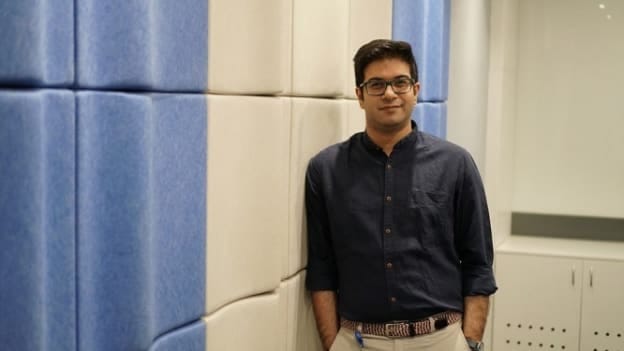
Sudeep Ralhan is currently serving as VP, People at Walmart Global Tech India.
In his present role, Sudeep is responsible for driving sustainable growth and embedding a culture of inclusion & innovation for a workforce spread across Bangalore, Gurgaon & Chennai.
He brings over two decades of experience, having played leadership roles at global brands in the likes of GSK and Accenture. Sudeep has worked across the Tech, BPO & FMCG industries in a diverse set of roles, spanning multiple geographies.
Passionate about diversity & leadership, he likes working with leaders who are values-driven and forward thinking.
In a candid interview with People Matters, Sudeep talks about the key to boosting business competitiveness, the link between well-being and skilling, and highlights what being the ‘fittest’ entails in the current context.
Read on for highlights from the interaction.
What are your thoughts on how employee well-being has unfolded in the past 18 months? How is Walmart Global Tech India embedding well-being in the flow of work?
2020 was a cataclysmic year for everyone. People went through such unique personal challenges and journey that they became opportunities, because people really reframed their lives and re-evaluated many things about themselves. That has led to the overall evolution of the workforce and as a result, the value proposition that organisations had some time ago to where they are today has really changed significantly. The concept of well-being was earlier restricted to just point in time interventions, but its importance in a much more holistic context came through recently. We've taken that up in three different ways:
- First, we began involving our associates and our teams in the conversation. We've got wellness champions from every team that are coming together and working with the leadership and the HR team to think about innovative ways in which we can help people on the ground, specific to the context, because we also realize that it's not one size fits all.
- The second piece is on the wellness agenda - we really amplified it to a different level with a variety of interventions. From providing access to wellness apps to addressing the topic of emotional and mental health, we've sensitized our managers around it all and have also started leveraging chatbots for nudges.
- We also realized that well-being is not just necessarily wellness, but has a broader meaning. We've encouraged our people to formally take up opportunities like flexible working schedules, or part time working or sabbaticals because this year has been very challenging for them. We have also focused on recognition and set up a peer-to-peer digital recognition platform.
The saying survival of the fittest has long been haunting the corporate ladder. In your opinion, what does being the fittest/resilient entail today?
There's a saying about ‘trees that stand the test of time’. The trees that last the longest are the trees that stand tall and firm, but are also able to gently bend to the wind as it flows, so that they are able to maintain the longevity. I think that's really true about people and professionals as well.
The ability to stay true to your drivers and to your paths, but also be smart enough to accommodate cataclysmic events like the ongoing crisis, is what resilience is about.
And over the last 1-2 years, we've seen so many ways in which people have used this opportunity to rethink and accelerate their careers. Look at the entire talent ecosystem right now. It's alive with movement, and with people taking risks. These are people who are really trying to ride the crest of the wave as much as possible, that's really what resilience is today.
With the fast paced technology upgradation, constant skilling, reskilling and upskilling have become essential for all professionals. How is WGTI balancing the push for skilling amid mounting burnout concerns?
Interestingly, we started out by toning down a lot of our learning initiatives last year, but got resounding feedback from people saying ‘we need more’. I think people also realized that with the constant disruption in the world around us, the only way to stay ahead is by investing in themselves.
What we also realized is that we need to change the modalities. We experimented with some new concepts. For example, we started weekly Tech Bytes sessions, each with a different theme. We created a program called mFit for our managers and said ‘it is about building muscles, so let's take you on a journey of fitness’. It ended up being an award winning program - a blend of training, leadership conversations, internal networking, self-help resources, apps to use. Recently, we conducted Opportunity Knocks, a series of mini-events spread over two weeks, all on the theme of growth and development. We even had a speed coaching session with leaders which got sold out within minutes!
I don't think building skills by itself causes burnout, but you have to give people flexibility and you have to engage them in a way that makes sense for them, using technology in a much more blended manner.
As organisations strive to build a new culture and new experiences that foster belonging and learning, how can they drive greater participation from employees?
The key to creating a constant and participative dialogue is in two parts -
- Think like a marketing function. If you think about the way the new, digitally native brands of the world are resonating with consumers, it's very different and they are changing the game altogether. All organisations need to learn from that. You have to talk to consumers in their language and in this case, our associates are our customers.
- The second, but I believe the more important piece, is to really equip and evolve our leaders and managers to think in that way. There is only so much that can be done centrally.
Any progressive organisation today has really invested time in helping managers be a lot more authentic, vulnerable and empathetic than they were earlier.
The way HR’s role has changed for the future, so has the leaders, and I think organisations where leaders are able to adapt to that are the ones which will continue to be successful on the talent front.
As we approach the end of 2021, what key learnings and realizations are shaping your perspective and plans for the next year?
Accept that change is part of the ecosystem. Trying to predict things is no longer going to work. Individual employees don’t have predetermined careers anymore and organisations can't have predictable talent trends anymore. Your systems, your processes have to be designed for agility.
The second is leadership. The way leaders are perceived, the expectations from leaders have changed, and we all must build that into our hiring, skilling and talent processes for the future.
And finally, we need to keep pace with how our people are feeling and thinking. There has been an evolution in what employees and workforces expect from their organisation, and that might change again in a couple of years. How you put in place enough listening channels, enough dialogue opportunities, so that you are able to not only just react, but spot trends before they happen, is going to be the key for the future.