








“Everything comes second to people’s health whether it means conferences not going ahead as planned, the sudden necessity to stage the biggest remote working experiment in history or even the suspension of football and other sports” - David Green
Depending on where you are based, it has been a few days or weeks or a month since you have been asked to work remotely, if your work and organization permit the same. While there is no doubt that the biggest impact has been on human lives and health, the third biggest impact has been on the global economy.
Reports show that the global economy has already been hit by a shortfall of $2 Tn in global income, with a $US220 Bn hit to developing countries (excluding China).
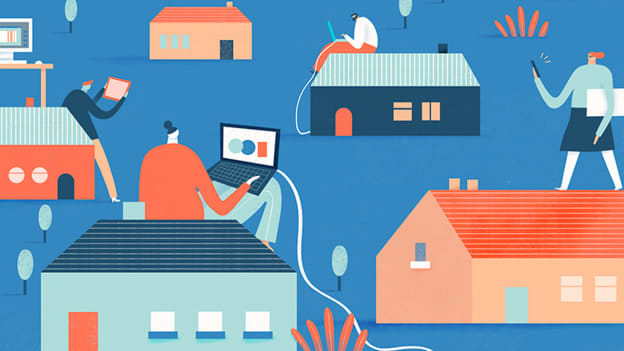
The impact of this pandemic on every aspect of life has been drastic. The severity of the present circumstances has led to the biggest ever global isolation and in some places, a lockdown. With the situation indicating stepping out as a threat to life, organizations have resorted to implementing a mandatory remote working arrangement, in order to keep employees safe and business running. The concept is not new, however the scale and speed at which it was implemented, there was not much time to think it through and put in place practices and policies to ensure the experience remains seamless for employees, clients and revenues. With the help of virtual collaboration tools though companies are able to make the most of technology and ensure connectivity even in the present times that call for distancing.
In light of the above, Sankalp Saxena, SVP and MD-Operations, Nutanix India, shared with People Matters, "There is now a scramble to identify, access and implement remote working solutions across the globe as team leaders race to quickly re-align their teams and themselves, to maintain effective management, communication, reassurance and motivation during this time of unprecedented disruption. Access to remote working tools will help organizations maintain, manage and operate effectively, and it is certainly encouraging to see the tech industry doing its part in extending software support to businesses, making the technology readily available to help with this."
A lot is at stake, which is why it is crucial to prioritize and streamline efforts.
In a recent blog, Josh Bersin, world-known industry analyst and founder of Bersin by Deloitte, shared that people are scared, and acknowledging this sentiment, he says, “we have to create a sense of trust, shared responsibility, and safety. The big message I think we’re learning is that whatever happens, the right response is People First, Business Second.”
In times that demand prioritizing people, and ensuring their safety - physical, mental as well as financial - here are some things to keep in mind as you keep it together and strive to stay connected despite the miles in between:
- Communicate: The need to stay informed and regularly communicate is more important than ever, from the standpoint of being updated as well as to avoid breeding of rumours or any form of miscommunication. You can only build trust and accountability, when you deliver the same to your employees. The only way to do that is communicate - your thoughts, plans, concerns, suggestions - allowing a two-way communication, ensuring you don’t deliver a monologue and are open to ideas, fears and suggestions that are making their way to your employees. Companies are actively ensuring to keep the communication lines open.
The company spokesperson for Viacom18 shared with People Matters, “Through frequent circulation of advisories and communication, we are ensuring that our employees take precautionary measures for themselves and their families. To ensure team leads are in sync with their teams, daily calls are being implemented as SOPs so that there is no impact on the daily functioning, while working from home. A 24-hour IT helpdesk has been implemented for remote assistance.”
The spokesperson also shared that employees have been advised to practice social distancing and resort to telecommunication tools such as MS Teams, Video Conference scrums and Skype calls to conduct meetings both with internal and external teams.
- Establish a connect: Owing to the existence of latest technological advancements, the workforce is able to stay connected through video calls, webinars, digital conferences, and more. You are aware of the attention span of an individual in general, it is significantly low even in a face-to-face conversation, and much lower when you have the privileges of going on mute. So to make communication and calls more effective, leverage storytelling, especially in the very first 60seconds, they are the most crucial. There is no time like the present, where you can engage in conversations and draw the attention of the team exchanging stories and encouraging everyone to participate.
- Foster ownership and shared responsibility: The work pressure is humongous and the agility required to ensure regular inflow of revenue cannot be undermined. This is the time to provide opportunities to people to level up. Crisis helps discover hidden and undiscovered talent. Leaders need to be more open to give such opportunities, only then will you discover hidden talent reveal itself. Foster a mindset of growth and learning, encourage people to experiment, and empower them to take ownership.
As per survey results, 93% of high performing organizations believe a crisis uncovers talented leaders. Additionally, 75% of modifications made to team structures at the time of crisis remain unchanged.
- Build a digital culture: In a recent podcast, Abhijit Bhaduri, an HR leader with over 20 years of experience, emphasizes the need to translate organizational culture in a virtual setup. While the focus remains on ensuring consistent communication and seamless collaboration, the digital culture will remain the backbone to ensure continuity. A key value in digital culture is trust, and there is an interesting study on trust, the 2020 Edelman Trust Barometer, that talks of trust as a constitution of three ingredients - competence (doing things well), ethics (living by an ethical value system), and voice (giving people a chance to speak). In a virtual work setup, trust goes a long way, some might say it is the very foundation, core or prerequisite of everything you do. Once trust is established, that’s half the battle won!
- Check-in: There is no doubt that people today are scared, the intensity might differ. Some fear falling sick, some fear losing their jobs, those on the roads making ends meet fear being unable to provide basic food and supplies for their families, and some fear what’s going to be the aftermath of the present situation. While you conduct regular virtual meetings to discuss business and work and challenges, do check-in with one another to help each other stay emotionally stable, and to keep each other from panicking.
Whether you break together for lunch hour, or drop-in a quick greeting to each other’s family on video calls, or exchange memes to bring in some laughter in the middle of all the worries, look out for your colleagues, as well as your leaders.
Check-in on your leaders. Ask them how are they doing? How are they feeling? Heard the phrase one for all, all for one? This is where you use it.
- Keep a check on time: Know when to tap out. When in office premises, people are aware of their working hours and know when to leave for the day, they have a place to be. However, while working from home has its benefits, it blurs the timecheck on clocking out. Especially now that individuals are practicing social distancing and self-quarantine, they tend to look for more work to keep themselves occupied. Track your team members who are unable to control the urge to log-in those extra hours. Work is essential, but so is a balanced life.
There was a time when allowing employees to work from home meant you are an employer with flexible work policies and recognize the importance of work-life balance. Now that working from home is a working arrangement, even if for a short duration until the pandemic comes to a halt, let’s ensure the balance remains, productivity and stability remain, the connect remains, and above all good health triumphs.