In the lexicon of modern heavy industry, terms like "transformation", "disruption", and "innovation" are thrown around with casual abandon. Yet, inside the highly capital-intensive, traditionally male-dominated corridors of the automotive and manufacturing sectors, true transformation is rarely a matter of simple vocabulary. It is a gritty, long-term engineering challenge, not just of engines and assembly lines, but of human culture.
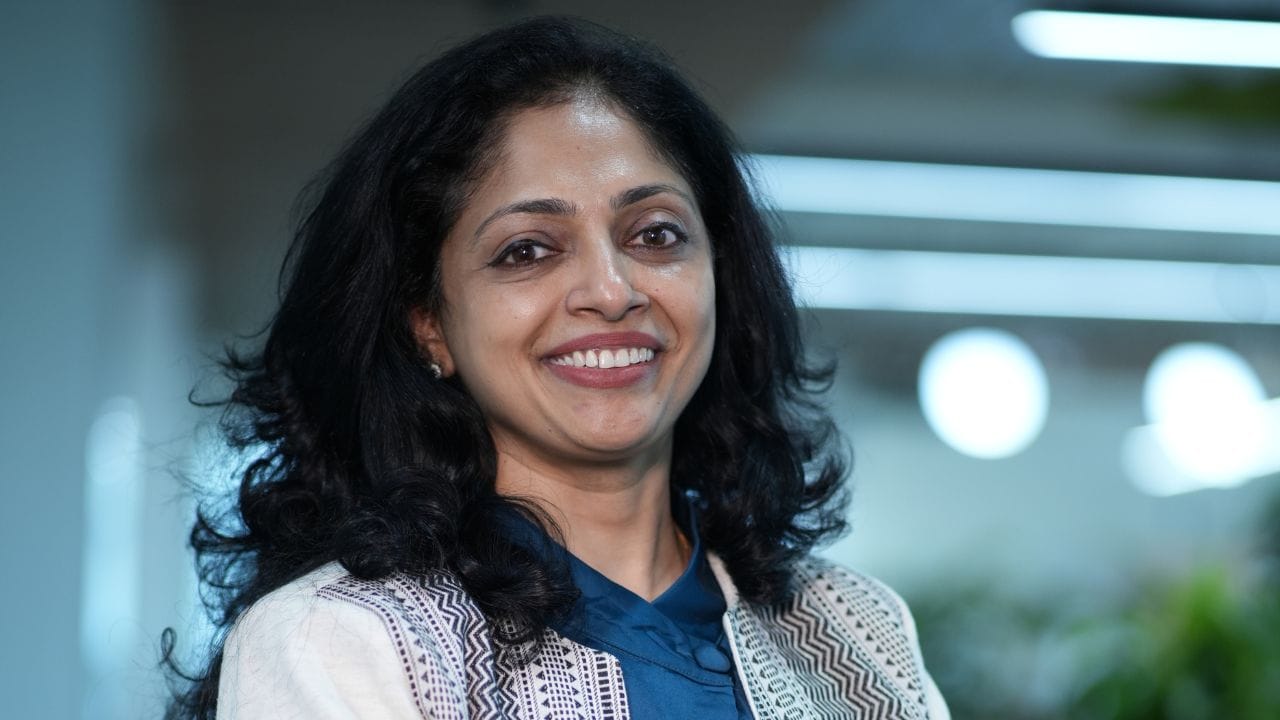
At the centre of this cultural recalibration at Volvo Group India is Radhika Nair, the Head of People & Culture. In an exclusive dialogue with People Matters, Nair outlined a blueprint for an organisation navigating a dual imperative: maintaining high operational performance today while aggressively transforming for an uncertain, technology-driven tomorrow.
From dismantling corporate tokenism to bringing heavy-machinery simulators into schools for young girls, Nair’s strategy reveals an HR leader who views culture not as a supportive corporate function, but as a core driver of business resilience.
Moving Beyond the Checkbox: Inclusion as a lived experience
For decades, Diversity, Equity, and Inclusion (DEI) in corporate spaces has been treated primarily as a mathematical exercise. HR departments proudly publish graphs showing incremental rises in minority or gender representation, treat the figures as an ultimate victory, and move on. Nair, however, is quick to draw a sharp line between mere representation and genuine, sustainable inclusion.
"Representation is an important outcome," Nair notes, acknowledging that numbers do matter, especially in an industry historically built by and for men. "But inclusion is what sustains diversity. It is about lived experiences. We often say that diversity is about who is present in the room, while inclusion is about whose voice is heard and whose perspectives influence decisions."
To bridge this gap, Volvo Group India has pivoted away from static metrics, focusing instead on qualitative indicators of psychological safety. Through aggressive data gathering via engagement surveys, leadership dialogues, and targeted assessments, the company tracks nuanced internal indicators: Are employees truly confident in speaking up? Do they feel a sense of belonging? Are they empowered to challenge the status quo?
Crucially, this focus on psychological safety is not an invitation to corporate complacency. Nair defines it cleanly: "For us, psychological safety is not about the absence of disagreements, but creating an environment where diverse perspectives are welcomed and constructive dialogues are encouraged."
To support this structure, the company relies heavily on Employee Resource Groups (ERGs) to foster a sense of belonging across all levels. Simultaneously, significant capital is invested in manager capability training, ensuring that front-line leaders are equipped to handle the frictions that naturally arise when diverse minds clash over complex problems.
The 35% Ambition: A business strategy, not a quota
This philosophy heavily informs how Volvo Group India approaches its global mandate: achieving 35% women leaders by 2030. While many organisations would weaponise such a figure as a strict compliance target, Nair views it through a distinctly different lens. "We do not view the 35% figure as a target; we view it as an ambition. It reflects our commitment to building a more equitable and inclusive organisation rather than achieving a number for its own sake."
This distinction is vital. Targets can be manipulated through short-term fixes, such as concentrated hiring at campus levels to artificially inflate aggregate statistics while leaving the boardroom entirely uniform. An ambition, by contrast, requires a systemic rewiring of the organisational DNA.
At Volvo, this responsibility has been shifted squarely onto the shoulders of business leaders rather than remaining an isolated HR initiative. Line managers and executives are actively evaluated on how they build diverse talent pipelines, ensure equitable access to opportunities, and support long-term developmental needs. Representation is regularly reviewed across critical milestones: talent development, succession planning, and upward career progression.
Nair ties this directly to the company's dual philosophy of performing and transforming. In a volatile industrial landscape, diversity is treated as a core commercial buffer. Diverse teams yield the varied perspectives required to solve highly complex engineering and logistical puzzles, directly driving the innovation, adaptability, and resilience needed for business survival.
Engineering the pipeline from the roots
One of the steepest hurdles to achieving gender equity in heavy manufacturing is structural. "If you do not have women in a certain area of engineering, you will not be able to bring them into the workforce at all," Nair explains. Decades ago, walking into a mechanical engineering department at any major university yielded an almost exclusively male student body. While the market has shifted, the legacy of that imbalance persists.
To counteract this talent drought, Volvo Group India operates on two distinct timelines: an immediate corporate timeline and a long-term societal one.
On the immediate front, initiatives like the global Tech Hub focus heavily on elevating the visibility of existing women in manufacturing, actively encouraging talent with the right competencies to enter and scale within their systems.
On the longer, societal timeline, the company is deploying grass-roots interventions like the YUKTI programme.
YUKTI targets young girls in schools, introducing them to Science, Technology, Engineering, and Mathematics (STEM) long before career stereotypes can harden. The approach is deliberately tangible. During YUKTI events, Volvo brings advanced heavy-vehicle and engine simulators directly to schools.
The impact is often immediate and profound. By allowing young girls to get behind the virtual wheel and interact directly with complex mechanical simulations, the programme systematically shatters the myth that automotive engineering is an inherently masculine domain.
For Nair, the return on investment for these programmes isn't measured in immediate hiring metrics. "We are helping expand the possibilities and challenging stereotypes at a very early age," she explains. "Even if one young girl leaves the programme believing that engineering, technology, or innovation is a future she can pursue, then I think we have created a very meaningful impact."
Human-Centric Automation: Navigating the AI frontier
Beyond demographic shifts, Volvo Group India is actively managing the technological wave redefining global work: Artificial Intelligence. In an era where worker anxiety regarding automation-driven displacement is at an all-time high, Volvo's approach is marked by a deliberate philosophy of augmentation over replacement.
"Our approach is to ensure AI augments human capability rather than replaces it," Nair explains. "We see AI as an enabler that can help people work more effectively and make better decisions."
This transition is smoothed considerably by the company's demographic profile. With a relatively young, digitally native workforce, the basic adoption of new tools happens organically.
However, the organisation exercises strict operational prudence, with a heavy focus on data hygiene. Nair highlights that for AI to be truly effective and unbiased, the foundational data fed into these systems must be exceptionally clean, a priority that has accelerated the company’s internal digitisation efforts.
To combat the natural anxieties associated with rapid technological evolution, the company relies on an architectural shift toward continuous, competence-based career development.
By embedding learning directly into the daily expectations of every employee, the fear of sudden obsolescence is replaced by a structured path toward the next iteration of their career.
The Evolving Leader: Creating conditions for success
Reflecting on her own journey over the last four to five years, Nair notes that the very nature of corporate leadership has shifted on its axis. The era of the omniscient executive who commands all the answers is definitively over.
In an environment where macroeconomic, geopolitical, and technological changes are the only constants, the modern leader's role is to build a scaffolding for others. "Leadership today is less about having all the answers and more about creating the conditions for people to succeed," Nair reflects.