








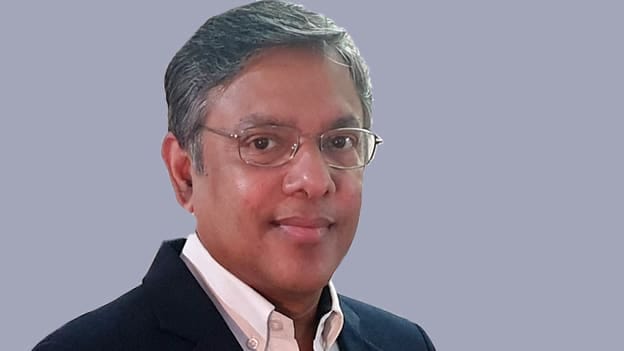
An industry veteran with over three decades worth experience across India as well as overseas, in sectors ranging automotive, chemicals, investment, consulting and construction, Sanjay Chaturvedi is presently working with Hilti India as Director Human Resources.
In his multi-industry professional journey, Sanjay has steered HR strategies and policies, best-fit HR practices across group companies, developed several leadership teams, as well as led large-scale change management, new company set ups and corporate integration of diverse businesses.
In an exclusive interaction with People Matters, Sanjay talks about the cost structures, labor codes and in-demand skills for a hybrid future of work, and highlights how the organization is enabling leaders and employees to manage the sudden digital rush.
Read on for excerpts from the interview.
There is a significant influence of digital in all our lives today, right after conversations around a much needed digital detox began to surface. How are you bringing in that balance as a leader and as an individual?
As a leader, recognizing the impact for greater digital influence in our lives, we have to understand our priorities and educate ourselves accordingly.
For example, the communication technology is so prolific that it requires us to train our people on broader WFH (Work From Home) principles, one of which requires a very planned approach to work as below:
- Regular breaks have to be built into the plan; breaking up work into manageable units, shorter meetings
- Start and end times have to be defined and be meaningful individually; flexibility to people is important
- Talking to people more rather than writing emails
- “Switching off” techniques such as perhaps, time scheduled for a hobby, are taught to our workforce
- What platform to use for what kind of communication or sharing of ideas – for example; Yammer for success stories
We invest a lot in culture building and have themed Team Camps each year – this year’s theme being ‘Care & Perform’ which helps people to find the right balance between caring for oneself and performing. As part of this on-going series, we also conduct workshops with our people facilitating them to understand the difference between what they can and what they cannot control. They are also encouraged to collaborate more by engaging in frequent conversations as required. We have a unique position in our company called the Sherpa, who is a culture guide. The Sherpa conducts these programmes across the company.
We also have an App called the Care & Perform App that helps people with meditation individually or in groups, guides in achieving a mental balance, reducing anxiety and promoting an optimistic outlook. This is done through a series of assisted activities such as mindful breathing, mindful walking, mindful driving, mindful reading, mindful listening, body scan etc.
Except for our sales force, the choice of working from home or the office is left to our people – even to the days they choose to attend office; meetings are mostly virtual except when customer interaction is required – then we plan well in advance and arrange accordingly.
I practice the same principles. It is no different for our leaders than from what we expect our people to do.
HR has to demonstrate a whole new kind of agility in the wake of the coronavirus crisis. How do you align your HR initiatives with the larger business goals?
There are two basic mindsets that have to be created for agility:
- First people have to be valued over processes and structures, so build processes and structures keeping people in mind and what these mean for them – this is not easy as our entire learning has been on creating processes and organization designs which obtain business results. So, for example, in career planning, we tend to ask people about their ASPIRATIONS, match their ABILITIES to those aspirations to get a real sense of fit and then match that with AVAILABILITY of a suitable role. Very often we also add pieces to a role to make them relevant for learning, such as learning assignments and projects that impact the business. Leading cross-functional assignments / projects is a great technique that can be applied here.
- Second, having a plan is good but the ability to respond to change should be valued over a great plan, hence, a greater need to understand what risks one is faced with and build “what if” scenarios. Hence, we prepare team leaders and teams for contingencies or for managing change in the most appropriate manner. For example, we trained our entire workforce on WFH techniques as mentioned above, we ideated on what the customer needs would be going forward – productivity was a key theme as we are service providers to the construction industry and built our solutions accordingly. Customers have appreciated this and have also seen the value of our offerings.
Having said that, the whole focus is then centred around people’s emerging needs.
During the crisis, taking care of anxiety was one of the main things and each of our team leaders did a daily check-in with the team to understand and respond to their individual situations and challenges. They were also coached for this.
We also had our Employee Assistance Programme (EAP) to address issues of mental health, stress & anxiety.
At Hilti, all core activities of hiring, on-boarding, HR services, performance management and developing people are part of a larger annual planning exercise undertaken by the leadership (including Global priorities) that decides the appetite of business for the following year. HR is part of the exercise when it comes to issues of planning people capacity and deciding an optimum growth plan since people have to be trained to be capable of living up to that appetite right from the word go. The central idea is what will make people successful and how to enable that.
At a second level, HR Business Partners align with their respective stakeholders (functional leadership) to understand the emphasis required by them on various people topics and build a plan for each of their areas that gets dovetailed into an overall picture of HR priorities and roadmap. Most of these are in the nature of specific projects that raise the level of what we do for our people. An example would be specific leadership courses required for people in a function.
This plan is then also translated into a people growth plan based upon our career and succession planning which requires us to then place people into new assignments for the following year. Thus the growth in the business and people growth is aligned.
What changes are you seeing or expecting in your organization’s HR tech landscape to handle the hybrid future of work?
We have recently implemented Workday as our enterprise HR system and are adding on useful functionality in sprints.
We are also looking at creating more agile dashboards that support business decisions – for example the 9 box performance-potential grid on the system.
Our entire career and succession planning is done on Workday. Individual development plans (IDPs) are also created on the system. Finally, we provide feedback to our people on the system, with check-ins as well as reviews happening in an agile manner rather than in a calendarized cadence.
We have also automated a very large part of our HR services. In the near future, more self-service facilities would become available to our people and possibly we could harness the benefits accruing from Al.
What are your thoughts on the concept of a hybrid workplace? What are some challenges you foresee in implementing a hybrid workplace?
There are 2 concepts which we should distinguish within the hybrid work place.
- People having the flexibility, in whatsoever form, to work from home & work from office – organization policy enabled. The challenges here would require the organization to:
- Set a few mandatory days in office or have a rota system whereby different teams / people come to office on different days
- Deal with the issues of safety & social distancing & therefore, companies may choose to tell their staff with comorbidities not to come to the office for safety purposes
- It would also mean a different level as well as cadence of sanitizing the office
- People on a permanent WFH basis. This would definitely fall within the purview of organization policy and will challenge organizations to:
- Determine how to set hours of work – start – stop and how to measure for those companies who monitor these parameters
- Determine applicability (how to) of organization policies such as POSH, Grievance redressal, project collaboration norms to quote a vital few
There is also a complication of measuring productivity of people in the same role when some undertake that role from office and some from home.
With complete financial and economic recovery appearing still distant, organizations will need to keep cost control measures in effect. With that background, how do you see cost structures impacting a hybrid workforce?
It is true that companies will be under financial pressure for quite some time to come in most sectors. While there are a host of macro factors that contribute to this we will look at what impacts organizations, and what will some of the new measures mean:
- Travel cost is most certainly going to be greatly mitigated and also hotel costs for accommodation and conferences etc. this is going to be the ‘easy’ savings part, brought about by the existing pandemic
- Supply Chains are becoming more prolific but also have to add in safety measures and therefore, in the short-run, we can definitely see a rise in the supply chain costs. Over time, competition and innovation will drive the economy in this area
- Companies are having to go digital and there are attendant costs of digitization as well as providing better infrastructure to a hybrid workforce for maintaining work efficiency. The impact, therefore, will be on one-time CAPEX as well as continued costs on this account.
- For manufacturing companies, the cost of materials will increase as a result of fear of inflation as well as increase in input costs, not the least of them being the cost of energy
Consequently, organizations will come up with new and innovative ways to look at managing their costs even as they contend with a hybrid workforce. The saving in travel costs may in a large part be channeled into improving IT infrastructure & digital enhancements to existing infrastructure or processes. This will benefit the hybrid workforce improving their efficiency and overall experience.
I can see that there will be a cost pressure on salaries, and the level of increments will definitely get affected – it may also taper over a longer term, say 3 - 5 yrs on an all industry basis.
As a result of cost pressures there could well be a change in the hiring pattern, with companies going in for fixed term contracts and participating more in the Gig economy which is rising at a CAGR of 17.4%.
Combined with the changes in Labour legislation that are coming through (29 Labour laws collapsing into 4 Labour Codes), this will be an area where the HR community will need to devote some time to make meaning and derive what it could mean for their organizations.
What kind of a workplace model are you considering for your organization? Do you foresee any major changes?
In the short run, we at Hilti see some change, however, our business landscape will change considerably in the next 2 - 3 years. We are already advancing on the curve of change by digitizing our processes, providing better infrastructure to our team members at work and also at home, embarking upon initiatives to vastly improve our reach to customers in order to assure ourselves of better customer engagement, improve our services to our customers to enhance their productivity and overall attain an ecosystem that will be aspirational internally and externally.
What are some capabilities or skills that you would like to see in prospective candidates for a hybrid future?
A very clear area that emerges under the current circumstances is digital savviness. The current set of millennials in the workforce are driven and are quite digital savvy as well as innovative.
We will also look at people who, apart from their domain expertise are able to add to themselves adjacent skills that will complement their capabilities towards their outcomes.
In terms of the emerging emphasis on competencies, we will be looking at candidates with:
- Curiosity & Learning Agility
- Adaptability & Resilience
- Prediction & ability to connect the dots
- Empathy & collaboration skills