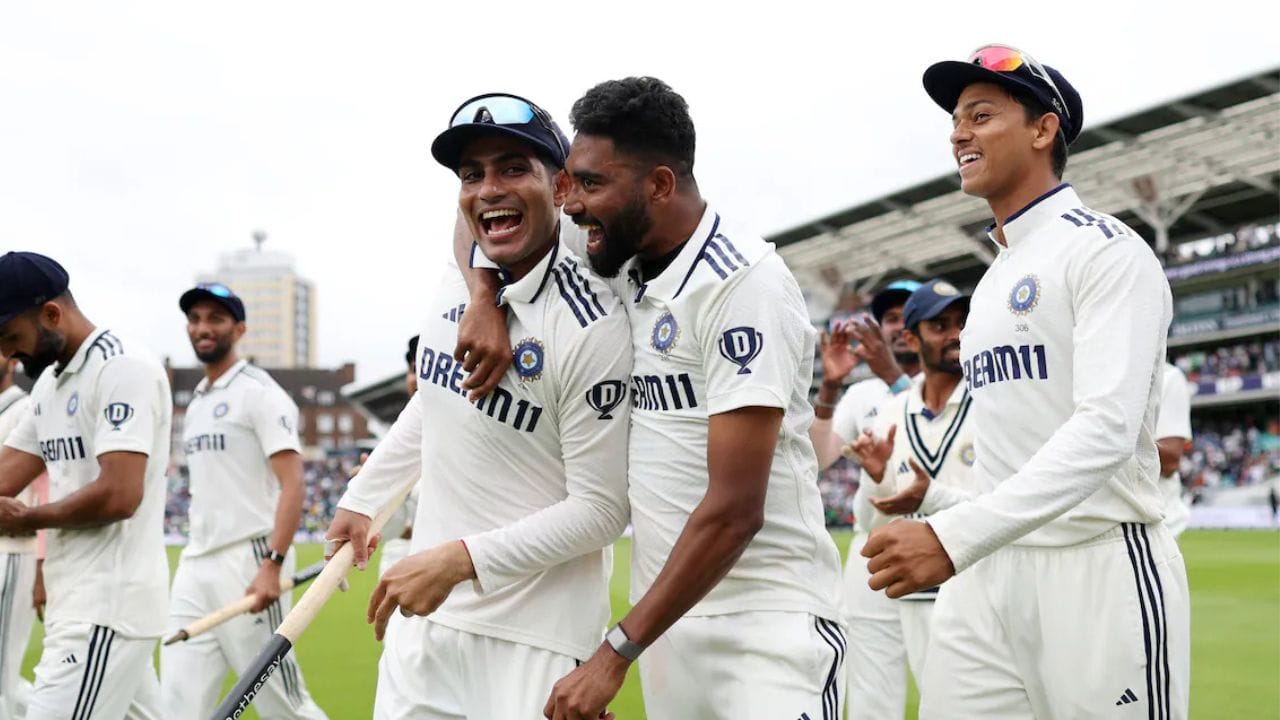
When India clinched victory by the slimmest of margins in a Test match destined to become part of cricketing folklore, the headlines focused on the final wicket, the edge behind, and the roar of the crowd. But for those leading complex workforces through uncertainty, the match offered something deeper -- a blueprint for how talent, culture, and clarity can converge under pressure.
Pressure reveals ownership
Mohammed Siraj bowled a crucial spell late in the day when the match was delicately poised. He held his line, kept his pace, and maintained control through every over, without being swayed by the shifting scoreboard or crowd pressure. His discipline allowed others to build around him.
In high-stakes situations, individual clarity supports team stability. HR must enable role-focused execution by investing in behavioural clarity, situational training and systems that reinforce consistency over improvisation. The ability to stay grounded under pressure is often a result of role clarity, cultural norms and psychological safety.
Depth is an asset when the stakes are high
Prasidh Krishna, a relatively newer addition to the Test squad, took over the pitch at a tense moment. While Siraj took the lead, Krishna’s dismissal of Josh Tongue was no less valuable. It helped tip the momentum and reduced England’s chances significantly. His preparation paid off, even without the spotlight.
Where unpredictability is common, depth in talent is what sustains outcomes. Preparedness in support roles and adjacent functions allows organisations to continue delivering even when the spotlight is elsewhere. HR must invest in building readiness beyond high performers, ensuring that all team members are equipped with the tools to step up when needed.
Synchronised teams deliver sharper results
India’s fielding arrangements and bowling changes reflected coordinated strategy. The team responded as one unit, with clear communication and shared awareness. Each player executed their role within a well-aligned system, which left little room for error.
Alignment within teams is a key performance driver. HR must ensure goal frameworks are clear and interdependent roles are defined with precision. Regular cross-functional syncs, collaborative metrics and shared accountability frameworks foster a culture where teams operate with coherence, even under high pressure.
The ability to reset protects momentum
Earlier in the match, Siraj had a few loose overs and a dropped catch off his bowling. Yet, he returned to the crease with heightened focus and executed a plan that ended the game in India’s favour. There was no visible hesitation, only recalibrated execution.
Organisational momentum depends on how fast teams recover from operational errors or missed opportunities. HR leaders should embed recovery strategies into daily team rhythms. This may include immediate retrospectives, performance coaching or mental resilience support, ensuring that teams maintain energy and clarity even after setbacks.
Consistency amplifies trust within teams
Throughout his spell on the final day, Siraj maintained an unwavering rhythm. His lines were tight, his appeals measured, and his tempo consistent. Even in moments of silence between breakthroughs, his discipline gave the team confidence. The fielders stayed alert, strategies held firm, and no one second-guessed the plan. Siraj delivered reliability.
Consistency builds trust across the system. When people show up with reliability in meetings, in delivery, and in stakeholder engagement, they strengthen team cohesion. HR must recognise consistency as a core behavioural strength, embedding it in feedback loops and succession frameworks. A team built around steady contributors creates space for experimentation, growth, and long-term success.
Initiative creates adaptive capacity
In the final overs, senior players adjusted field placements, bowlers signalled strategy, and on-field suggestions were implemented fluidly. There was no over-reliance on the captain. The group was aware, agile and decisive.
Adaptive capacity grows when decision-making is distributed. HR teams need to build confidence at all levels to take initiative within clear boundaries. Training for situational judgment, frameworks for distributed leadership and feedback systems that reward proactive action all contribute to developing a responsive organisation.
Build teams that win through systems
A six-run victory is the cumulative result of clarity, discipline, and shared ownership, principles that sit at the core of strategic HR. As organisations face volatility, HR leaders must draw lessons from the field of sport, where outcomes are shaped by the quality of execution under pressure. In many ways, the future of work will not be won in sweeping moves, but in how organisations handle the fine margins.