
By: Sanjay Tripathi
Work has always been about more than just a job, but today, employees are making that expectation much clearer. Artificial Intelligence and technological advancements have enabled new collaboration methods and productivity measurements.
Meanwhile, employees are reconsidering what they expect from their working environments.
Salary matters, but it is not the only indicator of an ideal workplace anymore. The white-collar recruitment sector in India grew by 14 percent year over year in August based on Naukri JobSpeak data. The hiring for AI and machine learning posts has grown by 31 percent, and hiring of graduates grew by 15 percent, experiencing growth in all different categories.
However, there is something more significant going on here. Companies are restructuring their positions, using artificial intelligence, and changing what skills they require of their employees.
Connecting business performance with people performance
Those organizations that will be able to survive in this evolving world are the ones that will know how the business performance and people performance are interlinked.
In light of the fact that many routine activities get automatized, HR specialists will be left to deal with questions that only people can answer and not technology: what skills would the organization require? How would roles evolve? How would we enable people to adjust?
How would we ensure ethical use of AI? As revealed by EY’s Work Reimagined Survey 2025, 88 percent of Indian workers reported to employ AI in their work, 37 percent of which were active users of AI.
Balancing technology with the human factor
With AI & Technology playing an essential role in the work process, the human factor assumes more significance than ever before. Empathy, judgement, trust and contextual understanding will always remain key ingredients in good people leadership.
Hence, it is imperative for HR leaders to be at ease with technology while also making sure that technology is merely an enabler of work rather than being the end goal in itself.
Pressure on skills is no less. Critical thinking, technological savviness, resilience and adaptability are becoming increasingly important. Job roles can be important for structuring things, but they fail to address the skills of the future.
The ecosystem of the Global Capability Centre in India is evolving, and there is growing demand for technology and AI professionals. Organizations have to develop capabilities within and make smart hires of the future.
Building trust through employee experience
Developing capabilities is one issue, trust is another. Workers are expected to work with technology that can change their job roles, and discussions about automation and skill gaps create uncertainty.
That is when the concept of employee experience is especially crucial, as the discussion around employee experience is expanding, the CHRO's scope of responsibilities is changing too.
The CHRO has to start thinking like an organisational architect, which means stepping back from specific HR activities and seeing how different aspects of the employee experience fit into each other.
Onboarding, interaction with managers, adaptability, inclusiveness, sense of belonging and development opportunities all contribute to the overall experience of the employees, which, in the long term, affects the corporate culture. This way, the employee experience becomes the business concern rather than the HR one. The concept You Matter highlights this idea.
Using data and leadership to shape the future
In addition, data can help HR know what is going on within the labour force. The attrition rates, skill gaps, pipeline of leadership, workforce effectiveness, learning outcomes and the feedback of the employees can indicate where there might be a problem.
But the data can highlight the pattern without explaining the underlying reason behind it in the terms of humans.
It needs judgment, empathy and conversation for that.
Leadership development will be equally important. Given that employees will have to adjust to new technologies and job roles, leaders will not only have to ensure success for the organisation. But they will also have to ensure trust, collaboration and learning among their employees.
Thus, ensuring that leadership development is an ongoing process and not just a training exercise.
Putting people at the centre of organisational growth
To sum it up, one can say that the future of human resource management is neither technology nor people, but the intelligent use of technology combined with people at the core of organisational development.
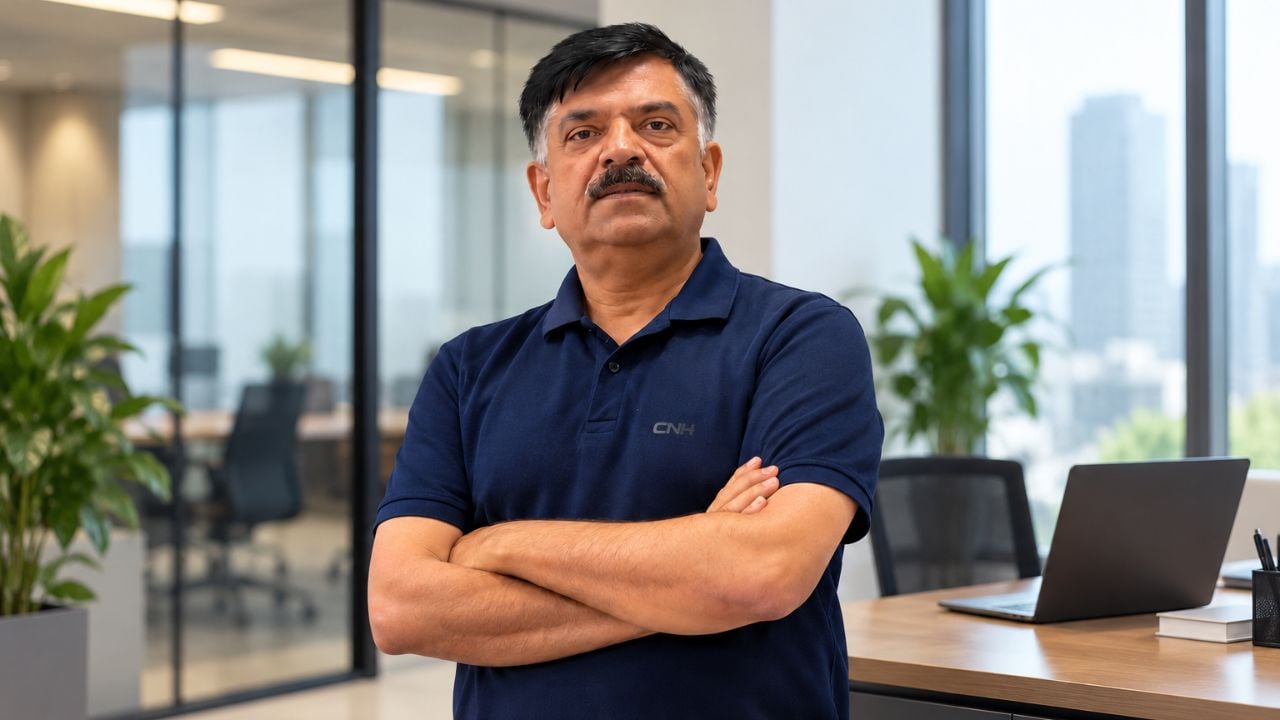
About the author: Sanjay Tripathi is an accomplished Human Resources leader with over two decades of experience in people management, culture and business transformation across manufacturing and industrial sectors. As Director & Head HR at CNH India, he leads the organisation’s people agenda, focusing on talent development, employee experience, leadership development, diversity and inclusion, and workforce transformation. He champions HR as a strategic business partner, aligning people practices with business objectives.