

When we talk about the future of HR, the conversation usually starts with technology. I think it needs to start somewhere broader. By 2030, HR professionals will need a broader capability stack than ever before. Foundational HR knowledge will now include business acumen, data literacy, technology fluency, workforce planning, risk awareness and ethical judgement.
But this is not simply a call to learn the tools. The more capable our tools become, the more our value as a profession rests on two things technology cannot supply: a deep understanding of the discipline itself, and the judgement to apply it well.
A broader capability stack
HR professionals will be expected to understand how work itself is changing. That means being able to assess skills needs, redesign roles, interpret workforce data, evaluate technology and connect people decisions to business outcomes in real time.
Just as importantly, HR will need stronger judgement. AI and analytics will continue to support more decisions, but we will still need to understand context and recognise when an apparently efficient solution may create unintended consequences.
The strongest HR professionals will therefore combine technical fluency with deep people expertise. They will understand the tools, but they will also know the workforce, the business and the principles that should guide responsible decisions.
AI and data fluency: the new baseline
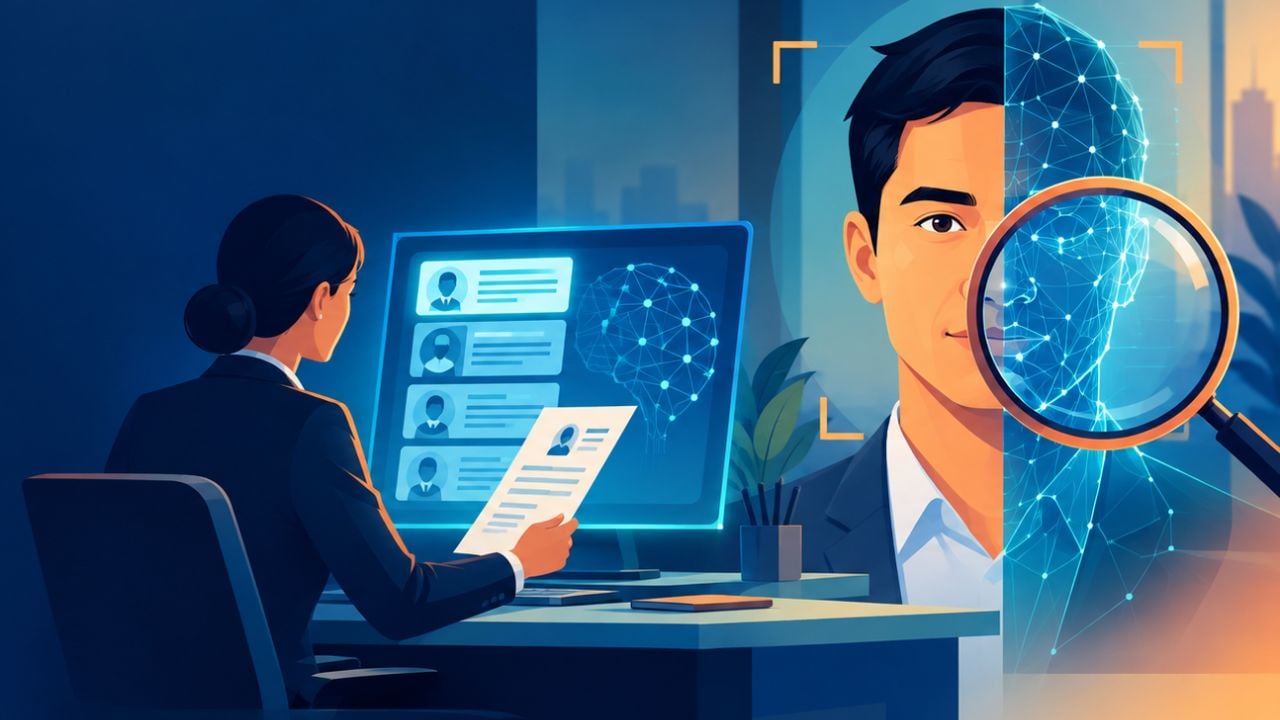
AI and data fluency will become baseline capabilities for HR, much as digital literacy is today. That does not mean every HR professional needs to become a technologist. It does mean we should understand enough to use these tools intelligently, question their outputs and participate confidently in decisions about how they are applied.
An HR professional should be able to ask where data came from, whether it is reliable, what an AI system is actually optimising for and what risks may be embedded in the process. They should also be able to translate workforce data into insights that business leaders can use.
This will matter across every specialisation:
Recruiters will encounter AI-enabled sourcing and screening.
Learning professionals will use adaptive technologies.
Total rewards teams will work with increasingly sophisticated analytics.
HR business partners will need to interpret workforce trends.
AI literacy will not be a specialist skill. It will become part of professional competence.
The rising premium on human capability
The more technology can automate, analyse and generate, the more valuable distinctly human capabilities become.
Judgement will be one of the most important. AI can surface patterns and recommendations, but it cannot fully understand organisational context, relationships, culture or the consequences of a decision in the way an experienced professional can.
Empathy will also matter, particularly when organisations are navigating change, restructuring, conflict or uncertainty. Employees may interact with more technology, but they will still expect important decisions to be handled with fairness, dignity and understanding.
Communication, influence and critical thinking will become increasingly important as well. HR leaders will need to explain complex workforce issues, challenge assumptions and build trust across functions.
Ultimately, HR deals with decisions that affect people's livelihoods, opportunities and experience at work. Technology can improve those decisions, but accountability cannot be delegated to a system. Human judgement will remain central to professional HR practice.
Don't let the fundamentals erode
One risk of rapid technological change is that organisations become so focused on what is new that they undervalue the fundamentals.
Employment law, employee relations, compensation, job design, performance management, workforce planning and organisational development remain essential. Technology may change how these activities are carried out, but it does not remove the need to understand the principles behind them.
Consider a few examples:
AI may help draft a job description, but HR still needs to understand job analysis and role design.
Analytics may identify patterns in turnover, but we still need to understand employee experience, management practices and labour market dynamics.
Automated screening may accelerate recruitment, but HR must still understand selection validity and risk.
Strong technology capability built on weak HR foundations is not future-readiness.
The professionals who will be most effective in 2030 will be those who can combine new tools with a deep understanding of the discipline itself.
Where new entrants should invest
If you are entering HR today, my advice is to build breadth before chasing specialisation.
I would prioritise four areas:
Master the core disciplines. Develop strong foundations in talent acquisition, employee relations, compensation, learning, workforce planning and employment risk. These fundamentals give you the context needed to make sound decisions later in your career.
Develop business acumen. Learn how your organisation creates value, how it makes financial decisions and how workforce choices affect performance.
Build practical fluency in AI, analytics and data. Use the tools, but also learn to question them. Understand basic concepts such as data quality, bias, technology governance and measurement.
Invest in capabilities that compound. Critical thinking, communication, judgement and the ability to influence others grow in value over time.
The goal should be to build a professional foundation strong enough to adapt as tools inevitably change.
Looking ahead to 2030
The HR professional of 2030 will not be a technologist who happens to work in HR. They will be HR experts who can work confidently with technology, question what it tells them and stand behind the decisions it informs.
For those of us leading HR functions, that means treating AI and data fluency as part of every role, while continuing to invest in the fundamentals that give those tools their meaning. The tools will keep changing. A strong foundation in the discipline, paired with sound human judgement, is what will allow our profession to change with them.
This article is written by Dr Amy Dufrane, SPHR, CAE. Dr. Amy Dufrane is one of the HR profession's most influential voices. As CEO of HRCI, she sets global standards for HR, and is considered a leading authority on HR learning, credentialing, and community.