








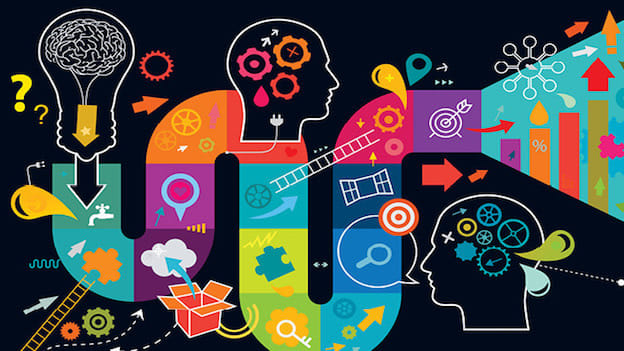
Talent acquisition and retention have always been topics of great discussion and debate across enterprises and academics globally. The advent of the digital economy has quickened the pace and the intensity of these conversations. Value engineered and highly designed HR strategies and policies have become the mainstay of all conversations as organizations are dealing with digital disruption across various functions.
Josh Bersin at Deloitte estimated that in 20171, HR teams will focus on designing high-value experiences to get employees to be excited about their role in the organization and keep them inspired through varied engagements. These efforts could range from curating opportunities to developing skills or enabling the option to explore newer skillsets, to introducing flexibility at work. As employees innovate to create tailor-made products and services, companies are taking this opportunity to retain resources by allowing them the opportunity of all-round growth alternatives in the organization.
Design thinking can be explored in an organization through several methods2. While an organizational design helps to hone roles in a company during restructuring, engagement ensures that the work done by the employees is made easier, efficient and that good work is rewarded appropriately. User experience is at the core of all design thinking. Employee satisfaction is the prime motivator for creating a robust and symbiotic learning and development module for employees across organizations.
Today, the teams managing employee relations are expected to innovate to form new digital tools to create seamless experiences for employees. The aim is to create an ecosystem of learning and development that will help nurture talent across levels and functions which works to not only retain talent but also acquire good resources.
Processes are being made simpler for hiring managers and candidates through the extensive use of digital technologies that allow them to make their processes less complex. At Tata Communications, design-thinking helped us to create a solution that could sharpen our recruitment processes. Our hiring managers now save ample time and effort by using an artificial intelligence (AI) based automated tool that auto-matches a role with best-in-class individuals. Analytics and automation are also brought into play when a new employee joins the company.
Our semi-automated social induction program aims to create a network experience by announcing the arrival of the new employee to the team and providing a checklist of things they could do to make the employee feel welcomed. This could be something as simple as recommending a must-read document/induction material or a restaurant near the office. The program helps break the ice around a new joinee and enables quicker socialisation within the system.
We also have ‘Shape the Future’ initiative which endorses our open culture and gives employees an opportunity to give inputs on the operational functioning of the company and contribute to the direction the company is headed towards. Under the initiative, employees can submit ideas that they believe have the capability to evolve into a $200-million business in a decade and impact masses. The best ones are selected and the ideators are allocated teams that can help implement the idea effectively. The effort paves the way for employees to innovate, gain new skills and become an integral part of the organisation’s growth.
Today, companies follow the thumb-rule of growing their employees not just in the company but also as individuals with various capabilities through skill development initiatives. The ecosystem has evolved to embrace a return investment in employees, with the belief that the return would be substantial towards innovation and creativity — the principles that help organizations to stay ahead of the curve.
At Tata Communications, we created an internal Project Marketplace that spans across 40 countries to enable employees to contribute their skills to key projects, build new skills and create new networks within the organization. The internal platform enables anyone across the business to register their skills and to seek assistance on a project from staff around the world. This again leverages world class digital collaboration and connectivity tools and helps employees inch closer to their ambitions by adding to their capabilities.
Feedback systems have also progressed today to save time while keeping intact the personal connection with the employees. Spending long hours in filling unwieldy forms while evaluating an employee’s work are processes that have faded away, as platforms are now equipped to handle instant responses coupled with feedback mechanisms.
Processes and strategies today are being decoded in terms of data-dependent strategies, removing any ambiguity in processes and results. This demystification today is further trickling down to hiring processes to ensure a better quality of talent addition in the company. Meanwhile advanced analytics are utilizing several tools that help with better sourcing of candidates.
While design thinking has mostly been associated with a company’s operations, the fourth industrial revolution presents a canvas that can be custom-painted for every single employee. Talent acquisition processes are expected to become more precise and automated. Talent will always be key to enable a thriving and market – leading organization.
References
1 HR applies design thinking to deliver engaging employee experience
2 6 ways HR applies design thinking to deliver engaging employee experience