India is not short on talent. It is short on the right kind.
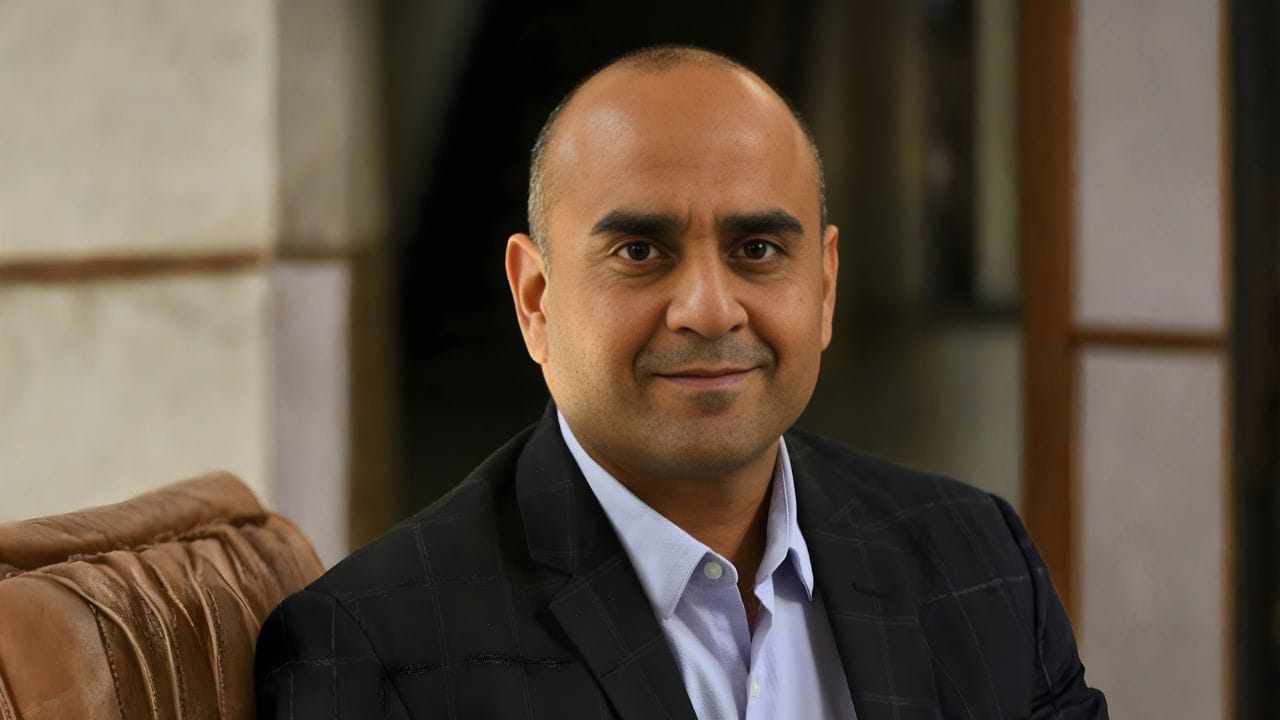
That, in essence, is the tension Brijesh Narang, Vice President Human Resources at Indian Energy Exchange, lays bare. The country produces engineers at scale. It has a growing digital workforce.
Yet when it comes to running modern, market-driven energy systems, the gap shows up quickly. Because the rules of the game have changed.
The job has changed. The talent hasn’t caught up
India’s energy system is no longer predictable, linear, or slow-moving. It is becoming dynamic, volatile, and deeply data-driven. “India’s energy landscape is undergoing a significant transformation, driven by the scale of renewable energy integration, increasing electrification, and the growing role of power markets.”
Add to that a 500 GW non-fossil fuel target by 2030, and the system starts to look very different from what it was designed for. “The system is becoming far more dynamic and data-intensive.”
That is where the shift begins. “The talent requirement is shifting from traditional, function-specific roles to more integrated and interdisciplinary profiles.” In simpler terms, the old model of hiring narrowly skilled specialists is breaking down.
“There is a growing need for professionals who understand not just power systems, but also market behavior, price signals, and demand-supply dynamics.” The new archetype is not just an engineer. It is an energy market specialist who can read systems, data, and markets at once.
Data is no longer support. It is the job
If there is one force quietly reshaping energy roles, it is data. “The role of data has become central to decision-making.” This is not about dashboards or reports. It is about real-time action.
“Organisations require talent that can work with real-time data, build forecasting models, and apply advanced analytics to optimise outcomes in a volatile environment.” Layer renewables on top, and the complexity multiplies.
“The increasing share of renewables has also created demand for expertise in grid balancing, storage, and flexibility management, requiring a deeper understanding of intermittency and system stability.” Then comes regulation, moving just as fast.
“The pace of regulatory evolution in India necessitates professionals who can interpret policy developments and translate them into business and operational strategies.” Put all of this together, and the job description starts to look less like a role and more like a hybrid discipline.
India has talent. But not job-ready talent
Here is where the contradiction becomes sharper. “India has a strong foundational advantage in terms of the scale and diversity of its talent pool.” And yet, “there remains a clear gap between academic preparation and industry-ready capability.”
The issue is not numbers. It is readiness. “Much of this workforce is not immediately deployable in complex, real-world energy environments.” That gap is visible across hiring conversations.
“Industry data suggests that a significant majority of employers face challenges in finding job-ready talent.” Why? Because the system still trains people in silos.
“One of the key issues is the lack of interdisciplinary training. Most professionals are educated in silos such as engineering, finance, or policy, whereas the energy sector increasingly requires a convergence of these skill sets.” There is also limited exposure to the actual work.
“There is also limited exposure to specialised areas such as energy markets, trading mechanisms, forecasting, and advanced grid operations.” So companies end up doing what the system has not.
“Organisations still need to invest significantly in structured capability building, hands-on training, and cross-functional exposure to bridge the gap between potential and performance.”
From long-term planning to split-second decisions
The nature of work inside the sector is shifting just as fast. “India’s power system is increasingly characterised by variability in both supply and demand, particularly with the rising share of renewable energy.” Which means decisions cannot wait.
“This has led to a greater emphasis on real-time balancing and faster decision-making cycles.” But the industry is still catching up.
“While there are strong capabilities in certain parts of the ecosystem, the broader industry is still adapting to the demands of operating in a high-frequency, high-stakes environment.” Because historically, the system was built for something else.
“Traditionally, the power sector has been oriented toward long-term planning and stability, whereas the current landscape requires continuous optimisation and rapid response.” And that changes the kind of people who succeed.
“There is an emerging need to strengthen the integration between human decision-making and digital systems.” As automation deepens, human judgement becomes more critical.
“Professionals must be equipped not only to use these tools but also to interpret their outputs and exercise informed judgement.” The capability shift is therefore behavioural as much as technical.
“The focus is therefore shifting toward building cognitive agility, resilience, and the ability to make decisions in dynamic and uncertain environments.”
The real gap is not learning. It is application
If there is one idea Narang returns to, it is this: learning exists. Application does not. “One of the biggest gaps in today’s talent landscape lies not in access to learning, but in how effectively organisations translate it into role-specific capability building that drives business outcomes.”
Even as education systems and corporate training evolve, they fall short in execution. “They often fall short in bridging the last mile, aligning learning with the real, day-to-day demands of roles.”
The pace of change is not forgiving. “The rapid pace of technological change and the constant evolution of job roles have rendered traditional, one-time training interventions insufficient.” What replaces them is something more embedded.
“What organisations need instead is continuous, context-driven learning that is embedded into the flow of work and directly linked to performance and outcomes.” Capability building, in other words, cannot sit outside the job anymore. It has to sit inside it.
Hiring is not enough anymore
Then comes the inevitable conclusion. “Organisations today are increasingly building talent internally, as the pace of change in skills continues to accelerate.”
Because the maths does not work otherwise. “Nearly 40% of core skills are expected to change by 2030, and skill gaps are already emerging as a key barrier to business transformation.” External hiring cannot keep up with that rate of change.
“In this context, external hiring alone cannot keep pace with the demand for specialised capabilities.” So companies are forced to rethink their model.
“This means clearly identifying critical skills, linking them to roles, and enabling continuous learning through digital platforms and on-the-job exposure.” Those that do it well gain an edge.
“Organisations that consistently invest in building talent from within are better placed to stay agile, reduce dependence on external hiring, and develop a workforce that evolves with the business.”
The new energy professional
What emerges at the end of this shift is not just a new skill set, but a new type of professional. “Roles that were once largely domain-focused now require a much stronger grounding in data and digital tools.”
Add AI, regulation, and market complexity, and the expectation becomes clearer. “There is a growing need for professionals who can work with real-time data, understand how AI-led insights are influencing certain key areas.”
The direction is clear. “The demand is increasingly for talent that can bring together domain understanding with data orientation and regulatory awareness.” Not one skill. Not two. But a combination.
India’s energy transition is often framed as an infrastructure story. Capacity targets. Investments. Technology. But beneath all of that sits a quieter question.
Who is going to run this system?
The answer, for now, is still catching up.