India is entering a pivotal stage in its workforce evolution. While millennials continue to dominate the current demographic composition of the working population, Gen Z is rapidly entering the workforce, and Gen X representation is gradually declining. Each of these generations has its unique perspective on what matters most and expects policies and benefits to be tailored to their life stage.
Why Personalisation Matters Now
Organisations thrive when employees experience holistic well-being at the workplace. A recent report from Great Place To Work® on trends in Workplace Wellness outlines four key pillars of employee well-being: social, mental, financial, and physical.
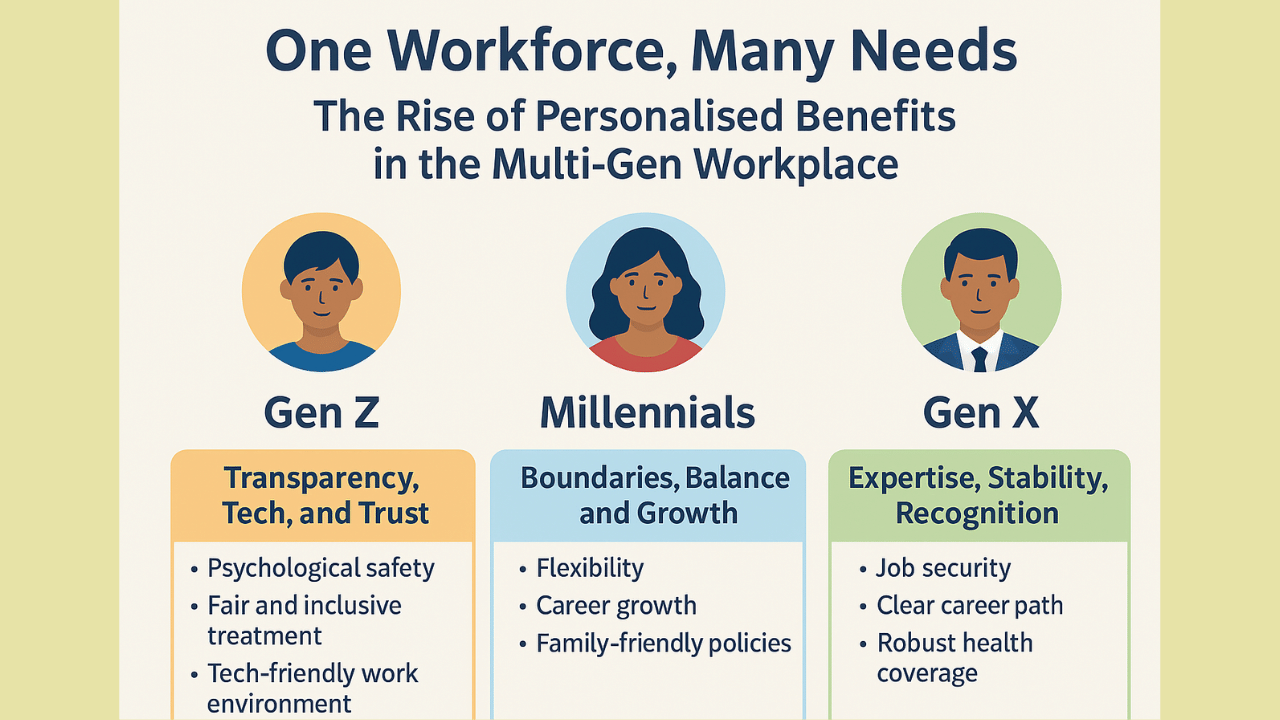
Our study shows these four pillars are so critical that when they are all addressed together, 96% of employees report thriving well-being. If any two pillars are missing, only 48% feel supported. While employees across generations have very similar well-being priorities and want to experience all four pillars of well-being mentioned above, what varies is how they define and expect those needs to be met. Gen Z seeks digital fluency and psychological safety, millennials prioritise flexibility and career growth, and Gen X values stability and robust health coverage.
India’s evolving demographic diversity is changing the way organisations think about well-being for all. As organisations design ecosystems to support a multi-generational workforce, taking a flexible and personalised approach to well-being and benefits is essential.
1. Gen Z: Transparency, Tech, and Trust
Gen Z are entering the workforce in relatively larger numbers, and they are clear about their needs. Gen Z prefers working in an environment that offers psychological safety, open communication, and fair and inclusive treatment for all. They want transparency in compensation policies and support with financial inclusiveness and investment programmes. As a digital native generation, they expect workplaces that are modern, ergonomic, and tech-friendly to support productivity and their individual well-being.
How Leaders Can Support Gen Z:
To support Gen Z meaningfully, organisations should:
Foster inclusive leadership that encourages open dialogue, transparency, and a feedback-orientated culture.
Normalise mental health conversations at work to enhance psychological safety at work.
Ensure pay transparency and help Gen Z understand how their compensation is structured and introduce financial literacy programmes tailored to early-career professionals.
Train people managers to support the well-being of their team members (especially Gen Z), equipping them with tools to recognise stress signals, facilitate open conversations, and offer personalised guidance.
2. Millennials: Boundaries, Balance, and Growth
Millennials are at a life stage where personal responsibilities and professional ambitions often intersect. Many are caregivers, raising children and/or supporting ageing parents, while also advancing into managerial roles. For this generation, growth, stability, and flexibility are essential to well-being.
Millennials seek trust in leadership and meaningful relationships with colleagues. They value organisations that recognise their unique challenges and offer flexibility and respect for boundaries. They also value job security, a clear career path, and growth opportunities.
How Leaders Can Support Millennials:
To support millennials effectively, organisations should:
Introduce family-friendly policies like childcare and eldercare provisions to support their life stage needs and caregiving responsibilities.
Ensure pay parity and transparent communication simultaneously to reinforce trust and foster long-term engagement.
Enhance clarity around career path options and support them with learning programmes and opportunities that will fuel their growth.
Enable hybrid and flexible work options to help them balance professional and personal demands effectively.
3. Gen X: Expertise, Stability, Recognition
Gen X brings decades of work experience, exposure, and expertise. Many of them are likely to hold middle- to senior-level managerial roles and be responsible for mentoring younger talent. For this cohort, stability, recognition, access to the leadership team, and long-term security are essential. They want to be acknowledged and valued for their experience and tenure. Financially, they seek advice on secure retirement options, and they value a physically safe work environment. They also seek policies that support their life stage and responsibilities.
How Leaders Can Support Gen X:
To support Gen X meaningfully, organisations should:
Create open communication forums, such as town halls and Q&A sessions, to foster connections and influence.
Recognise tenure and legacy contributions through awards, storytelling, and internal spotlights highlighted by leaders.
Facilitate one-on-one connections with the people and culture team to reinforce psychological safety and provide emotional support.
Implement workplace safety protocols and plan ergonomic upgrades to enhance physical well-being.
Provide financial counselling and retirement planning to enhance financial well-being. These programmes should be tailored to mid-career and late-career professionals.
Offer flexible medical and insurance coverage, including top-up options and family support.
Engage Gen X in mentorship programmes, positioning them as culture carriers and advisors to younger generations.
Our study finds that psychologically safe workplaces drive five times more engagement, loyalty, and commitment. In such an environment, employees are more likely to stay with the organisation for longer (85%), demonstrate discretionary effort (86%), and be advocates for their organisation (90%) as a great place to work.
Personalised benefits are the cornerstone of resilience, sustainability, and high-trust workplaces. Two-way communication between leaders and employees, along with intentional practices, ensures programmes that are more inclusive, personalised, and relevant. Organisational support, development programmes, leadership behaviours, and overall transparency must be personalised beyond age groups and be inclusive of all demographics. It should feel personal; going from a one-size-fits-all approach to ‘this-fits-perfectly-on-me’ should go a long way.
Authored by: Balbir Singh, CEO, Great Place To Work® India