
There are many ways to judge an office. The coffee, the commute, the meetings that could have been emails, and, of course, the lunch.
Because when the clock strikes lunchtime, even the most enthusiastic employee wants to know one thing: what is on the menu?
A good meal can make the working day more comfortable. A disappointing one, a long queue or a cafeteria serving the same options on repeat can quickly change the mood. And with employees expecting more flexibility, healthier choices and convenience, office food has acquired a bigger role in the workplace conversation.
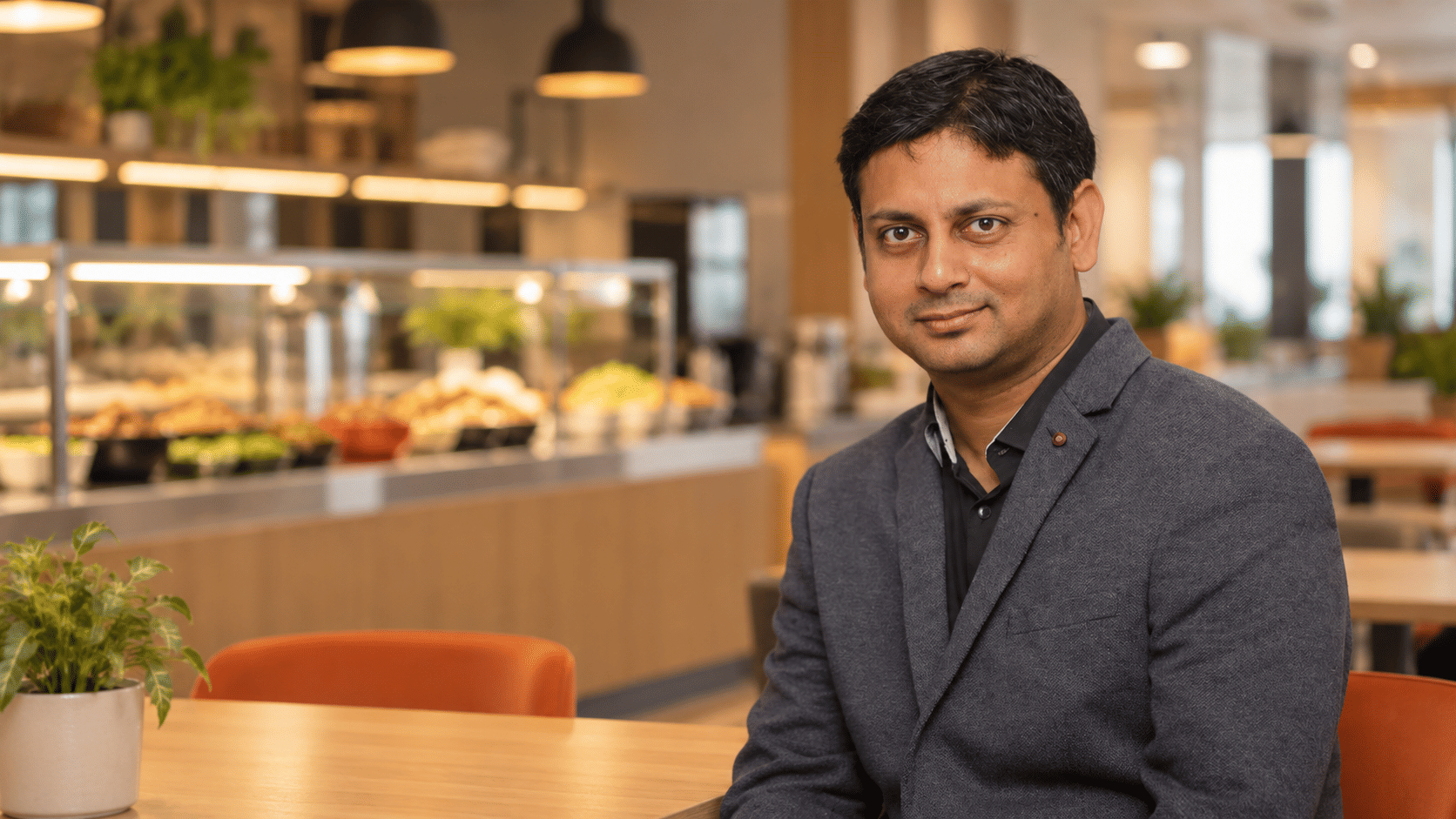
For Sandipan Mitra, Co-founder and CEO of HungerBox, the cafeteria is no longer simply a place to grab a bite before returning to the desk. In an interview with People Matters, he discusses how food connects with employee experience, workplace culture, hybrid work and the business of keeping cafeterias running efficiently.
The cafeteria is having a moment
Once upon a time, workplace dining was largely about getting the basics right: food needed to be available, affordable and served on time. Employees now expect considerably more from their lunch breaks.
“Today, employees expect much more, from variety and convenience to healthier choices, hygiene, transparency and a seamless digital experience,” Mitra says.
The changing expectations reflect a workplace where convenience matters as much as the meal itself. Employees want different cuisines, healthier options and simpler ways to browse menus, order food and pay.
Hybrid work has added another ingredient to the mix. When office attendance changes from day to day, cafeterias cannot always rely on predictable footfall or familiar ordering patterns.
Mitra believes organisations need more flexible dining programmes, built around actual employee behaviour rather than assumptions about how many people will turn up for lunch.
And there is a bigger reason to pay attention to the cafeteria.
“A cafeteria is not just a place to grab a meal, it gives people an opportunity to take a break, meet colleagues and build connections,” he says.
In other words, the lunch break has a social life of its own.
Can a good lunch make Monday feel less Monday-ish?
Food may not fix every workplace problem, but the daily lunch experience can influence how employees feel about their time in the office.
Mitra points to the difference between a convenient, reasonably priced meal and an experience marked by long queues, limited choices or inconsistent quality. The former makes the workday easier; the latter can become another source of frustration.
For employees living alone or managing particularly busy schedules, a reliable workplace meal also removes some of the daily effort involved in planning, cooking or arranging food.
Then comes the part no menu can fully capture: the conversations.
A shared meal offers colleagues a chance to step away from their desks, meet people outside their immediate teams and talk without an agenda waiting on a screen.
In hybrid workplaces, where employees may spend fewer days together in person, these small interactions can become more important. Mitra sees opportunities for organisations to encourage them through team lunches, communal tables, regional-food celebrations, festival menus and wellness campaigns.
Food is also connected to identity and tradition. A thoughtful dining programme can recognise a diverse workforce, provided it considers different dietary needs, shift timings and attendance patterns.
The cafeteria, in short, has a chance to be more than a pit stop between meetings. It can become a space where people actually spend time together.
More dishes, more happiness? Not necessarily
If employees want choice, the obvious response might be to add another counter, expand the menu or bring in more food vendors.
Mitra suggests a more considered approach.
“We are seeing greater emphasis on healthier and nutrient-rich meals,such as millet-based bowls, grilled paneer or chicken, salads, sprouts, fruit bowls and balanced rice or roti-based meals, regional and diverse cuisines, as well as options that cater to different dietary preferences and requirements,” he says.
The challenge is to offer food employees want to eat, rather than simply making the menu longer. A wider selection can add operational complexity, increase costs and create more waste when demand does not match supply.
“Too many vendors or menu items can lead to inconsistent quality, operational complexity and higher waste,” Mitra says.
A better approach begins with understanding preferences and adjusting the offering accordingly. Healthy meals, regional cuisines and options suited to different dietary requirements matter, but so do quality, hygiene, reliability and fair pricing.
There is little point in an impressive digital menu if the meal itself disappoints. As Mitra puts it, “A good app cannot compensate for poor execution.”
It is a useful reminder for employers: the dining experience is only as strong as the food and service behind it.
The lunch bill still has to add up
Behind every cafeteria meal sits a less glamorous calculation involving staffing, procurement, portions, subsidies and food waste.
Employers want employees to enjoy the experience, but dining programmes also need to make financial sense. Mitra believes the two objectives need not compete.
The starting point is understanding demand. When are employees coming into the office? Which meals are popular? What do employees consider good value? Answers can help kitchens plan quantities, organise staffing and avoid preparing more food than people consume.
Menu planning, appropriate portion sizes, flexible subsidies and the right mix of food partners can also help manage expenditure.
Mitra is clear about the fundamentals: “The fundamentals — food quality, hygiene, reliability, and fair pricing- need to remain non-negotiable.”
For employers, the practical challenge is identifying where efficiencies can be made without compromising the meal or the service. Multiple counters offering similar dishes, for instance, may increase costs without adding much value.
The same principle applies to employee feedback. Collecting complaints is only useful when organisations act on them. Repeated concerns about food quality, availability or service need visible corrective action, rather than another feedback form disappearing into the corporate ether.
Workplace dining also requires coordination between HR, facilities, finance, technology teams and food partners. Employee satisfaction matters, but so do service levels, food safety, costs and waste.
What happens when the cafeteria gets smarter?
Technology is already changing how employees interact with workplace dining. Digital menus, pre-ordering, cashless payments and nutritional information can make choosing and collecting a meal more convenient.
Mitra expects the next three to five years to bring greater use of artificial intelligence and predictive tools across dining operations. These could help organisations forecast demand, improve kitchen planning and identify potential service issues earlier.
The data generated through dining activity can also help employers understand:
When employees eat: Peak meal periods and attendance patterns can inform staffing and kitchen capacity.
What they prefer: Popular cuisines, repeat choices and demand for healthier options can guide menu planning.
Where the experience falls short: Service bottlenecks and employee feedback can help identify problems.
How to reduce waste: Better demand forecasting can help kitchens avoid overproduction.
But collecting information is only part of the job. Mitra emphasises the need to turn insights into practical improvements, from shorter queues and better food availability to more efficient subsidies.
He also stresses responsible data use. Aggregated or anonymised insights, clear data-governance practices and transparency can help organisations improve convenience without making employees feel monitored.
Technology may make the cafeteria smarter, but its value ultimately depends on whether employees notice a better experience.
The final course: Food, people and the future of work
Mitra expects workplace dining to become more personalised and integrated with the wider workplace ecosystem. Organisations are also likely to pay greater attention to nutrition, sourcing, sustainability, food waste and the efficient use of kitchen resources.
Yet the future of office food will not be decided by technology alone. Understanding employees, delivering consistent service and adapting to changing attendance patterns will remain central to a successful dining programme.
As Mitra puts it, “The organisations that get it right will not necessarily be those that spend the most. They will be those that understand their employees, use data responsibly, execute consistently and adapt their dining model as workforce patterns change.”
So, can better food make the office more inviting? It can certainly make the working day more comfortable, create opportunities for colleagues to connect and remove one everyday frustration from the employee experience.
The recipe is not necessarily a longer menu or a fancier cafeteria. Sometimes, it starts with serving the right food, at the right time, with less waiting and less waste. And perhaps making the lunch break one part of office life employees actually look forward to.