For years, workplace health programmes have largely been built around access. Give employees health insurance, offer periodic check-ups, provide teleconsultations and make healthcare easier to reach.
Technology is now changing that equation.
Artificial intelligence can identify patterns, flag potential risks and make health information easier to interpret. But as AI becomes increasingly embedded in corporate healthcare, another question is becoming harder to ignore: what happens after the risk has been identified?
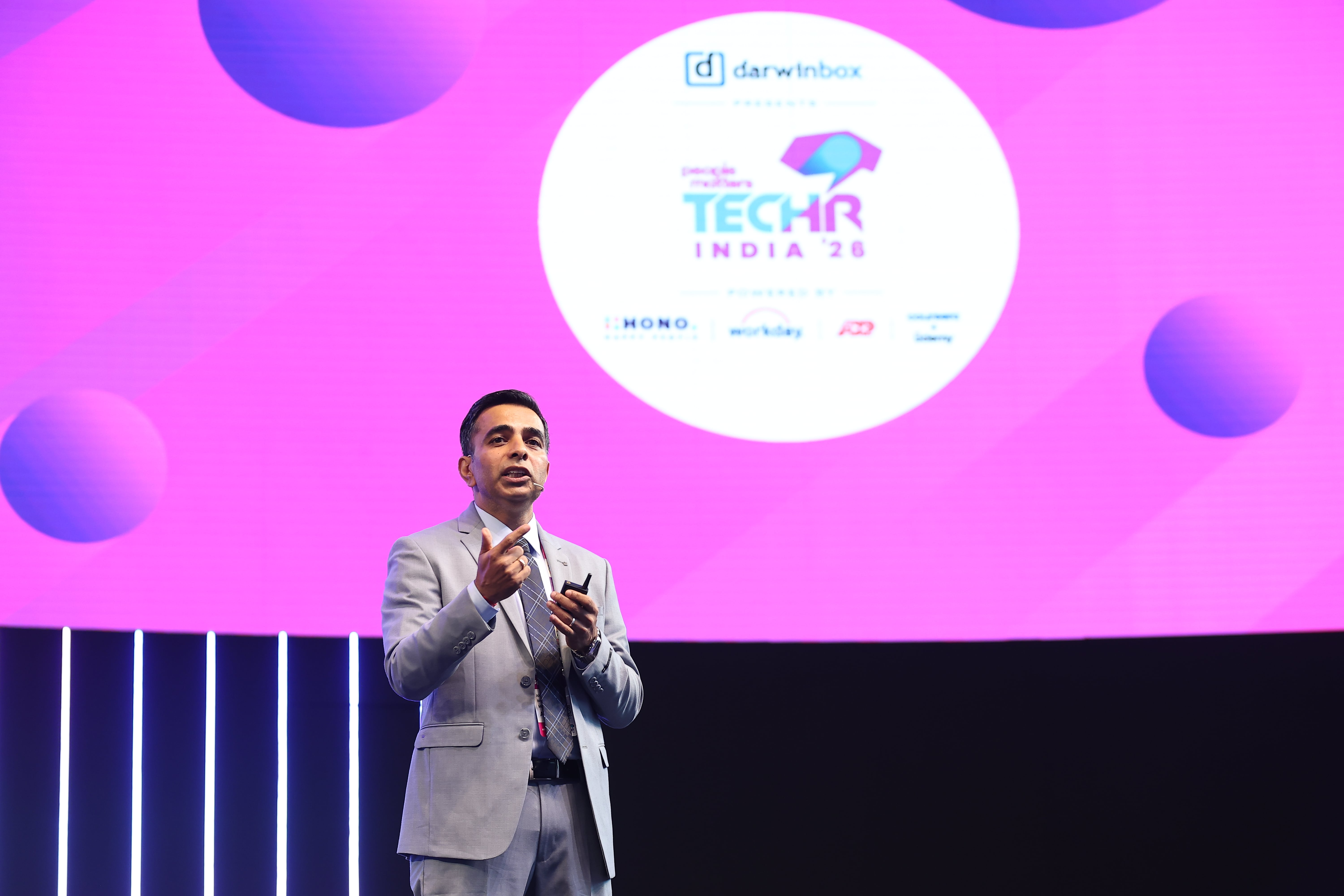
That was the central tension in Anurag Bhatnagar, Chief of Institutional Business at MediBuddy's, keynote at TechHR India 2026.
Bhatnagar was not arguing against AI. Rather, he explored where technology can strengthen workplace healthcare and where human intervention remains essential.
"We are standing at the intersection of what it means to have equal parts technology and a human touch." Bhatnagar said.
Health risks employers may be underestimating
Bhatnagar drew on data from roughly one million health check-ups across more than 700 corporates and 18 industry segments.
The findings point to a workforce carrying significant health risks:
64% of employees showed moderate or high cardiac risk
24% showed moderate or high risk of diabetes
One in five employees had a kidney, liver, or blood infection
"These are very severe data points that we are witnessing today in our corporate ecosystem," Bhatnagar said.
The age profile of that risk is particularly noteworthy.
Corporate health programmes have traditionally placed greater emphasis on comprehensive health checks after the age of 40. But data suggesting that younger employees are increasingly exposed to cardiac risk.
"Less than 40 is where cardiac risks are on a rise," Bhatnagar explained. "74% cardiac risk resides with less than 40 of the population today."
For employers, that raises a broader question about how health benefits are designed. If risk is emerging earlier, policies based largely on age may need to be reconsidered.
Detection is only the beginning
The more difficult challenge, however, may come after the health check.
According to the data presented by Bhatnagar, 52% of employees take no meaningful action after receiving a health check report.
That statistic shifts the workplace wellness conversation.
The industry has become increasingly sophisticated at screening and identifying health risks. Yet awareness does not automatically translate into behaviour change.
Bhatnagar described a familiar pattern, "For a day or two, they try to control their diet. They try to go for a walk, maybe for a week or ten days. And then again, life is back to normal.”
Corporate wellness benefits also have relatively low utilisation, at around 20% to 40%. Meanwhile, employees who skip regular health checks are three times more likely to be hospitalised.
For HR leaders, the implication is significant. The effectiveness of a healthcare programme cannot be measured simply by how many employees have access to it or how many health checks are completed.
The harder metric is whether those interventions lead to sustained action.
When everyday symptoms become easy to overlook
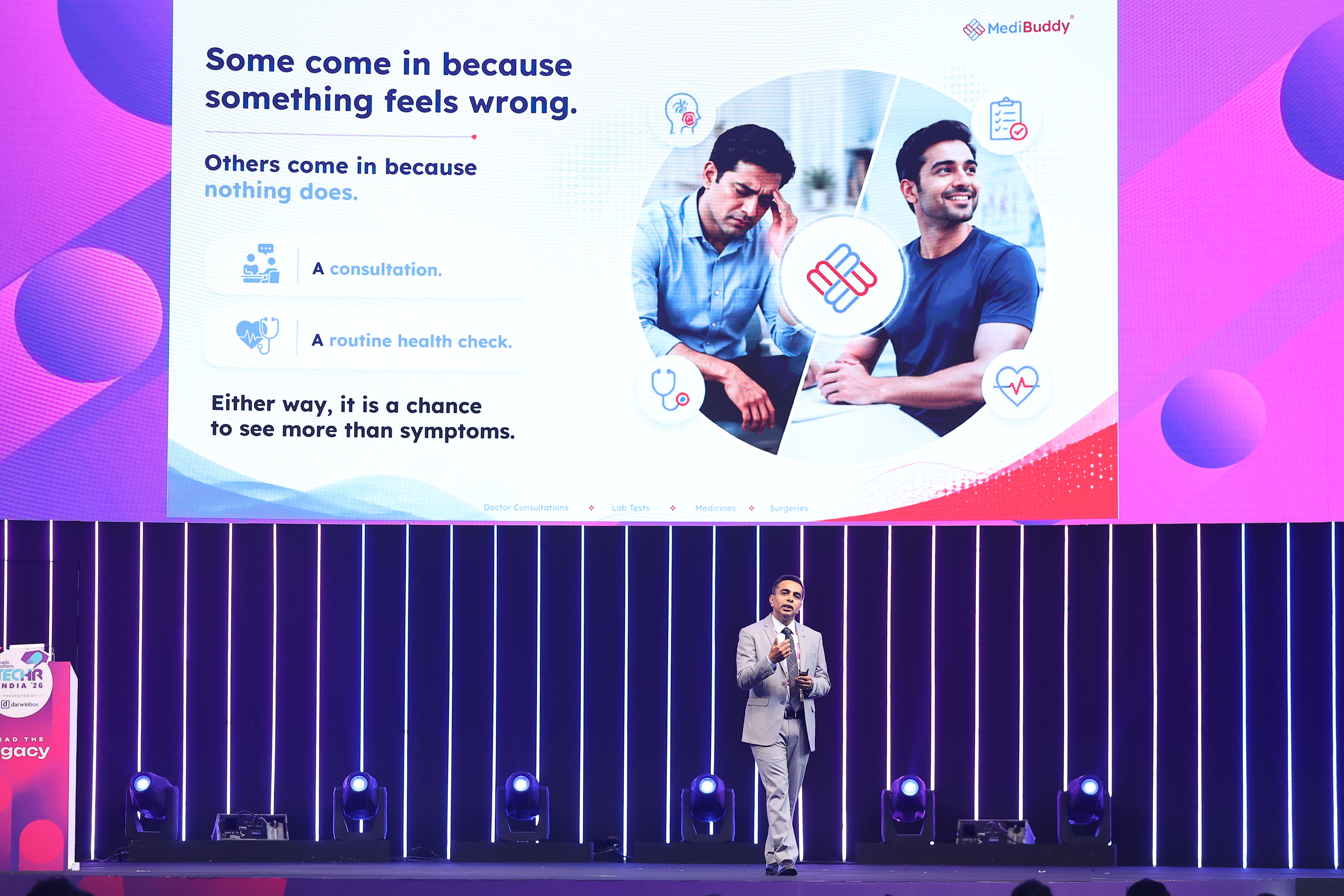
Bhatnagar also highlighted the role of seemingly minor health complaints.
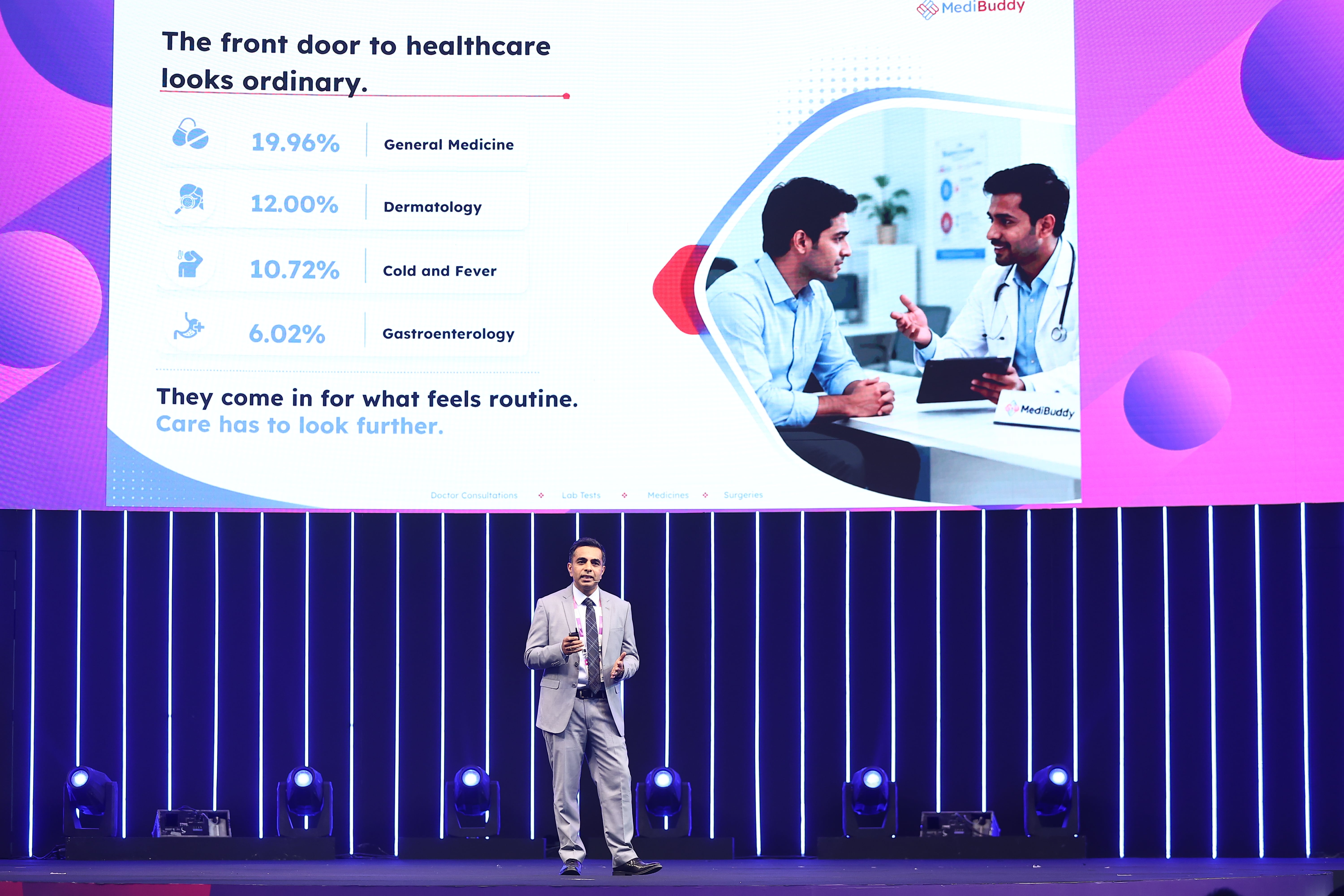
Of roughly 100,000 teleconsultations handled by MediBuddy over the past year, around half related to complaints such as colds, fevers and gastric issues.
The significance, he argued, lies not necessarily in the symptoms themselves, but in how employees interpret them.
"Is there an English term called lever ache? Is there a term called eye ache?"
The point was that employees may experience recurring discomfort without understanding whether it warrants further attention.
For employers, this places greater emphasis on health literacy alongside health access. Technology may make consultation easier, but employees still need to recognise when a consultation is necessary in the first place.
Where AI can add value
This is where AI has an increasingly practical role to play.
Bhatnagar outlined several ways technology is being incorporated into corporate healthcare, from supporting doctors during consultations to organising fragmented health information and identifying anomalies in claims.
MediBuddy's Doctor Co-Pilot, which Bhatnagar said is patented, provides doctors with a patient's previous ailment history and prompts during teleconsultations. Voice-to-text analysis across roughly seven million consultations can also flag likely ailments and suggest possible medication, with the doctor retaining the ability to override those recommendations.
Another system, Health Trends, brings health-check data from individual reports into a continuous view, allowing employees to track parameters such as thyroid levels or lipid counts over time.
The role of AI extends beyond clinical interactions. Sherlock, a 22-point fraud-detection system, examines reimbursement and outpatient claims for inconsistencies, including discrepancies in names, dates and amounts and potential document tampering.
"If somebody has tampered with the PDF file, even that gets a flag," Bhatnagar said, "because we can go to the metadata of the PDF file and decipher that somebody has done tampering."
Taken together, these applications illustrate a broader shift in corporate healthcare. AI is not confined to diagnosis. It can also support administration, information management and decision-making across the healthcare journey.
Technology still needs a human layer
Yet the scale of technology does not remove the need for people.
MediBuddy's healthcare operations include a field network of 350 phlebotomists across 35 cities, as well as care captains across more than 100 hospitals.
The organisation also operates a 24/7 control tower that provides visibility into healthcare operations, including scheduled phlebotomy routes and regional health trends.
Its daily operating scale of:
48,000 medicine orders across 19,000 pin codes
38,000 health checks and lab tests
8,000 doctor consultations
Around 40 million employees served across more than 1,000 corporates
The numbers illustrate the operational complexity of delivering healthcare at scale. They also underline why automation alone is unlikely to be sufficient.
"We cannot forget the human-in-the-loop aspect of it," Bhatnagar commented.
That distinction matters particularly in healthcare, where decisions often involve context, judgement and emotion that cannot be reduced to a data point.
The question of return on investment
For organisations, employee health is also a business issue.
Bhatnagar cited internal analysis suggesting that every rupee invested in employee wellness generates between three and six rupees in returns through productivity, reduced absenteeism, retention and presenteeism.
He also referenced the CII-MediBuddy Report 2026, based on interviews with 10,800 employees across around 1,000 corporates.
The report identifies five areas for corporate healthcare: prevention, personalisation, continuity of care, AI enablement and a human-in-the-loop approach.
The framework points towards a broader understanding of workplace health. Healthcare is not simply another employee benefit. It intersects with productivity, workforce sustainability and an organisation's ability to support employees over the longer term.
From health data to health behaviour
The evolution of workplace healthcare is therefore creating an interesting paradox.
Organisations have access to more health data than ever before. AI can help identify patterns earlier and make that information more usable.
But more information does not necessarily mean better health outcomes.
The real challenge is the distance between knowing and doing.
An employee may know their cardiac risk is elevated. They may receive a report showing an abnormal parameter. They may even have access to a doctor within minutes.
The question is whether they take the next step.
That is where the human side of workplace healthcare becomes important. Communication, trust, follow-up, empathy and health literacy can determine whether an insight remains a number on a report or becomes a change in behaviour.
As Bhatnagar noted, "Organisations that are working on these five pillars of the healthcare ecosystem will be the ones that are the most successful."
For HR leaders navigating the next phase of workplace health, the lesson may be less about choosing between AI and human intervention and more about understanding where each is needed.
AI can make healthcare smarter. The harder task is making those insights matter to the people receiving them.