Factories have become smarter. Machines can sense danger. Systems can shut down automatically. Wearables can track fatigue and exposure. Real-time dashboards can flag trouble before it becomes visible on the shop floor.
Yet workplace safety remains a stubborn challenge.
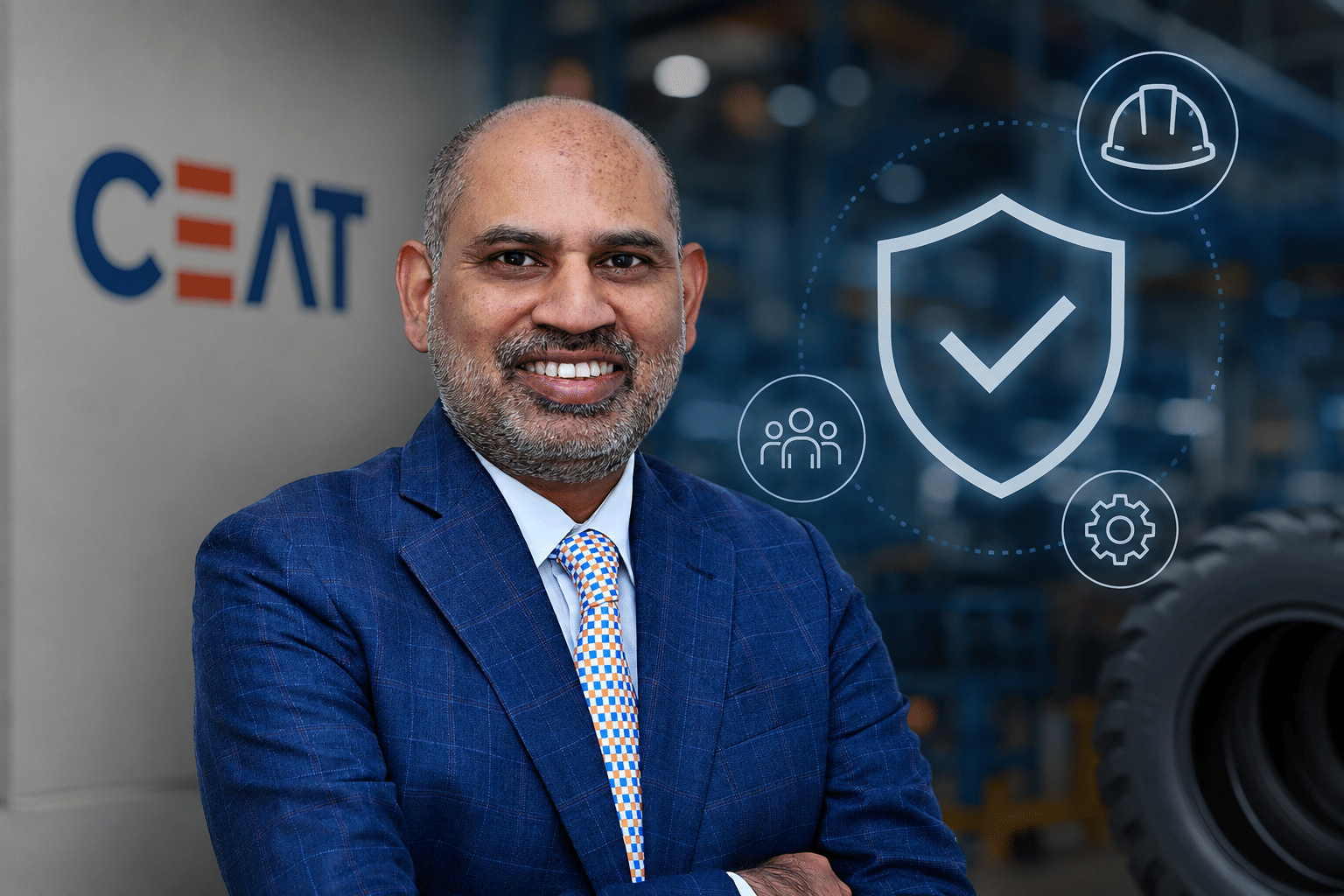
The reason, according to Rahul Gama, CHRO, CEAT Limited, sits partly outside the technology stack. A sensor can detect a risk. An alert can flash on a screen. A predictive model can spot an anomaly. But none of these can independently decide how an employee behaves under production pressure, whether a supervisor reinforces a safety rule, or whether someone reports a near-miss before it becomes an accident.
And the human challenge is not uniform either.
“Workforce observations includes risk taking behaviour amongst young employees, whereas experienced employees became complacent, hence different communication strategies required for multi-generation workforce,” Gama told People Matters.
It is a revealing distinction. The workplace safety conversation often treats employees as one workforce receiving one policy, one training module and one set of instructions. The reality on the shop floor can be far messier. A younger employee may underestimate a risk. An experienced employee may have performed the same task so often that familiarity starts diluting caution.
The same safety message, in other words, may land very differently across generations.
A smarter factory does not automatically mean a safer one
Manufacturing has no shortage of safety technology.
“In manufacturing, we have witnessed remarkable advancements in workplace safety through sensor-driven machinery, automated shutoffs, real-time monitoring systems, and wearable technologies that help track fatigue and exposure. These innovations have significantly strengthened our ability to create safer and more efficient workplaces,” Gama said.
The technological shift is also moving safety management from reacting to incidents towards anticipating them.
“Technology is helping organisations move from reactive safety management to a more predictive and proactive approach. At CEAT, we see technology as an enabler that enhances human decision-making rather than replacing it. Tools such as IoT-enabled monitoring, AI-led analytics, and real-time dashboards help identify potential risks, detect operational anomalies, and provide greater visibility across the manufacturing environment.”
But a warning on a dashboard is still only a warning.
“The technology alone does not create safer workplaces. Its value lies in how effectively people use the insights it generates. Data, alerts, and predictive indicators must translate into timely action on the ground.”
This is where the technology story meets the workforce story. Digital systems can improve visibility. They cannot guarantee action.
“At the same time, safety is not driven by technology alone. The most resilient safety cultures are built when every employee takes personal ownership of safe behaviour and decision-making. While systems and processes provide the foundation, it is the everyday choices people make that ultimately determine how effective those safeguards are.”
For employers investing heavily in automation, AI and monitoring, this creates a less comfortable question: What happens after the system spots the risk?
Young workers may take risks. Experience can create complacency
Safety communication often assumes more experience means less risk. Gama’s workforce observation complicates this assumption.
“Workforce observations includes risk taking behaviour amongst young employees, whereas experienced employees became complacent, hence different communication strategies required for multi-generation workforce.”
The risks may come from opposite directions, but employers still face the same outcome: unsafe behaviour.
For younger workers, the challenge may involve risk-taking behaviour. For experienced employees, repeated familiarity with a task may create complacency. Gama’s observation points towards a practical implication for manufacturing leaders: a single communication strategy may not address both behaviours.
This makes multigenerational workforce management a safety issue, not merely an engagement or retention issue.
It also moves safety training away from a simple question of whether employees received instructions. The more useful question becomes whether the communication addresses the behaviour employers are trying to change.
Gama places behavioural safety at the centre of this shift.
“This is why organisations today are increasingly focusing on behavioural safety, fostering a culture where employees feel empowered to speak up, report near-misses, identify potential risks, and support one another in maintaining safe work practices. Equally important is creating an environment of trust, accountability, and continuous learning, where safety is viewed as a shared responsibility rather than a compliance requirement.”
Production pressure changes the safety equation
Then comes another difficult variable: pressure.
“The perception of employee is that they are taking risks when there is production pressure, hence line managers to play important role in safety compliance and reinforcing positive behaviour amongst employees.”
This is where safety can collide with business performance.
An organisation may have detailed safety procedures. Employees may know them. Yet perceived pressure to deliver can influence behaviour on the ground.
The role of the line manager, therefore, becomes especially important. Senior leadership may set the safety vision, but supervisors encounter the everyday moments when employees decide whether to follow a process, raise a concern or take a shortcut.
“Frontline managers and supervisors play a critical role in building a strong safety culture because they interact with employees every day. They set expectations, reinforce safe behaviours, and create an environment where employees feel comfortable raising concerns.”
Gama describes the distinction simply: “While leadership defines the safety vision, supervisors bring it to life through their daily actions and conversations.”
This also raises a management question. If supervisors are measured heavily on output, what signal reaches employees when safety and production appear to compete?
“Supervisors and managers should be evaluated not only on productivity but also on how effectively they promote safe behaviours. When leaders consistently demonstrate their commitment to safety, employees are more likely to follow their example.”
Fatigue is not only a wellbeing conversation
Another risk can be quieter than an unsafe act and harder to spot than a machine fault: fatigue.
“Fatigue (Muri) is one of the key risk impacting productivity and resulting into incidents hence night shift risk assessment and implementing muri reduction projects mitigate the risk of fatigue.”
The observation places fatigue directly inside the workplace safety conversation.
In manufacturing environments, fatigue can affect both productivity and incidents. Gama points specifically to night-shift risk assessment and Muri reduction projects as approaches to mitigating this risk.
It also reinforces a broader point running through his responses. Workplace risk is not always found only in equipment, infrastructure or a visible breach of procedure. It can emerge from how work is organised, how pressure is experienced and how people behave.
Stop waiting for the accident to measure safety
For years, workplace safety has often been discussed through incident numbers. Gama points to a shift towards looking earlier in the chain.
“Workplace safety insights are; leading industries are moving beyond compliance to focus on leading indicators (reporting of unsafe acts & unsafe conditions, safety committee hit rate, near-misses reporting, hazard identification & risk assessment) rather than Lost Time Injury Frequency Rate (LTIFR) or Total Incident Frequency Rate (TIFR).”
The distinction matters.
Incident rates tell an organisation what has already happened. Leading indicators look for signals appearing before a serious incident. The areas Gama highlights include:
- Reporting of unsafe acts and unsafe conditions
- Safety committee hit rate
- Near-misses reporting
- Hazard identification and risk assessment
- A focus on high-risk activities through the ‘Permit to Work’ System
- Contractor safety management systems
- Risk assessment for pregnant women
- Engineering controls (pokayoke) instead administrative controls on equipment’s/ machineries operations
Gama also points to a wider change in how safety enters business performance.
“Industry learnings include the organisations are now focusing more on leading indicators & not lagging indicators. Safety is integrated in to business performance indicator such as PQCDSM. More focus is given on people engagement in safety management such as reporting of unsafe acts, unsafe conditions, hazard identification. Implementation of Behaviour Based Safety Management Process to prevent incidents and improving safety culture in the organisation.”
The shift changes what a “good” safety record can mean. A low incident rate remains important, but Gama’s comments place greater attention on the behaviours and warning signals appearing before an incident.
As he put it: “Organisations often focus on incident rates as a measure of success. While these outcomes matter, the everyday actions that prevent incidents offer a deeper view of safety culture.”
Safety cannot sit with one department
Another misconception, according to Gama, is organisational ownership.
“Another misconception is that safety belongs to a specific department. The most resilient safety cultures are those where accountability is shared across the organisation. From frontline employees and supervisors to business leaders, everyone has a role in identifying risks, speaking up, and looking out for one another.”
Moving beyond compliance, therefore, requires more than rewriting a policy.
“The first step is to actively involve employees in safety discussions. Frontline workers are closest to the risks and often have valuable insights. When their concerns, suggestions, and observations are heard and acted upon, they feel responsible for maintaining a safe workplace.”
Recognition also matters.
“Recognition is another important factor. Positive reinforcement encourages others to take similar actions. When people know the risks involved and the consequences of ignoring safety measures, they are more likely to follow them willingly.”
The common thread is participation. Employees are not simply recipients of safety rules. They are also the people spotting unsafe conditions, reporting near-misses and making decisions in real time.
The next safety challenge is human, digital and managerial at once
AI, IoT systems, predictive analytics and real-time monitoring will continue to expand the tools available to manufacturers. Gama expects AI capabilities to strengthen risk anticipation and decision-making.
“As AI capabilities continue to evolve, they will further strengthen our ability to anticipate risks and make more informed decisions, while keeping human responsibility and accountability at the centre of workplace safety.”
But the harder work may remain stubbornly human.
A young employee taking a risk may need a different intervention from an experienced worker becoming complacent. An employee under production pressure may respond differently from one working under normal conditions. A fatigued night-shift worker introduces another kind of risk. A frontline manager can either reinforce safe behaviour or weaken it through everyday priorities.
Technology can help employers see more. What organisations do with what they see will still matter.
“The organisations that succeed will be those that treat safety as a core value rather than just a compliance requirement. They will embed safety into leadership, decision-making, employee engagement, and everyday operations.”
For manufacturers, the future of safety may therefore involve a more complicated question than whether the latest technology has been installed.
Do different people, under different pressures and at different stages of their working lives, receive the support, leadership and communication needed to make the safer choice?