Inside the mountain of corporate soil, the “human capital” that’s often discussed carries skills, productivity, and retention as its components. However, the bedrock of this mountain lies in biological well-being and health. In India, health is a reality that cannot be avoided. Unlike strategy and structure, health doesn’t wait for permission. It travels across generations and moves through diagnostics and clinics to reshape eras. It determines who shows up, who steps back, and who carries invisible weight long before it ever reaches a policy document or performance review.
“In India, you cannot escape health. You are either destined to be a care seeker, or you’re destined to be a carer to someone else.”
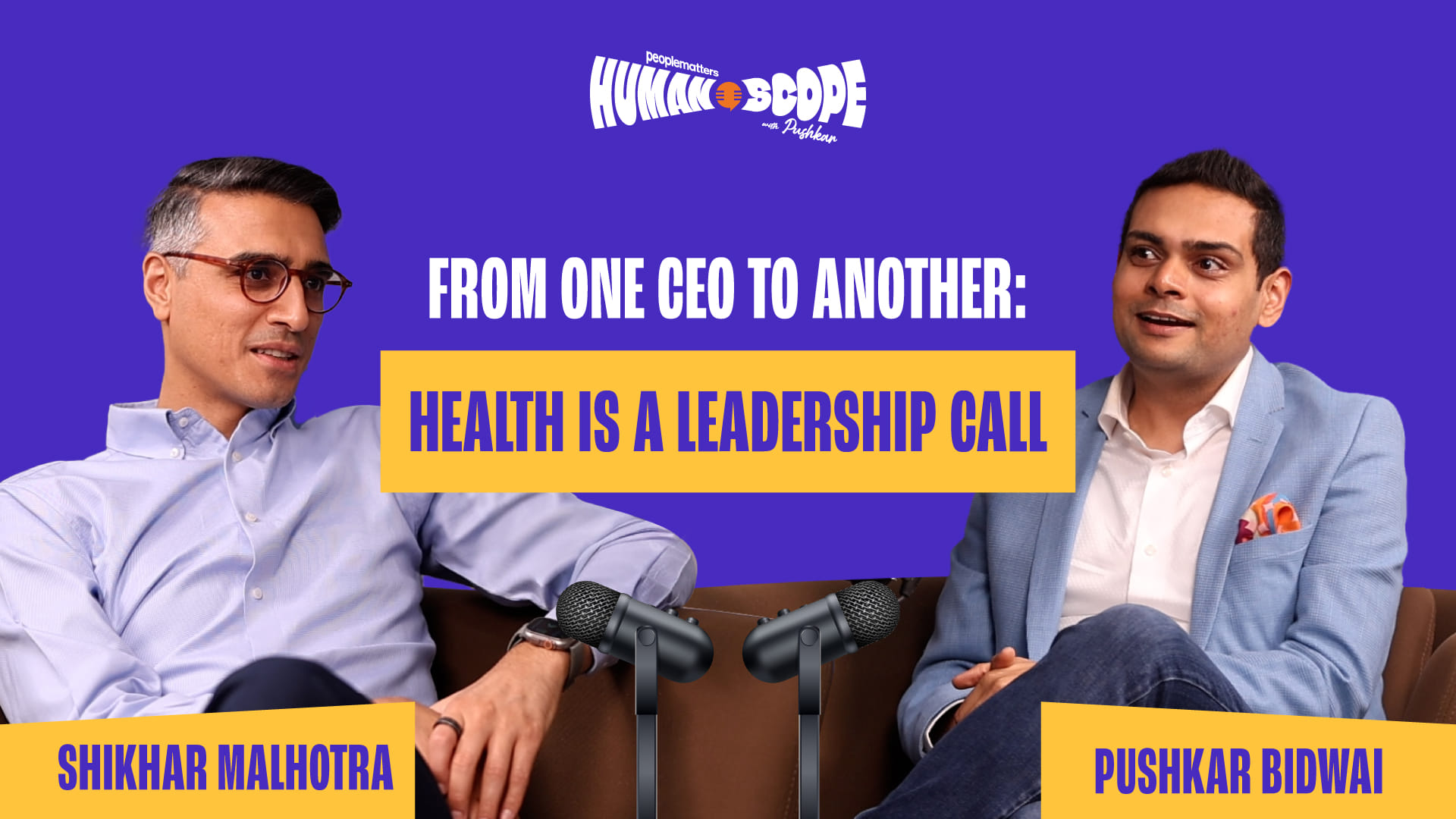
This truth formed the emotional spine of the latest episode of the People Matters Humanscope Podcast, where Pushkar Bidwai, CEO of People Matters, sat down with Shikhar Malhotra, CEO of HCL Healthcare. What followed was a discussion grappling with behaviour, belief, and time, and why wellbeing must be designed as an ecosystem rather than an intervention.
Health is personal. Care is collective.
“One can live a healthy lifestyle and still be deeply impacted by health,” Shikhar reflected, recounting his own family’s experiences. Chronic illness, caregiving, and the emotional labour that accompanies both often unfold in isolation.
That distinction, between isolation and participation, has shaped much of HCL Healthcare’s approach. Shikhar explained that in India, wellness has long been framed as a personal responsibility or an annual checkbox. What was missing was a sense of shared momentum.
“Health is a very lonely journey,” he said. Yet paradoxically, lasting health outcomes emerge when people move together.
This is where organisations come into play. Employers have a unique leverage here. While a digital tool can provide a nudge, the power lies in the numbers. Big enough to influence behaviour at scale, yet close enough to shape everyday habits. Gyms and apps can inspire individuals, but ecosystems change cultures. “Permanent change happens when a large group of people do it together,” he noted. “That’s when it stops being a programme and becomes a movement.”
The frustration beneath good intentions
For HR and wellbeing leaders, this insight lands close to home. If health were purely logical, the crisis would have resolved itself long ago. The data is abundant. The consequences are known. Yet people resist change.
“You should not overrate your ability to influence a person’s thinking just by presenting something logical,” Shikhar cautioned. “Change happens over time.”
This insight extends beyond healthcare into leadership itself. Pushkar reflected on a frustration that many HR leaders share, where they feel they are doing everything right, only to watch adoption still lag.
The answer, Shikhar suggested, lies in patience and design. “If it’s not structured, if it’s not incentivised, if it’s not tracked, if it doesn’t have data, then you’re throwing paint at the wall and hoping something sticks.”
From diagnostics to daily life
One of the clearest distinctions Shikhar made was between diagnostics and true preventive care.
“Diagnostics is a temperature check,” he said. “What happens after that is the real work.” COVID accelerated this realisation. “What COVID did for our business is what it may have taken a decade to do,” he admitted. “I’ve never had to explain the importance of preventive health after that. Now I just need to explain how to achieve it.”
Health decisions are emotional, contextual, and deeply human. People don’t change because they’re told to; they change because environments nudge them consistently. This is why he urges organisations to think beyond access and diagnostics. Screenings are temperature checks, not cures. He likens health investments to compounding interest. “You don’t see results immediately,” he said. “But over time, the returns are extraordinary.”
The organisations that succeed, globally, are those willing to commit for five or ten years, long enough for habits to take root.
Lessons from education: The green apple movement
At the educational institutions Shikhar helped build, health was woven into culture through unexpected rituals. Insurance coverage was extended not just to employees but to family members. “One teacher told me it changed her dynamic with her mother-in-law,” he recalled. “She’s now covered on my policy.”
But the real magic happened with the "Green Apple Awards". We began rewarding people for tangible health milestones, like losing weight or improving fitness markers. What started as a small incentive became a "cult-like following. People proudly display these trophies on their desks. “People created an objective for the year,” Shikhar said. “I’m going to lose eight kilos because the annual day is coming.”
This transformed an abstract idea into a movement. Hundreds of people, thousands of kilos lost collectively, and a sense of pride that outlived the programme itself. It proves that whether you are in a boardroom or a classroom, the human need for recognition and community is universal. “When it becomes a following,” Malhotra said, “it’s bigger than the initiative.”
The CEO’s role
When asked what message he would offer CEOs watching the episode, Shikhar’s answer was simple: “Lead by example.”
We often underestimate how much our teams look up to us. There is no point in telling your employees to prioritise their health if you aren't doing the same. “People don’t do as you say; they do as you do,” he said. Using the same health resources, participating in the same programmes, and investing openly in wellbeing sends a message that policies alone never can. It validates the programmes and makes wellness a shared value rather than a corporate mandate.
“People respect CEOs. Often you don’t fully appreciate that people are looking at your behaviour.”
The long view
As we look toward 2050, India’s ageing population and disease burden will peak. Wellness is
no longer a privilege; it is a call to action.
Shikhar Malhotra approaches the idea without extremes. Some outcomes, he believes, must be accepted on faith. Over time, the goal is not dependence on programmes but independence from them. “Ideally,” he said, “people outgrow the system because health becomes habitual.”
When that happens, organisations don’t just retain employees; they earn loyalty.
People may forget quarterly targets. They will remember how they felt, how they were cared for, and whether their workplace helped them become healthier humans.
For further insights from this enlightening conversation, watch the full episode on the People Matters YouTube channel.