In a world of AI acceleration, blurred boundaries, and rising talent fatigue, organisations are discovering a hard truth: performance systems are only as strong as the human systems beneath them. Wellbeing is no longer a “nice to have” or a set of scattered benefits. It is fast becoming core organisational infrastructure, shaping how work is designed, how leaders lead, and how resilience is built at scale. In this People Matters interaction, we explore how P&G India is moving beyond programs and perks to embed care directly into policy, culture, and everyday work rhythms—treating wellbeing not as a support function, but as a strategic capability that fuels sustained performance.
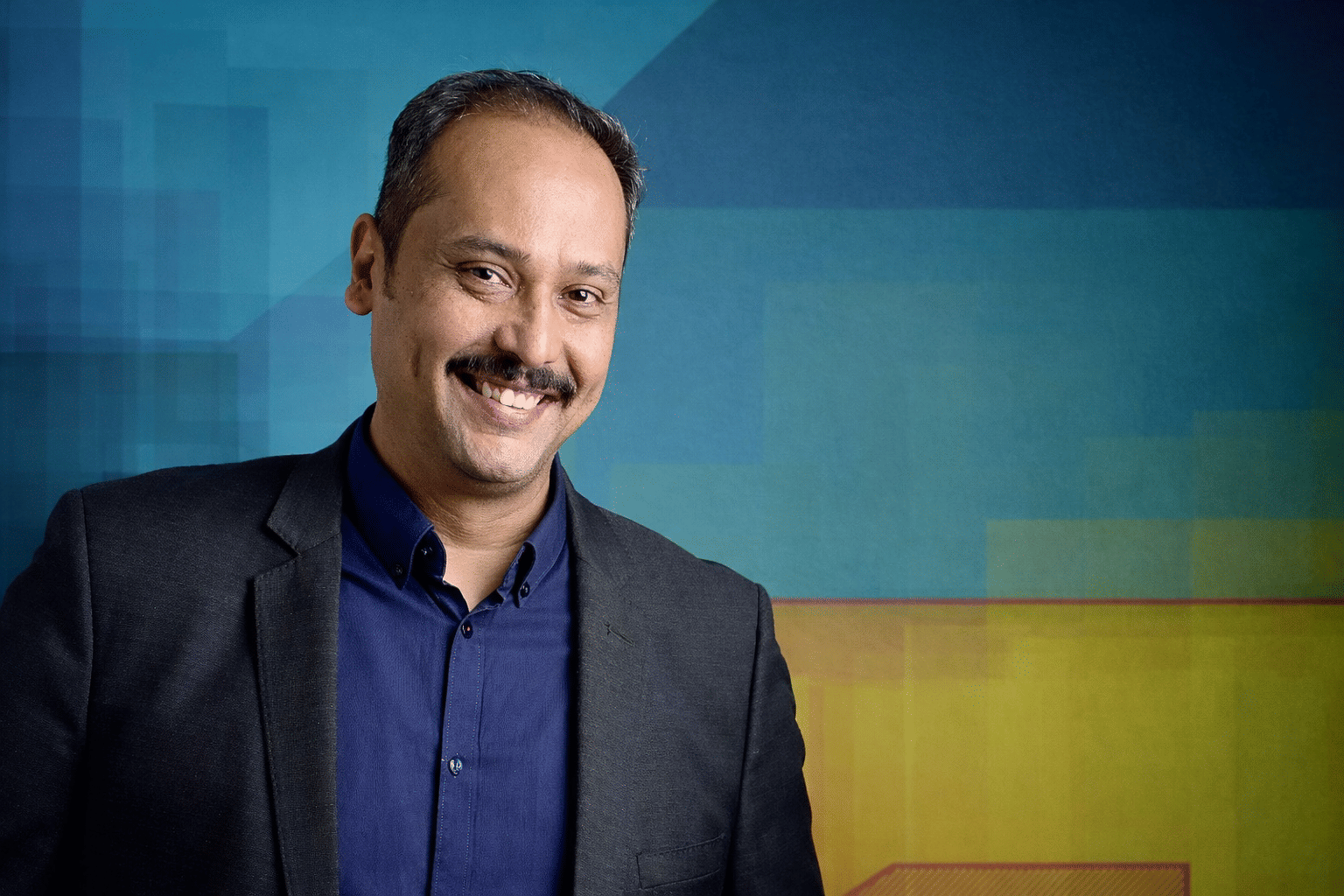
PM Srinivas, Head – HR, P&G India, brings a deeply operational lens to this shift. With experience steering people strategy in one of the world’s most people-centric organisations, he has helped translate P&G’s global philosophy of proactive, holistic wellbeing into systems that work on the ground for a 4,500+ strong workforce. His leadership sits at the intersection of culture, policy design, and manager capability, focusing on how large organisations can personalise care at scale while keeping business performance and human sustainability moving in the same direction.
1) The future of work is becoming increasingly ambiguous and AI-disrupted. From your perspective, why is wellbeing now emerging as a core capability and not just a support function within organisations?
At P&G, wellbeing isn’t a recent response—it has always been central to how we design work and shape our culture. As technology, including AI, accelerates change, we continue to see it as an enabler of human capability.
Our organisational belief is that true wellbeing is not just a program; it is deeply embedded in our culture, with our strategy. It defines how we design work, support life stages, and build capability. In practice, this means building proactive support systems, designing life-stage-secure policies, enabling inclusive benefits, and managing work rhythms to prevent burnout.
Our proactive & holistic “Be at My Best” wellbeing program is championed by our business leaders across the globe, ensuring that wellbeing remains integral across all workgroups. By prioritising the unique well-being needs of employees, we are not just supporting our 4500+-strong workforce; we are laying the foundation for sustainable organisational success.
Ultimately, wellbeing is integrated into how we lead, how teams operate, and how we deliver results— ensuring employees can bring their whole, authentic selves to work.
2) P&G has been vocal about moving beyond one-size-fits-all wellbeing programs. How is personalisation shaping your approach to employee care, and what impact have you seen from offering individualised consultations and support?
We address the need for scale and complexity by scaling personalisation through a universal policy framework with flexible utilisation. This allows us to provide consistent, comprehensive access to all, while still enabling employees to select what they need based on their unique life stage and circumstances. We manage this balance through three key strategic levers:
i. Policy-Driven Care as the Universal Framework- We embed comprehensive support into standardised, company-wide policies, which then allow for individualised utilisation.
· Universal Access, Flexible Choice- Employees are eligible to get a bouquet of options, based on their unique needs, towards different policies and enablers like Flex Care Fund. From interest subsidy on loans, personal development for self and family, childcare to home renovation or purchase of white goods, personal vacation, pet care, elderly care, adoption, medical expenses, financial advisory expenses, mental health support, and productivity enabling tools, and more - all can be availed as needed by employees annually.
· Life-Stage Security- Key life events are covered by inclusive, standardised policies. For instance, the "Lead With Care" program provides extensive support for caregivers of children with special needs, and the "Infertility Treatment" policy offers coverage for diverse and inclusive family planning needs, catering to deeply personal circumstances under a universal framework.
ii. Localised Response- We decentralise the delivery of care by empowering our people, ensuring support is immediate and localized:
·Manager Enablement- Managers are equipped with specialised toolkits and training to identify mental well-being indicators within their teams and co-create solutions with employees, ensuring that localised care is delivered empathetically and without bias.
iii. Co-Creation and Flexibility-Just like you said, our strategy operates on the principle that "one size doesn't fit all." We offer location and time flexibility, allowing employees to personalise their schedules to integrate work with personal needs, such as caregiving. This Co-Creation approach extends to professional development, where managers and employees jointly design learning journeys, ensuring that growth resources are always relevant to the individual's aspirations and life context
3) Talent fatigue is a growing concern across corporate India. How does P&G’s cultural philosophy help employees pause, recharge, and build sustained resilience, especially during periods of high change?
We recognize that the modern workplace, with its rapid shifts and constant pressure, has led to rising talent fatigue. We see this fatigue as a symptom of the uncertainty inherent in evolving work environments. Our strategy at P&G is designed to counteract this by building sustained resilience—a capability curated to be proactive, capability-focused, and culture-led. We move beyond reactive measures, establishing a structured framework for early identification, consistent support, and long- term vitality, which involves consciously shifting our focus from reactive "mental health" to proactive "mental wellbeing".
Our philosophy embeds three core pillars to reinforce psychological safety and confidence across different life stages:
·
Policy-Driven Security- We reduce
uncertainty by ensuring employees feel supported at key life moments. Our ShareTheCare inclusive parental leave policy that provides all
new parents including biological parents, domestic partners, adoptive parents,
parents in same- sex couples to 8 weeks of fully paid parental leave on top of
the 6-month maternity leave. Our "Lead With Care" policy,
offers enhanced support
for employees who are caregivers for children with disabilities, covering diagnosis, treatment,
and medical support costs. Furthermore, we extend our medical and
hospitalization cover to include partners of LGBTQ+ employees, providing a
critical safety net.
· Co-Creation and Flexibility- Through our philosophy of “Co-Creation,” managers and their direct reports work together to personalize learning, development, and work arrangements— acknowledging that evolving roles require tailored solutions. Managers of Others in P&G go through capability programs that empower them and help their employees bring their best selves to work each day.
· Structural Circuit Breakers- We build recovery into the system through initiatives such as bi-annual “Pause & Recharge” weeks and enforced “No Meeting Zones,” giving employees the uninterrupted space needed for deep work, reflection, and skill-building—critical elements for navigating new ways of working.
4) The Wellbeing Fest is positioned as a live lab for rethinking corporate wellbeing. What insights or behaviors observed at the Fest
reflect the future direction of wellbeing at P&G?
The Wellbeing Fest is an important demonstration of our proactive & holistic approach to bring to life the 4 pillars of wellbeing – physical, mental, financial and work-life, while providing end to end access to enablers, on one platform.
This year, the Wellbeing Fest was an end to end offering of all the enablers and not just a point-in- time event. The event included an annual health checkup, along with an opportunity to consult experts like MD Physicians, Life Coach, Sleep Therapist, Physiotherapist, Nutritionist, Gynaecologist, Dentists, Chartered Accountants, and more. The fest was designed as a one stop shop for employees, where they could access their year-on-year reports in the same document, along with the wellness benefits portfolio at one place. This enabled everyone to gauge the entire spectrum of their wellbeing from the reports to the enablers and solutions. In short, the Fest accelerates a key shift: from focusing on "what we offer" to focusing on "how we embed care" into the very foundation of the organization. This model reinforces that the future of workplace resilience is anchored in convenience, preventive health, and personalized care across every wellbeing dimension.
Based on the engagement we see in personal consultations, with wellbeing partners operating across various wellbeing areas – examples include an AI based wellbeing solution providers, paediatric hospital, sportswear & fitness companies, banking services, mental wellness & healthy food startups, among others. We get insight on what may be the top wellbeing needs for our employees. Throughout the year, we also bring back enablers that employees may need from time to time - such as financial wellbeing sessions or mental wellbeing touchpoints with leaders, and so on. By designing our wellbeing fest across the four pillars of resilience—physical, mental, emotional, and financial—the effort is to address beyond the usual focus on fitness or nutrition, by offering a comprehensive blueprint for managing employee wellbeing in today’s environment of rising stress, hybrid work, and lifestyle diseases.
The overwhelming responses we receive year on year to the Wellbeing Fest, only reaffirms that wellbeing must be immersive, leadership-backed, and integrated into everyday routines, not limited to annual checks or isolated sessions. The enablers act as subtle nudges, empowering employees to take charge of their wellbeing. With the “Be at My Best” program, we saw a significant increase in employees turning up for the annual health checks, a change that we have sustained across last 3 years.
P&G’s approach reinforces that the future of resilience at the workplace will be anchored in personalised care, preventive health and convenience, ensuring employees feel supported across every wellbeing dimension.
5) Building a culture of CARE is often easier said than done. What practical actions or policy decisions ensure that wellbeing is truly embedded in daily work life at P&G?
The policies and culture at P&G are co-created by keeping the employees at the center. Our wellbeing approach is similar to how we design programs for consumers – starting from insight, to designing and co-creating and then constantly listening, learning, improving.
At P&G, wellbeing is truly embedded into our culture, and as an organisation we stand for Care and Wellbeing via Co-creation. We look at it holistically across the 4 pillars - mental, physical, financial, and work–life—and focus on pro-active wellbeing that is personalised and inclusive. Our strategy embeds wellbeing via our policies, making care a permanent part of our culture:
· Mental Wellbeing - We have evolved our focus from reactive “mental health” to proactive “mental wellbeing”. The first line of response is our task force of Certified Mental Health First Aiders (MHFA), who are P&G employees trained to identify signs of distress and initiate supportive conversations.
We also have a robust Employee Assistance Program, in partnership with Manah, which offers a comprehensive suite of mental wellbeing enablers. Manah services are accessible 24x7 to our employees as well as their families and provide flexibility to users on choosing counsellors of their choice as well as preference on mode of communication, language, etc.
This helps make mental wellbeing a mainstream conversation.
· Physical Wellbeing- Our physical wellness programs focus on prevention and proactive care. These include access to onsite doctors, life-coaches and sleep therapists, as well as offering a Flexible care Fund that covers fitness and physiotherapy reimbursements. We also have the in-office annual check- ups, round the clock access to a general physician, gym and other physical fitness enablers across offices and manufacturing plants, & other enablers like sleeping pods or massage chairs. We also have many sports facilities available across our manufacturing sites – from pickleball to cricket, basketball and more. These enablers act as subtle nudges, empowering employees to take charge of their wellbeing.
· Financial Wellbeing and Inclusion - We provide financial security during critical life stages through inclusive policies. A key example is our "Lead With Care" policy, which offers enhanced support for employees who are caregivers for children with disabilities, covering diagnosis, treatment, and medical support costs. Furthermore, we extend our medical and hospitalization cover to include partners of LGBTQ+ employees, providing a critical safety net.
· Work-Life Wellbeing - To combat stress in a hybrid work environment, we implement structural circuit breakers at an organizational level. These include bi-annual "Pause & Recharge" weeks to allow for collective destressing and decluttering, and an enforcement of "No Meeting Zones" to enable focused, uninterrupted work. This is supported by offering location and time flexibility, which empowers employees to personalize their schedules to balance personal needs, such as caregiving, with professional responsibilities.
All our benefits and enablers are flexible and can be customised to suit unique needs. Wellbeing benefits are a part of the total rewards philosophy – serving as an annual reminder of the holistic bouquet of benefits, which managers can communicate to their direct reports. We ensure these are then communicated consistently across different forums like the Townhalls, business forums, Quarterly Benefits Roadshows, and so on. By design, we have frequent wellbeing check-ins between managers & direct reports, with personal wellbeing priorities are called out by the direct reports and the manager works on a plan to support them.
6) Many organisations struggle to connect wellbeing investments with business outcomes. How do you measure the impact of holistic wellbeing on performance, engagement, and organisational culture?
The impact of “Be at My Best” is reflected in our retention, along with ongoing commitment to wellness. In P&G, there is a popular saying – “Happy People deliver better business”, this translates to mean – when people are healthy, they are happy. When they are happy, they’re able to bring their whole selves to work and focus constructively and productively on the task in front of them – improving their impact on the business.
Ultimately, wellbeing is integrated into how we lead, how teams operate, and how we deliver results— ensuring employees can bring their whole, authentic selves to work.
Wellbeing benefits are a part of the total rewards philosophy – serving as an annual reminder of the holistic bouquet of benefits, which managers can communicate to their direct reports. We embed wellbeing into the system through leadership visibility, manager practices, life-stage policies, and work design. This keeps wellbeing part of daily life, rather than an occasional perk.
Our proactive & holistic “Be at My Best” wellbeing program is championed by our business leaders
across the globe, ensuring that wellbeing remains integral across all workgroups. Our focus on
prevention, continuous access, and employee-led utilisation ensures long-term adoption and relevance. With the “Be at My Best” program, we saw a significant increase in employees turning up for the annual health checks, a change that we have sustained across last 3 years.
Another key measure of the success of our wellbeing initiatives is P&G’s annual employee engagement survey, which has increased in scores related to wellbeing over the past three years. This improvement directly correlates with our ongoing commitment to wellness, including enhanced communication and support systems.
7) Looking ahead, what must HR and business leaders in India rethink or reinvent to help their workforce thrive in an increasingly uncertain, AI-driven world?
In an AI-accelerated world, the real challenge for leaders is not reinvention of intent, but reinvention of pace and discipline. Technology will continue to evolve, but the fundamentals of human performance—security, trust, flexibility, and care—remain unchanged. What leaders must rethink is how deliberately and consistently these fundamentals are built into everyday work.
This shift begins with leadership behaviour. Wellbeing cannot live in policy documents alone; it has to be visible in how leaders show up. When senior leaders actively demonstrate that wellbeing and performance reinforce each other, it resets expectations across the organisation. It makes it clear that sustained success is not about endurance at all costs, but about enabling people to perform at their best over time.
One of the most powerful levers is authentic role-modelling. Regular check-ins that extend beyond delivery milestones to include conversations around energy, workload, and recovery send a strong signal that balance is not a personal trade-off, but a shared responsibility. In our experience, this openness builds trust and gives employees permission to prioritise their own sustainability. As senior leaders, our role is not limited to approving initiatives, rather, modelling the behaviour we want the organisation to embrace. We make it clear through our actions that wellbeing and high-performance support each other, and that caring for oneself is integral to sustained success.
One of the strongest ways we “walk the talk” is by modelling work–life integration in a genuine and visible manner. Senior leaders, including myself, ensure we do regular check ins with our teams, with a focus on wellbeing. These check ins are dedicated to understanding what’s working for each person and where there is scope for improvement.
I have availed flexibility provisions to help balance my personal and professional needs. I remember there have been instances wherein a personal commitment had clashed with an important meeting at work. During such instances, I have availed Flex @work, enabling flexible work timings, to ensure I am able to attend to both, without having to compromise. This is something I personally believe in and always encourage my teams to practice too! This openness normalises conversations around balance and demonstrates that personal wellbeing is not a compromise, but a priority. Normalising discussions around Mental Health and conversations around availing therapy are regular corridor discussions at P&G. Our leadership ethos of “Enrol, Engage, Empower” further ensures our approach remains people-centric and rooted in empathy.
Our CEO often shares about his progress in his passion area – running, again normalising how physical fitness is a priority. When it comes to structured circuit breakers, whether it is adhering to “Pause & Recharge” weeks or respecting “No Meeting Zones,” we signal that rest and focus time are essential and non-negotiable. By upholding these commitments, we empower employees to do the same without hesitation or guilt.
Ultimately, organisations that will thrive through uncertainty are those that treat wellbeing as core infrastructure, not a programme. When leaders visibly invest in policy-led, proactive care and consistently stand by it, they send a clear message: care is not a temporary response to change, but a long-term commitment to building resilient people and resilient performance.