








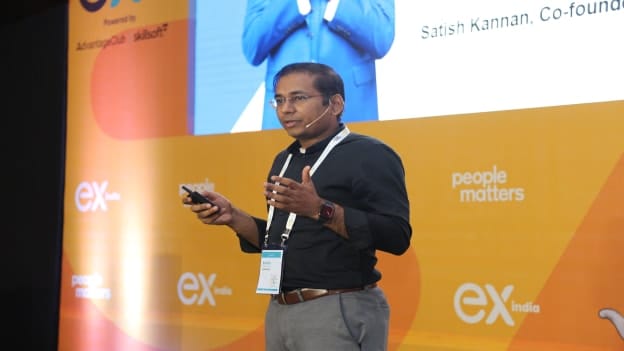
The role of wellness programs has seen a significant rise in their scope to address employee well-being needs. As the world shifts to more flexible nature of work, the impact of the pandemic has seen employees prioritize well-being over other factors. As a result, countries across the globe witnessed the Great Reshuffle, where employees left companies to look for better, more caring employers. This proved to be a vital lesson for companies who still face talent competition today and require a way to build their talent brand.
The great differentiator
What provides competitive advantages today has considerably changed over the decades. While significant capital investments In the early half of the 21st century could directly yield large market shares, today we see tech companies who perform by simply investing in stable internet connections and top-performing computer systems. "What truly helps companies capture a large market share today are great people," notes Satish Kannan, Co-founder, and CEO at MediBuddy. "The greatest transformation that we have seen in the past few decades has been the focus on hiring and retaining the best talent."
Speaking at the People Matters EX Conference 2022, Satish explained how today there is a strong correlation between a large market cap and great talent. "And to hire, retain, and motivate top talent, three top motivators remain compensation, work culture, and benefits," he added. While compensation and work culture often remain similar across companies in the same industry, the shift to hybrid work and the effects of the pandemic have put the focus on employers. "With flexible work on the rise," Satish noted, "employees want to know that companies care for them. Companies that can exhibit this change prove to have greeted productivity."
In other words, addressing the well-being concerns of their employees can help companies differentiate themselves from the rest. In addition, a multi-generational workforce facing the impact of Covid has meant that today everyone prioritizes wellness. "Across the demography," noted Satish, "there has been a rise of concern in personal health. In addition to lifestyle diseases accelerating in the past few years, other factors such as emotional health have also become essential to address."
Companies that can respond to this can attract and retain their best performers. In addition, those that genuinely care and offer the proper well-being solutions help differentiate themselves from their competitors.
Pillars of building the right wellness program
To build a robust wellness program that helps improve employee well-being holistically, Satish suggested companies look at developing programs based on the following key pillars:
- Address all elements of wellness: In the hybrid and flexible world of work, it is imperative to create holistic wellness programs and address all the concerns that employees have regarding their health. "It is important for companies to meet all employee expectations to create the right impact," said Satish.
- Personalize: To further ensure companies are creating the right wellness programs that are impactful and effective, Satish emphasized the point of personalization. "Somebody might want to focus on emotional health while others prioritize consultations and OPD benefits. To cater to all, companies need to look at personalizing their programs to individual needs," he noted. As a result, in addition to proving effective, they also save unnecessary expenditures.
- Communication: Communication is key to the success of wellness programs. "Companies need to communicate the work they are putting in to create impactful wellness programs," noted Satish. Companies take the proper steps toward a healthy organization by showcasing the work that they are doing and increasing awareness of their wellness offerings.
- Sustainable long-term goals: "Wellness programs need to have long-term goals," cautioned Satish. Unlike other HR interventions, wellness is a long journey. For many, it takes a few quarters to note the change that wellness programs are creating in their companies. Thus having long-term goals and creating roadmaps that ensure sustainable interventions are critical to a robust wellness program.
- Involving leaders: Leaders play a crucial role in setting the tone within the company. Even the best-designed wellness programs might suffer if leaders don't voice their opinions about prioritizing self-care and motivate employees to leverage their company's wellness program to take better care of themselves.
- Employee experience: The final key pillar in creating robust wellness programs is to ensure employee experience is central to how companies design and execute their different wellness offerings. Empowering employees to pick and choose relevant well-being offerings and providing them with an overall positive experience remains goes a long way in raising the adoption of wellness programs
While these six pillars are crucial to building a robust and holistic wellness program, Satish noted that technology remains a key enabler across all these pillars. "With in-person health and well-being benefits going down, companies need to have the right technology to build impactful wellness programs," he said.