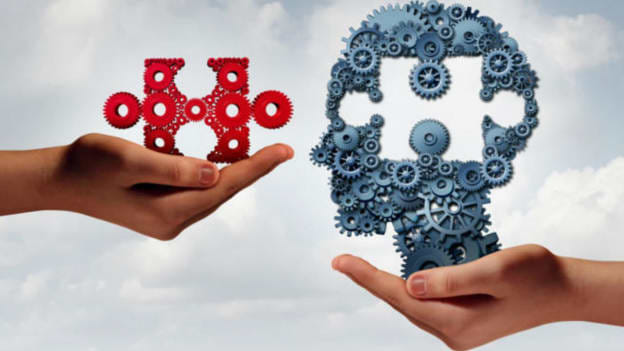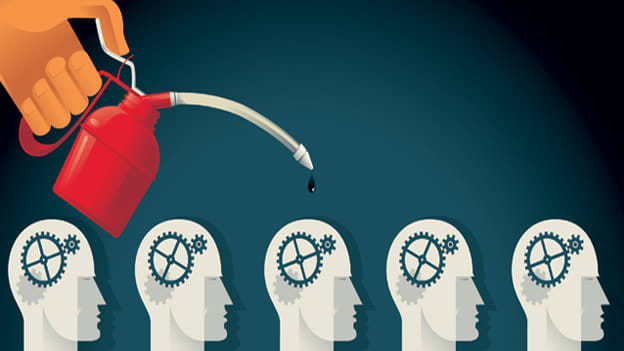
We are witnessing dynamic and unprecedented changes in the world of learning. The half-life of any form of skill is shrinking at a very rapid pace. New models of businesses, the rise of a large number of startups, new career options, endless development in science and technology are fueling skill gaps. This situation is coupled with longer life expectancies, higher literacy rate, longer career span combined with frequent job changes are making this whole issue of skill gap dynamic and burning issue across and therefore requires significantly innovative approaches to building skills.
The World Economic Forum in their Future of Job 2020 report has highlighted that 85 million jobs are likely to be displaced by 2025 due to changing skills and at the same time 97 million new jobs will be created which may require different or advanced skills. It added that 50% of all existing employees may need some form of reskilling by mid of this decade.
A growing economy like India coupled with a huge population that is young and has entered the employment age presents a different complexity. While a youthful population has its advantage; if the skill gap is not constantly bridged the un-employability issue will continue to balloon. The International Labour Organisation (ILO) has predicted that India might face about 29 million skill-deficit by 2030.
Almost all reports and on-ground experience point to the stark reality of rapid change in requirements of skill and thus commensurate need to stay relevant in possibly all sectors and economies of the world. The skill gap is a result of a mismatch between the demand and supply sides of the employment market and a perpetual disconnect between existing skills needed and capabilities present in the workforce at any given point in time. Shortage or lack of skills retard the growth and progress of organisations and take away the competitive positioning of an organization.
Post pandemic, the world is witnessing more rapid and unpredictable changes. Technology has sprinted in all sectors over the last 1.5 years. The ways of working have changed, and most of them will linger even in future to herald a new way of working which was not present till a couple of years back. This has compounded the issue of skill gap and unemployability in a further different way.
In India, the skill gap is largely fueled by few factors such as:
- The inability of the education system to teach hard and soft skills necessary to succeed in today’s job market. While basic concepts are certainly taught, the skills required to get employment are not matching up with the rapid changes in the employment market. India Skills Report (ISR) 2021 reported that only 45.9% of graduates are employable compared to 47.38% in 2019. MCA graduates are the least in terms of employability as only 22.42% of them are employable followed by polytechnic at 25.02 %. Only BE/B.Tech and MBAs have a respectable score of employability in the range of approx. 46%, still not reaching the halfway mark.
- Quality education is limited and has not reached the entire length and breadth of our country the way it should have reached. While the number of educational institutions may have mushroomed but the commensurate quality is certainly lacking to bridge this gap.
- The majority of organisations are in small scale or medium scale sectors and their ability to augment the skills of the workforce is certainly lacking. Only big corporations and good government institutions are only able to carry the mandate of relevant skill-building programmes.
Reports by industry bodies, consulting firms and large forums have pointed out that there is an increasing trend of newer skills that cut across careers, sectors and industries. The NASSCOM Sector Skill Council had pointed out that 55 new job roles and 155 new-age skills will be relevant for the future - big data, analytics, data science, robotic process automation, cybersecurity, internet of things (IoT), machine learning and artificial intelligence feature prominently among them. Interestingly, these skills are not just limited to the IT sector but given their wide-scale application, most employees need to have some basic level of understanding in their respective fields across different types of roles.
Surveys also point out that technical knowledge and dexterity with technology are becoming baseline skills for all types of employment. Adding to this, there is the requirement of skills such as critical thinking, problem-solving and innovation which will grow in prominence. Other newly emerging skills are that of self-management such as resilience, stress tolerance, active learning, flexibility, leadership and social influence.
The way forward
In my view, organisations will continue to face the dual issue of identifying the right skill gaps and reskilling and this challenge will be perpetual. While recruitment addresses the skills gap to some extent, it is never a perfect solution as the skill shortage continues in the market and several new-age jobs find it difficult to source and match the required skills across sectors. To be ahead of the curve, organisations and individuals need to take stock of their skill inventory and take appropriate action on an ongoing basis to stay relevant.
Learners must understand that they need to take the plunge and equip themselves to learn in self-paced environments. Just being dependent on organisations will be a risky proposition.
- Blending learning and work: Learning programs should be designed in such a way that they integrate the offerings with the daily work environment. Anytime, anywhere learning along with mobile-based micro-courses will be the norm of the day as this cuts down the time and information overload and helps a learner assimilate learning at their choice of time and when they have the mental space to absorb.
- Adoption of cutting edge technology in learning: This space is getting flooded with offerings. However, what will be important is to choose the right option which works and blends with work. With cloud-connected mobile and wearable devices, augmented reality devices, technology-backed learning modules including smart classes, podcasts, gamification, story-telling, live online or virtual lectures, recorded videos, hybrid learning, and bespoke focused training programs would help in disseminating quality education amongst the learners in small doses and at their pace. Learning experience platforms (LXPs), which is the latest and effective trend in the area of learning technology, must be deployed for better engagement with learners.
- Result-oriented learning approach: Ongoing and observable results emanating from the learning efforts will motivate a learner to put in more effort in reskilling and upskilling.
- Linking career and incentive to skilling: Though there is a heavy investment in training by most organisations, they are not linking performance incentives or career growth to their learning programs. Organisations must consider linking these to encourage employees to learn and also foster a learning culture.
There is a role to be played by the central and state government and several skilling forums which have emerged. The Ministry of Skills Development and Entrepreneurship launched its Skill India Programme to align three major aspects: Academics, industry and job aspirants. Probably investments in these would pay back in the second half of this decade. - The mindset of trainers and faculty needs overhauling: Very often the community which is entrusted with training and education are themselves lagging to keep abreast of changing trends. Deployment of the right faculty and pedagogy is the need of the hour and must be constantly evaluated for its effectiveness or else the investment would go to waste.
- Learners proactiveness: Lastly it is not just the above steps that can guarantee the result. While opportunities and facilities might be made available, individuals need to show eagerness to learn to stay relevant. One must remind themselves of the old proverb - ‘you can lead a horse to water but you can't make him drink'.
Technologies, processes and systems are changing at such a fast pace that no one can afford to rest on their past accomplishments. What has worked a few months back may not work anymore. Traditional jobs and roles are under threat; redundancies are common. An accelerated level of automation will replace almost all cognitive and routine manual tasks. Given this scenario unfolding before us, investing in continuous learning will equip organisations and individuals to stay relevant and survive.