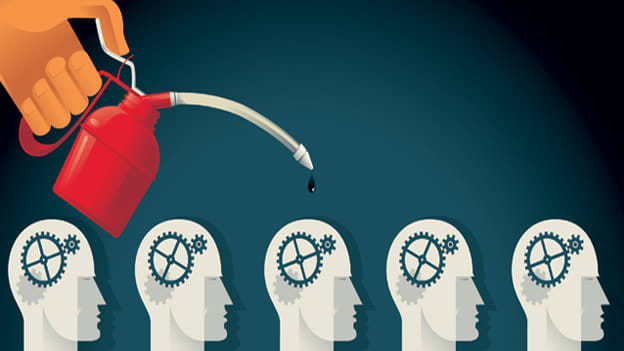
With millions of jobs lost, rise of automation, emergence of artificial intelligence and white-collar workers confined to their homes, COVID-19 has brought in the greatest workplace transformations of our lifetime and appears to have ushered in a new normal in the global workplace. But several of these trends stem from developments that had already set into motion long before the pandemic struck. New technological developments and changing demographics have been upending labour markets, driving inequality, making jobs increasingly precarious while deepening economic and financial insecurity. The new normal, in fact, isn’t really new - a deadly unwelcome virus has simply accelerated the pace of change, with devastating consequences.
Automation had started gaining ground well before the pandemic hit the world; for several decades now, new technology has triggered structural employment shifts —first from farms to factories and then from factories to services and in some cases (like India), from farm to services. Even more companies will automate as the pandemic exacerbates the vulnerabilities of a human workforce and geographically dispersed global supply chains. Developing economies must ready themselves for a triple shock: increasing automation substituting domestic labour, an emerging trend of foreign companies reshoring due to machine driven lower cost of production and slowing exports as demand remains low. The pandemic, on the other hand, is fuelling the platform economy - from e-commerce and online payments to the gig economy - consumers are increasingly using them to connect with goods and services from the safety of their smartphones. However, the gig economy’s low barriers to entry present new employment opportunities and new hazards - not only will these workers frequently find themselves underemployed and underpaid, they will likely face downward pressure on working conditions. COVID-19 is also accelerating trends in remote online learning and remote work. But these developments shall further widen the gap between those who do and who don’t have the skills and the resources to participate in a digitally driven world.
Over the next 5 years, some jobs will see a rapid rise – roles such as digital marketing and strategy, data analysts and scientists, AI and ML specialists, big data specialists, digital transformations specialists, information security specialists, database and network professionals, strategy advisors, fintech engineers will be in big demand. However, several job roles like data entry clerks, accounting and payroll, assembly workers, operations managers, auditors, relationship managers, bank tellers, training and development specialists, postal clerks, mechanics and machine repairs and store keeping officers will see a rapid decline.
The combined might of automation and the pandemic will make some jobs disappear as new ones show up on the horizon. We can see five clear trends emerging in the new world of work:
- As per a report by the World Economic Forum, almost 85 Mn jobs shall be displaced by automation in the next 5 years. The pandemic is accelerating several trends including the advancement of technology – this restructuring of the labour market dynamics will surely enhance productivity for many but will disrupt the livelihood of several others. Driven by lower cost of output and faster delivery of goods and services, several employers are replacing their workers with machines. Automation has clearly destroyed some jobs as robots clean office floors, chat-bots replace customer service agents and toll-booth operators vanish into oblivion.
- Yet digital platforms have also added new and different jobs to the economy—jobs in software programming, enterprise management, digital healthcare, social media management, content writing, genetics and online education have all seen an uptick. The emerging professions reflect a greater demand for green economy jobs, functions where human interaction is important, roles related to data and the AI economy, engineering, cloud computing, cyber-security and product development.
- Flexibility, creativity, analytical thinking, problem solving and team-work are growing in importance in the eyes of the employer. Multi-skilled candidates with better self-management skills, demonstrating higher efficiency, resilience and tolerance will be in demand.
- Organizations are investing in retraining and reskilling their employees; this is the only sustainable competitive advantage that they can build in these uncertain times. However, the government will need to play a greater role in skill building of the under privileged and the disadvantaged and displaced workers to create a safety net for them.
- Remote working is not going away anytime soon as employers are looking at digitalising their work processes to match up to this growing trend. In spite of the reservations of several other employers about the negative impact on productivity, most organizations are gearing up to help their employees adapt to this new normal.
The challenges facing today’s workforce are quite daunting; however for well prepared, tomorrow may offer a better place as efficiency and resilience will both become important considerations. Employment is shifting from a lifetime contract to a taxi-cab relationship – short, passionate but finite! Employees will need to take responsibility for making their own lives relevant and enriching in the new economy and will need to develop not only adjacent skills but also diametrically opposite skills. They need to take advantage of the enabling ecosystem that the government and the employers they work for are providing in terms of learning opportunities. Dinosaurs did not die because the world changed; they died because they refused to change. It’s time to take control; it’s time for change!