








She woke up with a sense of dread. The stress of logging in to work was weighing her down. She looked around her. The thought of the EMIs, the school payments for her children forced her to get up and moving. Her heart pounded hard as she visualised her day. Her body contracted with frustration at the thought of the pile of work and acrimonious debates. Joy had been replaced by worry, a nagging tension band of a headache and perpetual creases on her forehead. She headed to the medicine cabinet and popped a couple of pills. Her nerves got calmer and she said to herself, “Move! Let’s get it done and over with!”
Work-related stress ranks high among people and is the biggest cause of absence from work. Almost 15.4 million man-days are lost due to it and inadvertently, affects the productivity of an organization. With mobile phones becoming our mobile office and the recent WFH culture, you are ‘on-call’ and ‘available’ 24x7. There is no possibility of disconnection as the lines between work and leisure are blurring. People are working on 6-7 things with several windows open at the same time. Add to this the ‘house work’ and numerous Zoom meetings. My guess is, it has only gotten worse and calls for immediate redressal.
Work has a way of affecting your mind, body and spirit, leading to stress caused by any or one of the following:
Economic downturn. Unclear expectations. Long hours. Over-demanding supervisors/managers. High pressure working environment. Work overload. Perceptions of an unjust or insensitive environment. Layoffs, mergers or big changes.
Stress is not a bad thing. However, when it gets persistent, excessive and comes in the way of your daily function, it is an alarm bell. It can affect your overall mental health, causing anxiety.
Stress and anxiety highly affect your workplace performance, relationship with fellow workers and superiors as well as productivity. This in turn permeates into your personal life with compromised family relationships, lack of sleep, unhealthy eating habits and dependency on substances and even psychological and physiological disorders.
As an employer, how can you help to avoid such situations and prevent productivity loss?
- Train leaders to set expectations by defining the roles and responsibilities of each member.
- Inspire them with a purpose not a job. People know what is to be done, the why makes it all the more meaningful.
- Align job function with employee capabilities
- Provide a career growth plan. In the absence of direction, anxiety and resentment may quell their motivation.
- Promote a culture of transparency and communication. With WFH, it’s important that the lines of communication be continuous. Use check-ins, town hall meetings to share information with parity
- Create ‘water cooler’ moments to boost positive emotions.
- Place a hard stop on work hours – no calls or messages after 8pm and no meetings on weekends unless the earth is collapsing.
- Create an environment that respects work-life balance, diarise meetings and seek permission for unexpected calls/meetings, especially in the wake of the pandemic.
- As an employee, how can you help to avoid getting stressed?
- Stress can never be eliminated, completely however steps can be taken to reduce it as much as possible.
- Prioritise. You don’t have to undertake 5 things at a time. Select what’s important and urgent. Use the Eisenhower Matrix, it’s a useful time-management tool.
- Perfection is a myth so go easy on yourself. Focus on what is within your control.
- Acknowledge and celebrate your victories, no matter how small.
- Do not take things, personally. In case you feel slighted, discuss issues face-to-face.
- Seek feedback. Give feedback. And, be honest and gracious about it.
- Leverage the power of hydration. Consume 2-3 litres of water. It’s encourages an alert brain and improves creative thinking. Avoid Caffeine and alcohol.
- Mind your posture. Switch to a standing desk and have walking meetings. Move around while making or receiving calls. Clock 10000 steps on your fitness band.
- Stop eating your emotions. Stress eating makes you worry more. Change the trigger, consume water instead.
- Use the Creative Power of 5 – use 5 mins to draw, listen to a peppy track, watch a cat video, speak to a friend or colleague who is motivating or make tea.
- Speak slow and mindfully. Stop any ‘victim’ talk, it adds more fuel to your stress.
- Socialise at work. Have lunch, join a fitness class over zoom, share culinary tales or catch up for an informal evening. Make sure to avoid gossiping and bitching.
- Turn off all screens at one-hour intervals and walk towards a window and soak in the day.
- Sleep well and on time. Use a sleep app to monitor your rest. Take cat naps in between.
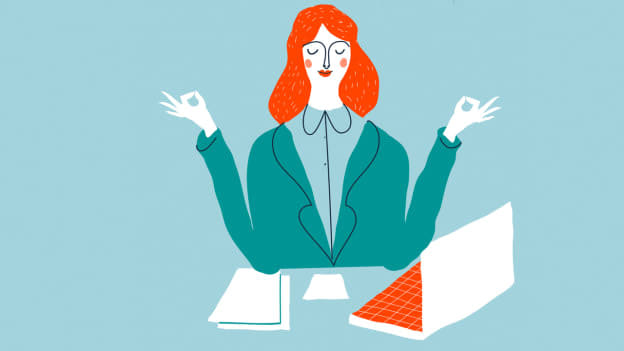
- Use meditative techniques to calm your mind. Doodle, cook, garden, try origami, dance or read. Watch the needle move on the clock and just breathe in and out. Empty your mind and stay in the moment.
My favourite Stress-buster exercise is:
Stand against the wall. Slide down and sit as though you were in a chair. Be in that position for 30secs without looking down. Keep your spine against the wall. Focus on your breath. Breathe in, deeply through your nose, breathe out, through your mouth. Plant your feet on the floor and visualise the stress flowing out of your body. Slide and stand up. Shake your arms and legs. Jump up and down, 3 times and get to work.
This technique allows me to reframe my thoughts and change my state, physiologically as well.
Under normal circumstances, you would be able to see the tell-tale signs of stress. However, with remote working, you are relegated to a small window and most often the window is shut. So, take care of your well-being and those of your co-workers for you spend the most time at work. Be mindful of your triggers and, importantly choose to be around people who lift you up instead of those who kill your vibe. If there’s something that you do that hasn’t been listed, I’d love to hear from you.