








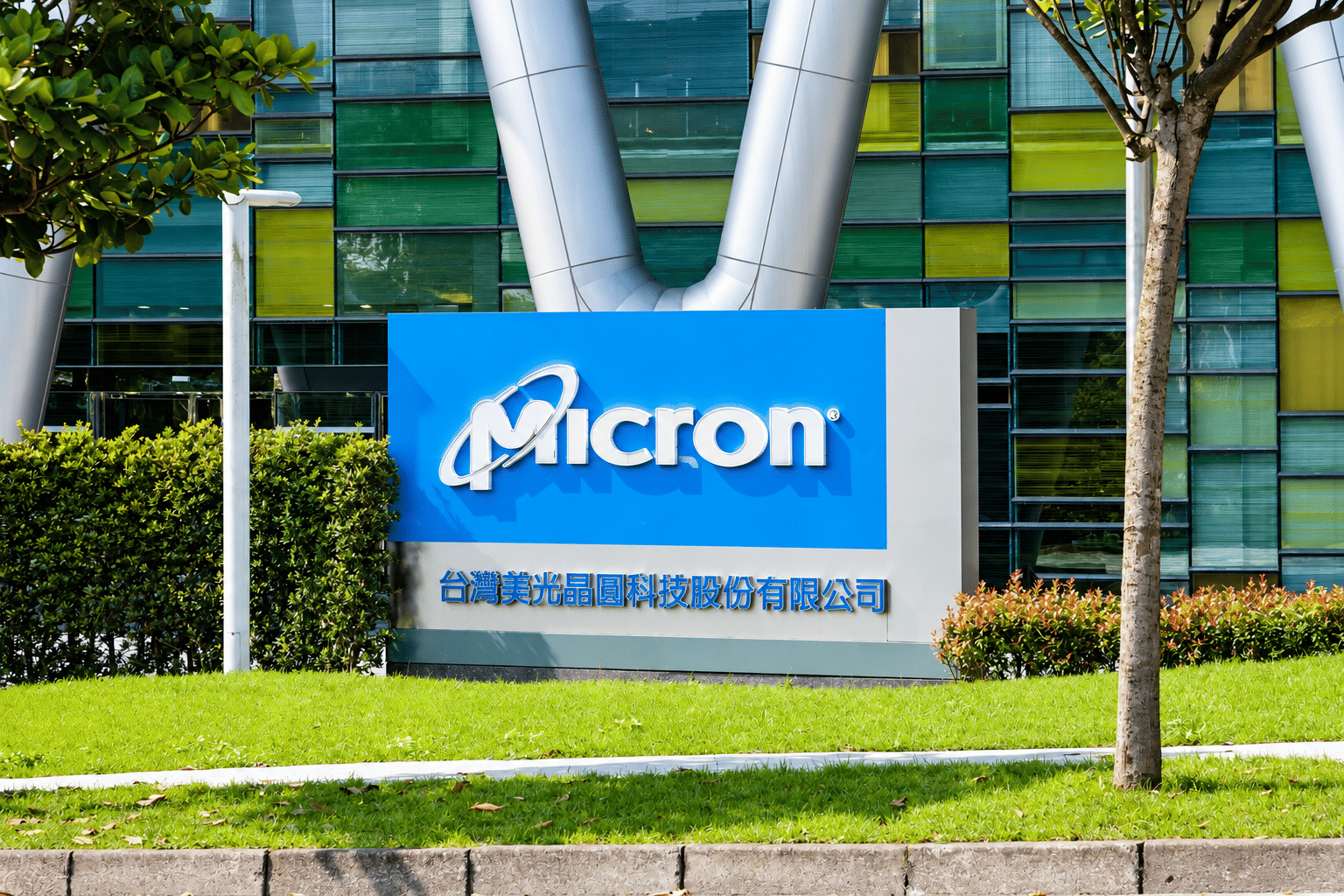
Hundreds of employees at Micron Technology's Taiwan operations are challenging the company's proposed bonus structure, saying workers deserve a larger share of the gains generated by the artificial intelligence boom. The growing dispute has intensified labour tensions at one of the world's largest memory chipmakers and raised the prospect of strike action if negotiations fail.
According to reporting by AFP, employees and labour unions representing a majority of Micron's Taiwan workforce have rejected the company's proposed compensation package, arguing it falls short despite strong industry growth and rising profits driven by demand for AI infrastructure.
The dispute comes at a time when memory chips have become a critical component of AI data centres, creating significant revenue opportunities for manufacturers including Micron, Samsung Electronics, and SK hynix.
Workers seek bigger share of AI-driven gains
Employees gathered near Micron's facility in Taoyuan on Thursday to protest what they described as inadequate compensation.
Micron stated last week that employees in Taiwan would receive total compensation equivalent to 35 to 68 months of salary for fiscal 2026, including a minimum cash payment of NT$1.7 million (US$53,200).
Union representatives and workers, however, are seeking more substantial rewards linked directly to company performance.
Key demands include:
- A one-time bonus equivalent to 83 months' salary
- A permanent scheme allocating 15% of Micron's operating profit to employee bonuses
- Quarterly bonus payments instead of annual distributions
- A compensation framework more closely aligned with industry competitors
The dispute reflects a broader debate emerging across the semiconductor sector as employees seek a greater share of profits generated by AI-related growth.
Taiwan workforce at centre of negotiations
Micron manufactures approximately 50% to 60% of its chips in Taiwan, according to AFP. The company is currently negotiating pay and benefits with two labour unions representing nearly 12,000 employees across facilities in Taoyuan and Taichung.
Negotiations have been taking place under government mediation since early September.
Union leaders have warned that employees could launch strike action if discussions fail to produce an agreement.
A production technician identified only by her surname, Lin, told AFP that workers should continue pursuing what they believe is fair compensation. She also suggested the issue extends beyond Micron and reflects broader concerns among employees across Taiwan.
Another employee, engineer Tsai, told AFP that the proposed package had "fallen short of expectations" given Micron's profit growth in recent years.
Industry comparisons add pressure
A significant source of frustration among employees is the comparison with compensation programmes at rival chipmakers.
According to AFP, workers contend that bonuses offered by SK hynix and Samsung Electronics exceed Micron's proposed payouts.
The issue has gained additional attention following developments in South Korea, where Samsung recently reached an agreement with employees to distribute bonuses worth 10.5% of operating profit among semiconductor workers, avoiding a potential strike.
As AI demand accelerates, compensation policies are increasingly becoming a competitive factor in attracting and retaining highly skilled semiconductor talent.
Engineer Ken Wu told AFP that Micron should examine how competitors reward employees if it wants to remain competitive and attract top talent.
Record growth sharpens employee expectations
The compensation dispute is unfolding against a backdrop of strong business performance across the semiconductor industry.
Micron has described Taiwan as a "critical hub" for its global operations and said it has invested more than NT$1.6 trillion on the island.
The company also reported record revenue of US$41.5 billion for the three months ended in May.
Demand for high-performance memory chips used in AI servers and data centres has created supply constraints across the industry, boosting revenues and profitability for leading manufacturers.
Neil Shah, co-founder of Counterpoint Research, told AFP that Micron is competing with Samsung and SK hynix to expand its share of the memory market. He noted that manufacturing capacity remains a key constraint as AI demand continues to grow.
Negotiations enter a critical phase
For now, talks between Micron management and labour unions remain ongoing. The outcome could influence not only compensation discussions at Micron but also broader conversations across the semiconductor industry about how AI-generated profits should be distributed between shareholders and employees.
With Taiwan accounting for a significant share of Micron's manufacturing capacity, both sides face pressure to reach an agreement that avoids disruption while addressing employee concerns over participation in the industry's AI-fuelled growth.