








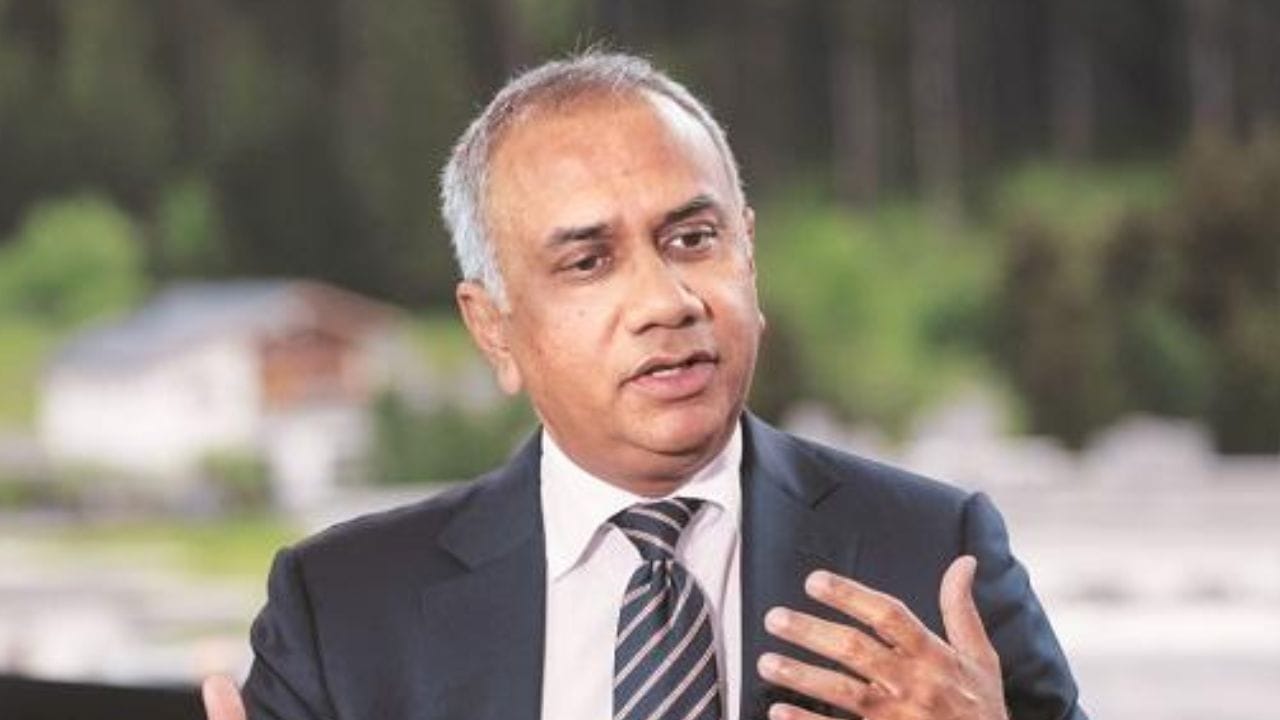
Infosys has ruled out layoffs even as artificial intelligence reshapes the global IT services sector, with chief executive Salil Parekh stating that the company does not expect job cuts in the near term.
In an interview with Moneycontrol, Parekh said the company has not carried out layoffs over the past year and does not foresee any such move ahead, despite automation and AI tools becoming central to software development and delivery.
“We have not done any layoffs in the last year and we don’t see anything of that sort coming up,” he said.
The stance positions Infosys apart from several industry peers that have undertaken workforce restructuring in response to automation-led efficiencies.
AI seen as an expansion of work, not a reduction
Infosys is framing AI as a driver of new work rather than a substitute for existing roles.
Parekh described the shift as structural but not immediately disruptive to employment levels.
“AI is expanding the scope of work, not shrinking it,” he said, adding that while roles will evolve, demand for talent is expected to continue.
This view contrasts with moves by companies such as TCS, HCLTech, Oracle and Cognizant, which have either announced or implemented workforce adjustments over the past year as AI adoption accelerates.
Hiring plans remain intact
Instead of reducing headcount, Infosys is maintaining its intake of entry-level talent.
The company plans to onboard around 20,000 fresh graduates in 2026, matching last year’s hiring levels, Parekh said in the interview.
Key workforce signals from Infosys:
- No layoffs reported in the past year
- No layoffs expected in the near term
- 20,000 freshers to be hired in 2026
- Continued reliance on entry-level talent alongside AI adoption
The approach suggests that the company sees long-term value in building a talent pipeline even as the nature of work evolves.
Reskilling becomes central to workforce strategy
Infosys is placing emphasis on reskilling rather than workforce reduction.
Parekh said engineers are being trained to work both with traditional coding methods and AI-driven tools. The goal is to ensure that employees understand how to build and evaluate systems independently of automation, while also leveraging new technologies.
“In training, we are encouraging the engineers to build code in the way they used to in the past, and then introduce new tools and foundation models,” he told Moneycontrol.
He added that employees are also being trained to assess AI-generated code, making technical judgement and quality control more critical in an AI-enabled environment.
AI already contributing to business performance
The company’s position is underpinned by the growing role of AI in its business.
Parekh said AI currently contributes around 5.5% of Infosys’ revenue, and that share is increasing. The company is also strengthening partnerships with organisations such as OpenAI and Anthropic, while deploying internal platforms like Topaz Fabric to scale AI-led development.
These initiatives indicate that AI is not only influencing how work is done but also contributing directly to business outcomes.
Skills, not jobs, are shifting
While Infosys expects employment levels to remain stable, it anticipates a shift in the kind of skills required.
Parekh noted that there is increasing emphasis on deeper expertise and subject matter specialisation, suggesting that generalist roles may evolve into more specialised functions over time.
“There is also more attention to deep individual knowledge and becoming a subject matter expert,” he said.
This aligns with a broader industry trend where AI is redefining skill requirements rather than eliminating roles outright.
A different path in a changing sector
Infosys’ strategy highlights a divergence in how IT services firms are responding to AI.
Some companies are focusing on cost optimisation and workforce restructuring, while others, including Infosys, are prioritising hiring and capability building.
The difference reflects an ongoing debate within the industry about whether AI will reduce the need for human labour or reshape it.
The coming years are likely to test whether hiring and reskilling can keep pace with technological change.
For now, Infosys is betting that AI will create more opportunities than it removes, provided the workforce is equipped to adapt.
The company’s approach suggests that the future of work in IT services will depend less on the number of jobs and more on how quickly skills can evolve to meet new demands.