








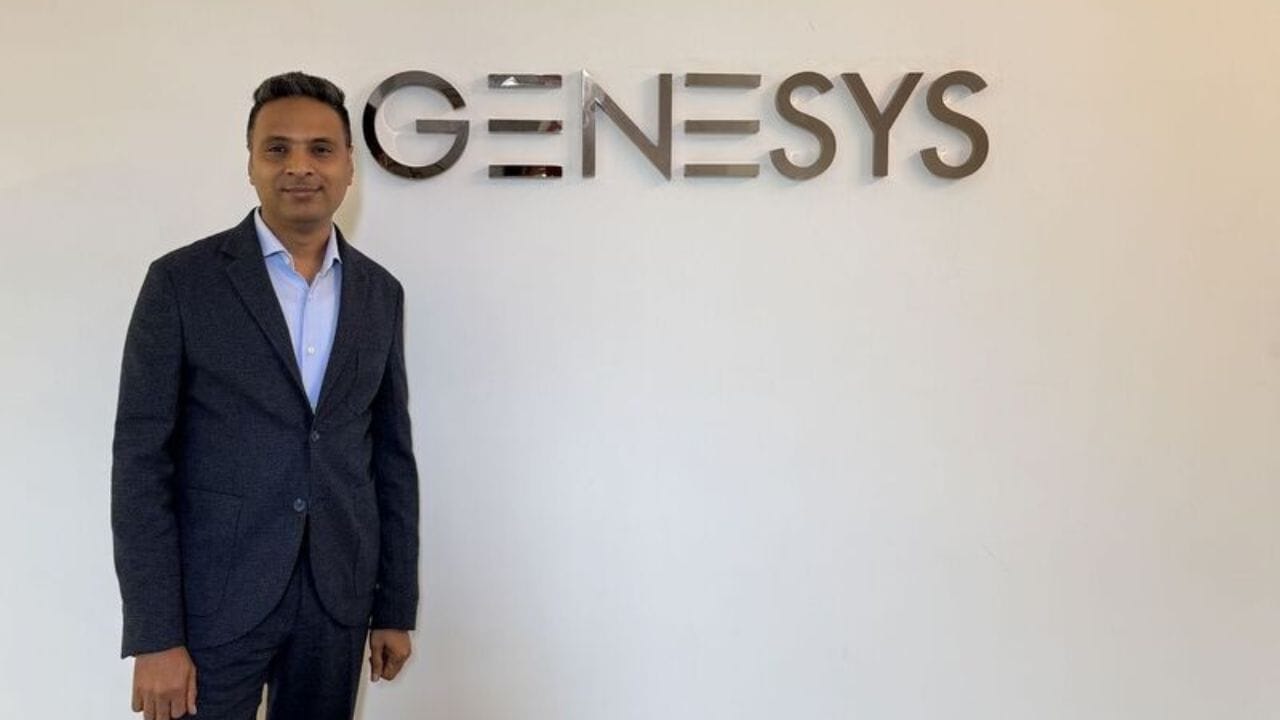
Genesys International Corporation has appointed Nikhil Alulkar as chief executive officer, as the geospatial technology company enters its next phase of growth across enterprise, government and international markets.
Alulkar will lead the company’s operations, business execution and expansion, with a focus on scaling its AI-native mapping, Digital Twin and spatial intelligence platforms.
Genesys shifts focus beyond mapping
The appointment comes as Genesys looks to expand beyond its established government business and accelerate adoption among enterprises and B2B customers.
Sajid Malik, chairman and managing director of Genesys, said the geospatial sector was moving from traditional mapping towards becoming an intelligence layer for the physical economy.
“We are moving from mapping the world to making the physical world computable, and Geospatial technology is going through a fundamental transformation. What was historically viewed as mapping is rapidly becoming an intelligence layer for the physical economy,” he noted.
“Nikhil joins us at exactly this point in our journey. He brings deep experience in building and scaling enterprise technology businesses, developing large customer ecosystems and creating the operating discipline required to convert technology capabilities into sustainable businesses. His experience of building across both government and enterprise markets is particularly relevant as Genesys broadens its addressable market.,” Malik commented on the appointment.
For Genesys, this represents a much larger opportunity than the mapping market we have traditionally addressed.
Over the years, we have invested in building the technology, survey infrastructure, high-precision content and Digital Twin capabilities required to create this layer at scale.
We are now at a stage where these capabilities can move beyond individual projects and become platforms that are relevant across governments, enterprises and multiple industries.”
Alulkar to drive enterprise and global expansion
As CEO, Alulkar will oversee Genesys’ company-wide operations and growth strategy. His remit will include expanding the company’s enterprise and B2B presence, strengthening government and institutional relationships and building the operating structure needed for international expansion.
Alulkar said India’s rapid development of physical and digital infrastructure was creating new opportunities for spatial intelligence.
“Genesys is at a fascinating stage of inflection. India is simultaneously building physical infrastructure and digital infrastructure at an extraordinary scale, and the convergence of the two creates a significant opportunity for spatial intelligence,” he commented.
He further added, “The next phase of digitisation will increasingly involve the physical world. Roads, buildings, land parcels, utilities and infrastructure assets will need to become digital objects that systems can understand, analyse and act upon. High-quality geospatial content therefore becomes foundational infrastructure rather than simply another dataset.”
“Genesys has already built one of the most difficult parts of this ecosystem — the ability to create and maintain high-precision, survey-grade geospatial content at scale, backed by deep technology, execution capabilities and experience in some of the most complex operating environments,” he attributed.
“The opportunity ahead is to productise this foundation, make it relevant across a much wider set of industries and customers, and take these capabilities to global markets. I believe Genesys has the potential to create a significant sovereign digital asset for India while simultaneously building a globally relevant spatial intelligence business,” he concluded.
From geospatial data to spatial intelligence
Genesys has invested in high-precision geospatial content, advanced mapping technologies and Digital Twin capabilities over recent years.
The company now plans to apply these capabilities across infrastructure, mobility, utilities, telecommunications, urban planning, land administration, asset intelligence and digital consumer applications.
The strategy centres on building a broader spatial intelligence platform that can help governments and businesses understand, model and make decisions about the physical world using dynamic, AI-enabled geospatial data.