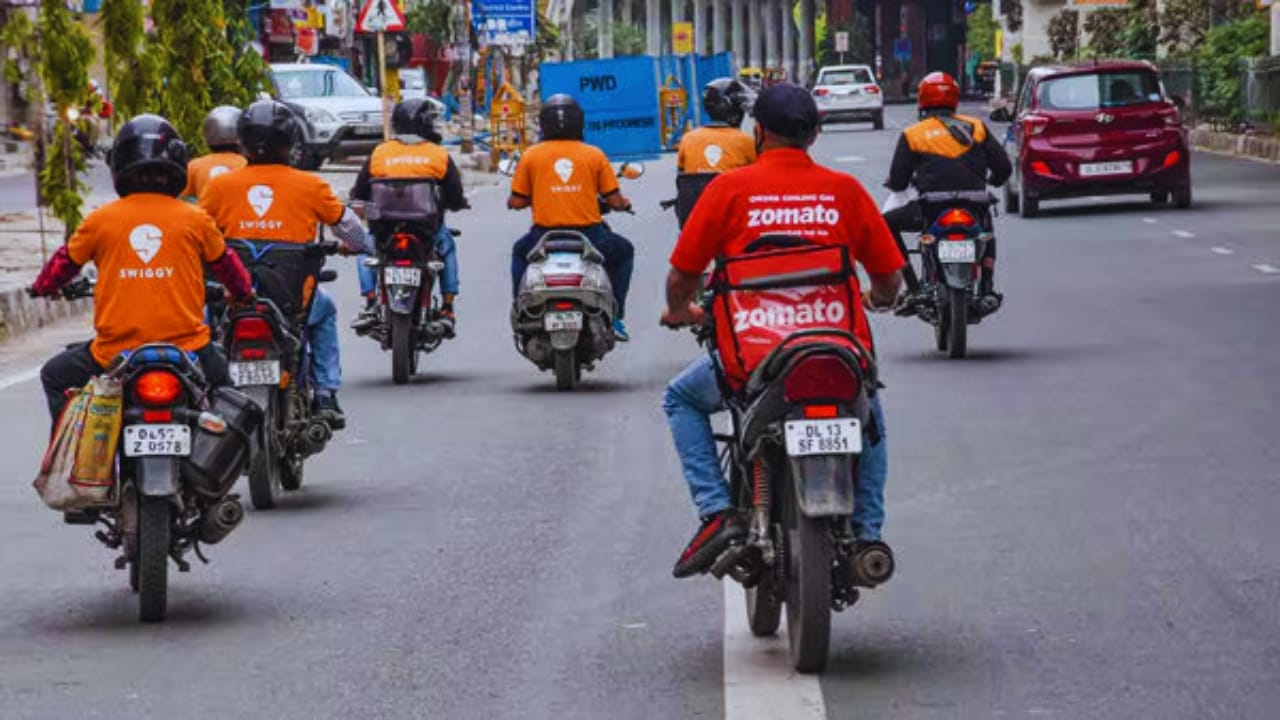
India’s gig economy hit a rare flashpoint over the holidays, as delivery partners logged off apps on Christmas Day and again on New Year’s Eve to protest pay, safety risks and the absence of basic welfare cover.
Unions behind the action said falling per-order earnings, rising fuel and maintenance costs, and opaque incentive structures have squeezed take-home pay. They also flagged safety concerns—especially for women workers—along with the lack of paid leave, insurance and formal grievance mechanisms, Deccan Herald reported.
The December 31 walkout was pitched to maximise pressure, colliding with one of the busiest nights of the year for food delivery and quick commerce. The Gig & Platform Services Workers Union called it a nationwide “switch-off” strike, following a smaller digital strike on December 25. Union groups said workers participated across multiple cities, though the scale was contested by companies.
Platforms moved quickly to project continuity. Zomato and Blinkit recorded an all-time high of 7.5 million orders on December 31, Eternal founder Deepinder Goyal said in a post on X. He said deliveries were “unaffected by calls for strikes” and credited local authorities for keeping “the small number of miscreants in check”. Magicpin’s chief executive Anshoo Sharma separately said the company saw “no impact”.
The confrontation landed just as the Centre advanced a long-awaited attempt to put gig work on a welfare footing. The Times of India reported on January 2 that draft rules under the Code on Social Security propose social security eligibility once a gig or platform worker has been engaged for at least 90 days in a financial year with a single aggregator. For workers active across multiple platforms, the threshold would rise to 120 days.
The draft also changes how “days worked” are counted—an important detail in a sector where workers frequently multi-app. The Times of India reported that engagement would be counted from the day a worker starts earning on a platform, and that if a worker is live on multiple apps on the same day, those days would be counted cumulatively. A worker active on three apps in a day could, under the proposal, accrue three working days.
Another contentious shift is definitional. The rules would treat workers engaged directly by an aggregator or routed through subsidiaries, associates or third-party entities as employees for the purpose of social security, the Times of India reported.
The benefits envisaged include health, life and accident insurance and linkage to Ayushman Bharat, alongside Aadhaar-linked registration and a universal account number, the report said. In parallel, the Centre has said the Code provides for social security measures such as accident insurance, health and maternity benefits, and old-age protection, under a dedicated fund and a national board framework.
For unions, the draft is a step forward—but not a solution to the immediate economics of gig work. Their central demand remains a more predictable wage floor and a payout structure that reflects distance, time, surge conditions and out-of-pocket costs. They also want enforceable safety provisions and clearer protections against harassment and arbitrary deactivation, which workers say can wipe out livelihoods overnight.
For platforms, the stakes are broader than a single holiday weekend. A tighter welfare framework could raise compliance costs and force greater disclosure of worker data and engagement patterns. At the same time, the companies argue they need flexibility to meet volatile demand and to keep customer prices competitive.
The draft rules are now open for public comment. The next phase will test whether the government can balance welfare coverage with the sector’s fluid work model—and whether worker anger, amplified during peak-demand periods, hardens into more frequent, coordinated action.