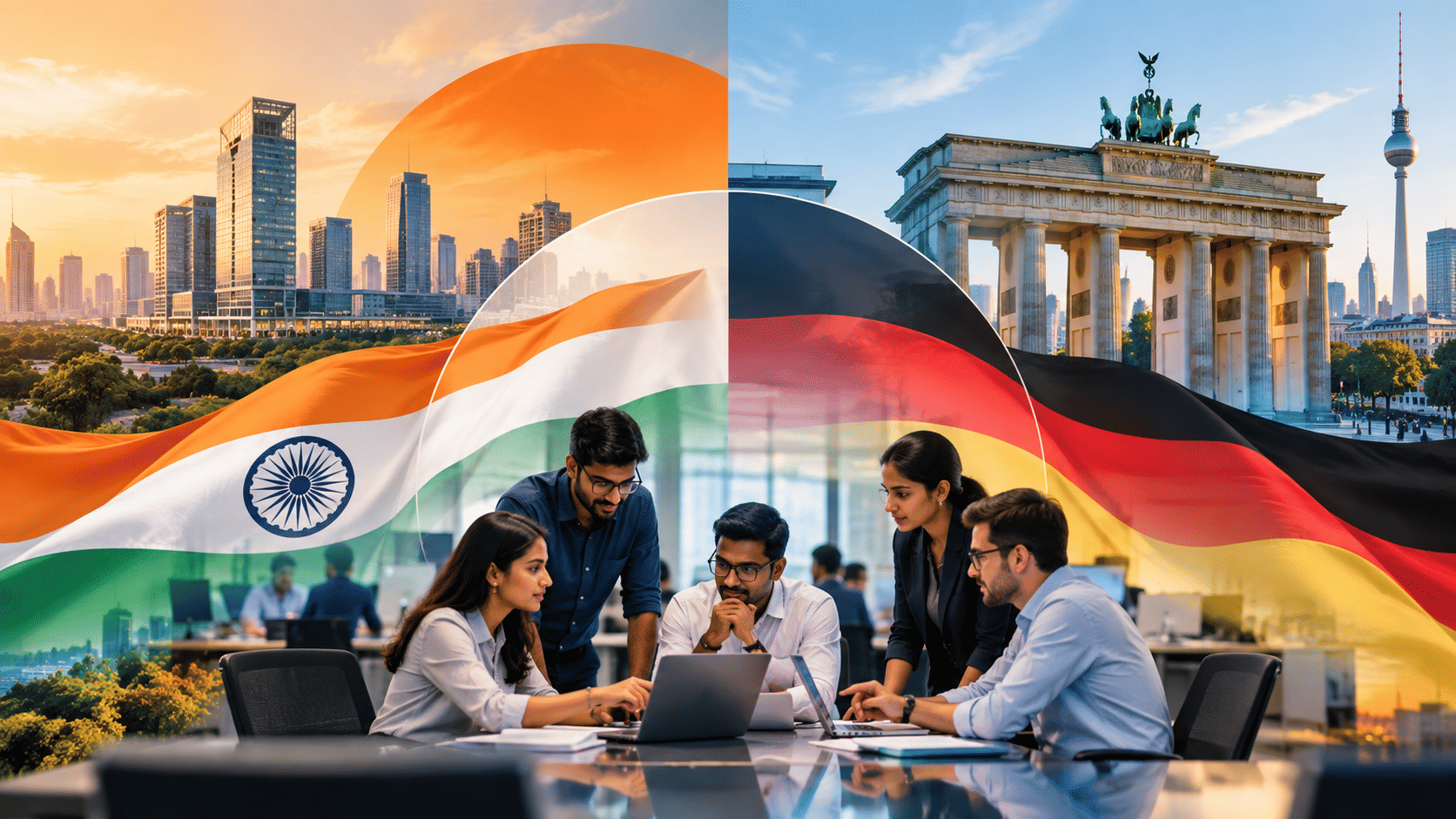
OpenDoor is shutting down its India operations and moving work back to the United States, affecting nearly 250 employees as the company restructures around smaller AI-native teams and streamlined operations.
The decision marks a significant shift for the US-based real estate technology company and has renewed debate about how artificial intelligence could reshape global outsourcing and operational work.
In a note shared with employees, Kaz Nejatian, an executive at OpenDoor, said the company had nearly 250 employees in India when it launched OpenDoor 2.0 several months ago.
"Over the last few months, some of these jobs have been relocated back to the United States," Nejatian wrote.
He added that the company is now finalising the relocation of those roles and beginning the process of winding down its India-based operations.
Company says work is moving closer to customers
According to Nejatian, the move is not a reflection of the performance or quality of work delivered by employees in India.
"Our colleagues in India are great people, and we recommend them to anyone hiring," he wrote.
The company said the decision stems from changes in how its operations are organised rather than concerns about workforce capability.
Key details of the restructuring include:
- Nearly 250 India-based employees affected
- Roles being moved back to the United States
- Transition to smaller AI-native teams
- Wind-down of OpenDoor's India operations
- A limited number of employees remaining temporarily to support the transition
Shift follows overhaul of operational systems
Nejatian said OpenDoor had historically built a substantial team in India to manage manual operational processes spread across multiple systems.
However, the company said it has since unified those systems and redesigned workflows around AI-powered processes.
According to the note, OpenDoor now operates with what it describes as "small AI-native customer-facing teams" located throughout the United States.
"Our customers are in America, and the operational work we do for them is best done close to them," Nejatian said.
The company also indicated that the new operating model is intended to reduce complexity by eliminating multiple tools, workarounds and fragmented workflows.
OpenDoor plans to consolidate operations into a single platform that enables employees to track a home's journey from acquisition and renovation through to sale.
AI becomes central to workforce strategy
The restructuring highlights how AI is increasingly influencing workforce decisions and organisational design.
Nejatian said OpenDoor 2.0 would become "a much smaller company by headcount, but a much larger company by impact".
He added that employees supported by AI-powered tools would take on broader responsibilities and greater ownership across the business.
The comments suggest the company sees technology as a way to reduce reliance on labour-intensive operational structures while increasing productivity.
Questions emerge for India's outsourcing industry
The move has sparked discussion about whether AI could eventually alter the offshore outsourcing model that has helped make India a global hub for technology and business operations.
According to reporting by India Today, entrepreneur Keshav Lohia described OpenDoor's decision as a potential "watershed moment in AI Ops", suggesting advances in AI models could weaken the cost advantages that have traditionally supported offshoring.
Lohia said companies may increasingly shift from large operations-focused offshore teams towards smaller AI-enabled teams located closer to customers.
While a single company's restructuring does not necessarily signal a wider industry trend, the development has intensified discussion around how AI could affect routine operational work and back-office functions over time.
Support measures for affected employees
OpenDoor said employees impacted by the decision will receive transition support.
The company stated that affected workers will be provided with:
- Severance benefits
- Outplacement assistance
- Additional transition resources
A small group of employees will remain temporarily to support the transfer of critical workstreams before the India operations are fully wound down.
Despite the restructuring, Nejatian said OpenDoor's broader business strategy remains unchanged.
"Our priorities and direction have not changed, and OpenDoor is in a strong position and getting stronger," he wrote.
The closure of OpenDoor's India operations may ultimately be remembered less for the number of jobs affected and more for what it signals about the evolving relationship between artificial intelligence, global operations and the future of offshore work.