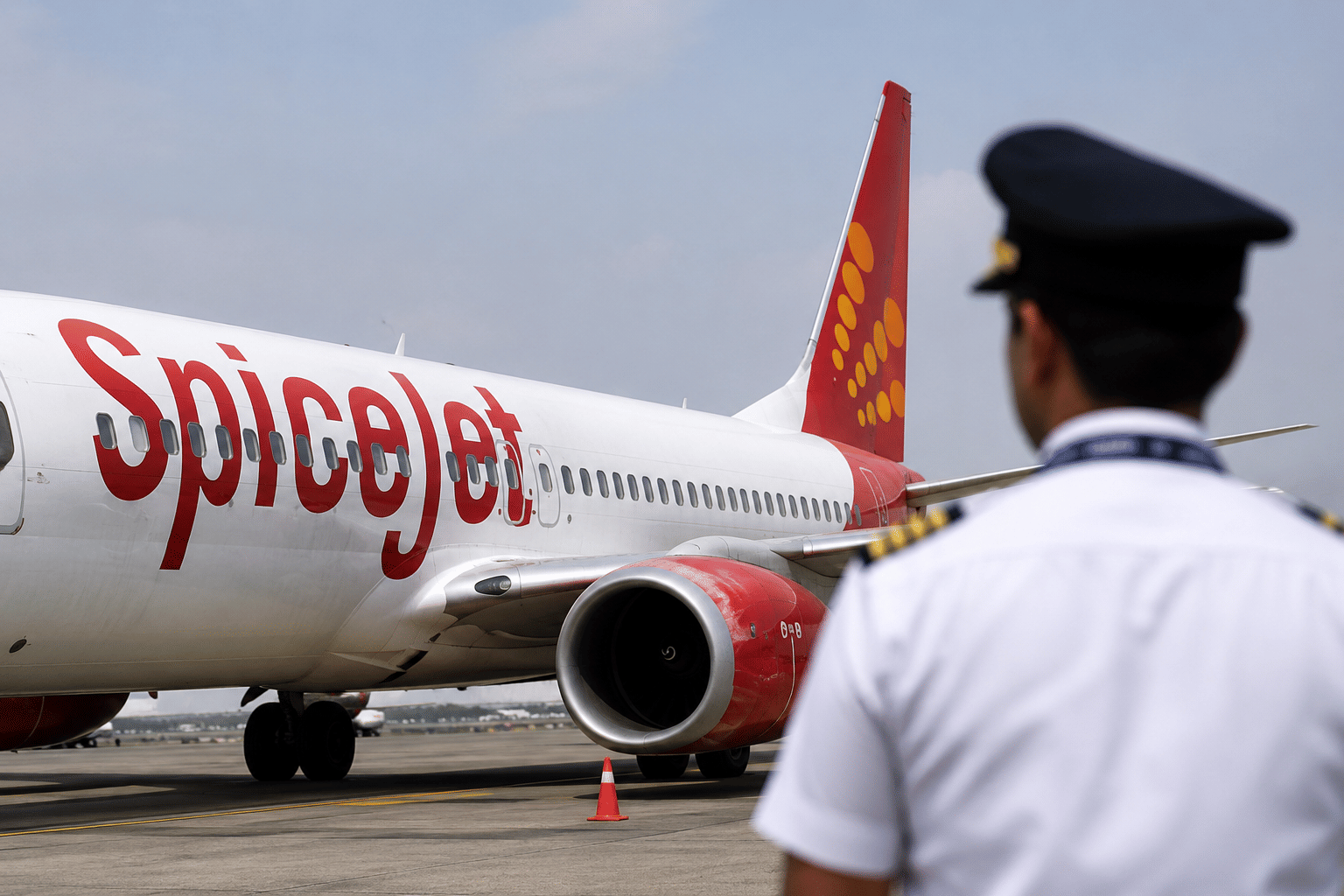
SpiceJet is facing renewed workforce and financial challenges, with many pilots reportedly waiting months for salary payments even as the airline seeks emergency funding to support its operations.
According to a Reuters report, internal communications and conversations with pilots indicate that salary disbursements have been delayed for several months, affecting a section of the airline's pilot workforce. The development comes as the carrier explores a government-backed credit facility to improve liquidity and restore operational stability.
The issue highlights the continuing pressures facing one of India's most troubled airlines, which has struggled to recover market share and profitability amid rising costs, operational disruptions and industry headwinds.
Pilots flag delayed salary payments
Reuters reported that SpiceJet had 375 pilots as of March 2026, with many experiencing delays in salary payments.
The report cited messages exchanged in a WhatsApp group comprising more than 180 members, including pilots operating Boeing aircraft and at least one senior airline official.
In a message dated May 26, Virendra Malhotra, Senior Vice President of Flight Operations at SpiceJet, reportedly acknowledged the difficulties employees were facing due to delayed salary payments and stated that pending portions of February salaries would be released shortly.
The communication described the situation as temporary and referred to the delays as a difficult phase for employees.
However, Reuters reported that one pilot subsequently sought clarification on timelines for the release of salaries for March, April and May.
When contacted by Reuters, Malhotra denied issuing such communication.
Financial strain reaches employees
The salary delays have had a direct impact on employees, according to messages reviewed by Reuters.
One pilot reportedly described growing difficulties in managing day-to-day expenses and said financial pressures had become severe enough to require assistance from others for essential commitments.
The situation has emerged at a time when concerns around pilot wellbeing, fatigue and mental health continue to receive increased attention globally.
SpiceJet acknowledged salary delays in a statement to Reuters, saying employee payments were being released in phases and that a majority of employees had already received their March salaries.
Airline seeks government-backed support
As it manages payroll pressures, SpiceJet is also pursuing fresh financing.
The airline told Reuters that it is actively seeking funding through the Indian government's Emergency Credit Line Guarantee Scheme (ECLGS), which enables eligible airlines to access government-guaranteed loans with a tenure of up to seven years.
Key financial and operational developments include:
- SpiceJet is seeking support under the ECLGS programme.
- The scheme permits government-guaranteed loans of up to ₹15 billion.
- The airline said it expects business operations to normalise over the coming months.
- Management cited the ongoing Middle East conflict among factors affecting costs and cash flows.
- Higher fuel prices and airspace restrictions have added operational pressure.
The airline said it was making efforts to restore normalcy and improve overall business performance.
Fleet expansion continues despite challenges
Even as it addresses funding and payroll concerns, SpiceJet is continuing efforts to strengthen its fleet.
The airline recently announced the return of a Boeing 737 MAX aircraft to commercial service. It has also finalised a lease arrangement, including crew, for three Airbus A320 aircraft, which are expected to join the fleet in July.
Currently, SpiceJet operates a fleet of 21 aircraft.
The additions are intended to help the carrier meet passenger demand and improve network capacity.
Market position weakens
SpiceJet's challenges have coincided with a sharp decline in its market position.
Reuters reported that the airline carried roughly 15% of India's domestic passengers in 2019, making it the country's second-largest airline at the time. Its market share has since fallen to 3.4%, placing it fourth in the domestic aviation market.
Recent indicators underscore the pressure on operations:
- Scheduled flights fell from 4,494 in January to 3,053 in May, according to aviation analytics firm OAG.
- SpiceJet's stock has declined approximately 60% this year.
- The airline has reported annual losses since 2019, with the exception of the financial year ending March 2025.
- The 2025 profit was aided by a one-time gain linked to settlements with aircraft lessors.
Reuters also reported that at least two aircraft lessors have issued payment default notices to the airline this year. SpiceJet did not comment on those notices.
Long road to recovery
SpiceJet's financial difficulties stretch back more than a decade, with periodic salary deferrals reported during earlier periods of stress. The airline's recovery efforts have also been complicated by the grounding of Boeing 737 MAX aircraft, the Covid-19 pandemic and multiple legal and payment disputes.
While management remains focused on securing fresh capital, restoring capacity and returning aircraft to service, the salary delays illustrate the human impact of the airline's prolonged financial challenges.
The success of SpiceJet's recovery strategy may ultimately depend not only on access to funding and operational improvements, but also on its ability to restore confidence among employees who continue to play a critical role in keeping the airline flying.