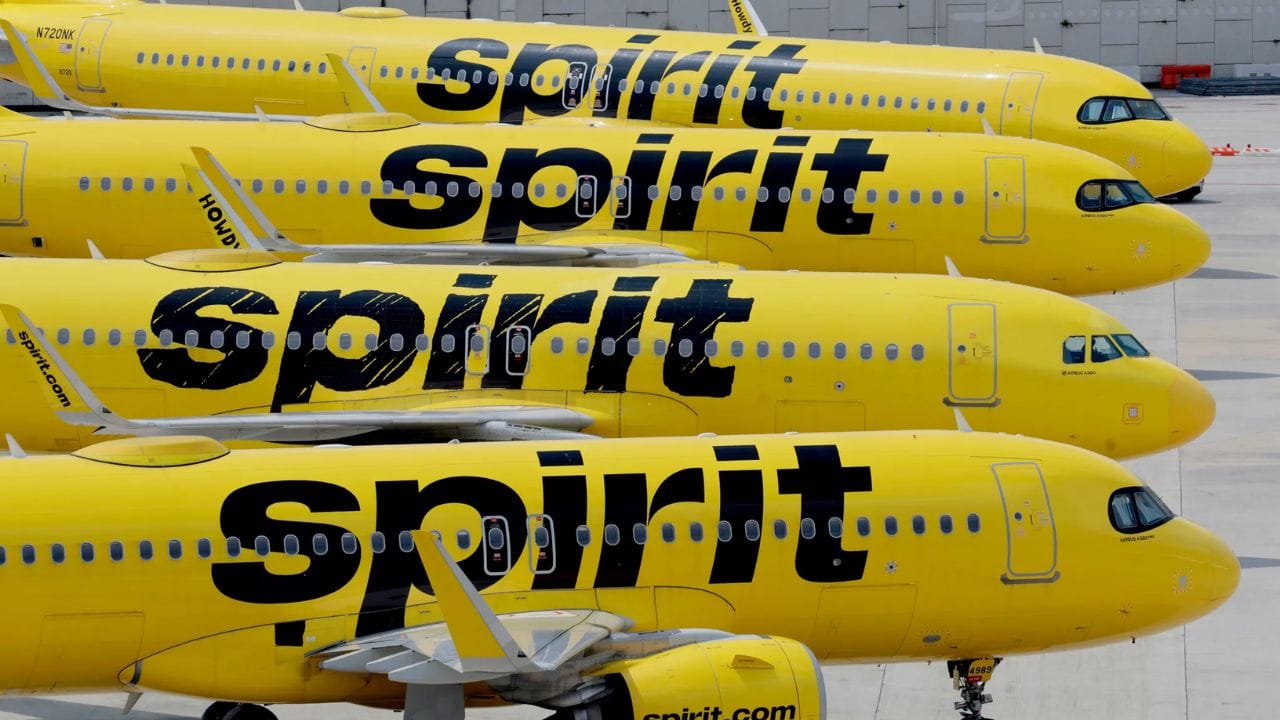
Spirit Airlines has shut down operations after running out of cash, bringing an abrupt end to one of the largest low-cost carriers in the United States and leaving around 17,000 employees without jobs.
The airline ceased all flights early Saturday, with its final service landing in Dallas, according to reporting by CBS News. The sudden closure has stranded passengers across multiple routes and triggered a scramble for refunds and alternative travel.
Financial strain forces shutdown
Spirit’s closure follows repeated financial distress over the past two years, including two bankruptcy filings. The company ultimately exhausted its resources, with leadership citing rising fuel costs as a decisive factor.
The airline’s chief executive said there “was no alternative,” pointing to a sustained increase in operating expenses.
Jet fuel prices have surged by more than 70% since the start of the Iran war, significantly raising costs for airlines operating on thin margins.
The pressure proved particularly acute for low-cost carriers such as Spirit, where profitability depends heavily on maintaining tight cost structures.
Passengers caught off guard
The immediate impact has been felt by travellers, many of whom were unaware of the shutdown until flights were cancelled.
Sharie Hargroves, a passenger travelling from South Florida, told CBS News she was left stranded after her return flight was abruptly cancelled.
“I’m upset. It’s putting us out of our way, definitely digging in our pockets because it’s unexpected,” she said.
She added that the lack of clarity around refunds has compounded the disruption.
“I just want to know when I’m going to get my refund. You can’t get in touch with anyone. We don’t know if we’re going to get a refund or anything, we’re just out of $600.”
Spirit said the majority of customers who paid by card were refunded on Saturday evening, with a smaller number of transactions still being processed. The airline noted that refunds may take several days to reflect in bank accounts.
Workforce impact and operational fallout
The shutdown has triggered significant job losses across the organisation.
Key impacts include:
- Approximately 17,000 employees affected
- Around 1,500 crew members returned home so far
- Remaining staff still in transit following flight cancellations
Spirit said it is working to repatriate crew members and support employees during the transition.
The scale of job losses highlights the vulnerability of airline workforces to sudden operational collapses.
Industry steps in with limited relief
Other carriers have moved to absorb some of the immediate disruption.
Airlines including JetBlue and United Airlines are offering discounted fares to stranded Spirit passengers, while the company has published details of so-called rescue fares through its restructuring channels.
However, these measures provide only partial relief, particularly for travellers facing immediate financial and logistical challenges.
A sector under pressure
Spirit’s collapse comes at a time of broader strain across the aviation industry, driven by rising fuel prices and geopolitical disruptions.
The sharp increase in jet fuel costs, combined with operational constraints, has significantly altered the economics of air travel, especially for low-cost carriers that rely on high utilisation and low margins.
The shutdown underscores how quickly external cost shocks can destabilise even established operators.
What comes next
For passengers, the immediate priority remains refunds and rebooking. For employees, the focus shifts to job recovery in a volatile labour market.
For the industry, Spirit’s closure raises questions about the sustainability of ultra-low-cost models amid persistently high input costs.
The airline’s abrupt exit serves as a reminder that while demand for travel remains strong, financial resilience has become just as critical as operational efficiency in aviation’s post-pandemic landscape.