








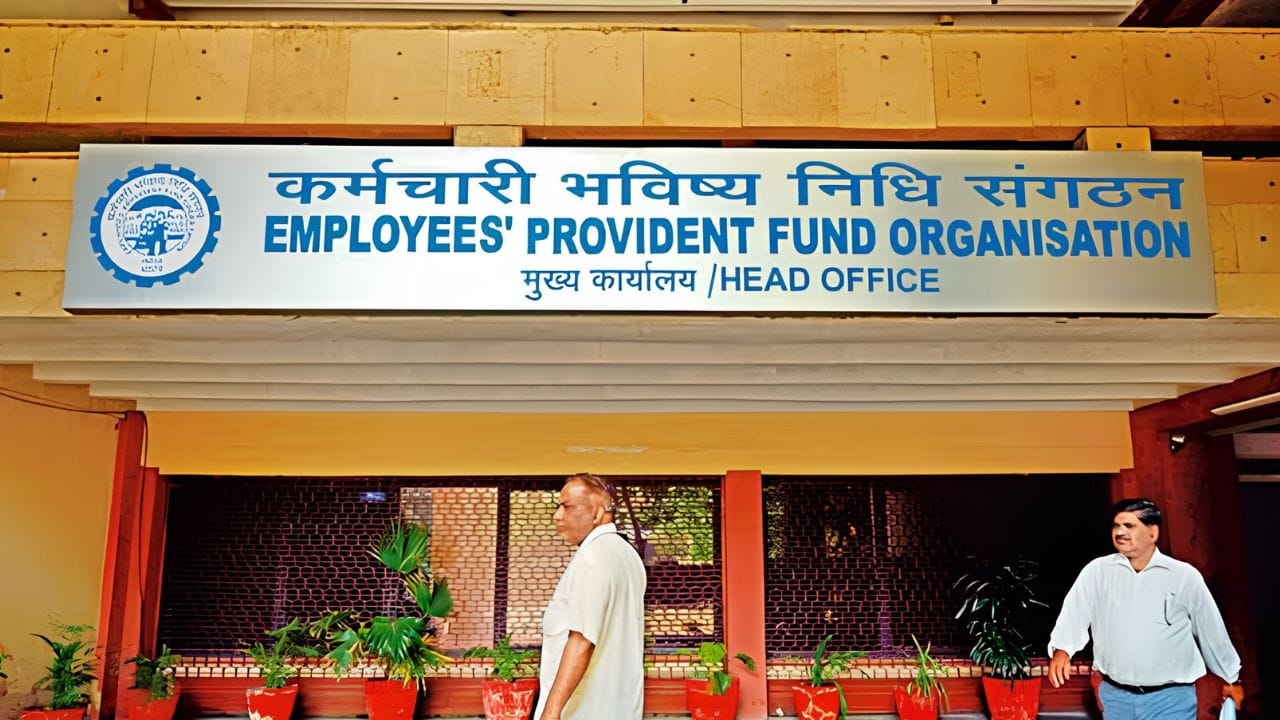
Employees planning early withdrawals from their Employees’ Provident Fund (EPF) accounts may face tax implications if they have not completed five years of continuous service, according to existing EPFO and income tax provisions.
While EPF is designed primarily as a long-term retirement savings scheme, partial and full withdrawals are permitted in situations such as unemployment, retirement and financial emergencies. However, withdrawals made before the five-year threshold can become taxable under provisions of the Income-tax Act, 2025.
According to information cited by Mint and tax platform ClearTax, the withdrawal amount, including interest earned, may attract both income tax and tax deducted at source (TDS) if specific conditions are not met.
EPF deposits currently earn an annual interest rate of 8.25%.
EPFO rules define when full withdrawal is allowed
The Employees’ Provident Fund Organisation (EPFO) permits full withdrawal of EPF balances only under certain circumstances.
According to ClearTax, employees can fully withdraw their EPF balance in the following cases:
• Retirement after reaching 55 years of age
• Withdrawal of up to 90% of EPF balance after turning 54, one year before retirement
• Unemployment for one month, allowing withdrawal of up to 75% of the balance
• Full withdrawal after remaining unemployed for two months
EPFO rules also allow online withdrawals without employer approval if:
• Aadhaar is linked to the Universal Account Number (UAN)
• Employer verification requirements have been completed
The scheme continues to function as one of India’s largest long-term retirement savings mechanisms, with both employers and employees contributing 12% of basic salary and dearness allowance each month.
The employer contribution is split between the EPF account and the Employees’ Pension Scheme (EPS).
Early withdrawals may trigger tax liability
According to Mint, withdrawals made before completing five years of continuous service are generally treated as taxable under Rule 6 of Schedule XI of the Income-tax Act, 2025.
The tax treatment applies unless the withdrawal falls under specific exemption categories recognised under EPFO and income tax rules.
Exemptions may apply in cases such as:
• Termination due to ill health
• Closure or discontinuation of the employer’s business
• Circumstances beyond the employee’s control
Information available on the official income tax portal states that if an employee has not completed five years of service and does not qualify for exemption conditions, the withdrawn EPF amount along with accumulated interest becomes taxable.
However, service duration with previous employers can also be counted if EPF balances have been transferred between employers without withdrawal.
According to ClearTax, employees who transfer their EPF balance and complete a combined five years of employment across organisations may avoid TDS deductions.
TDS rules depend on withdrawal amount and PAN details
Tax deducted at source on EPF withdrawals depends on both the withdrawal amount and the availability of PAN information.
According to ClearTax:
• No TDS is deducted if the withdrawal amount is below ₹50,000
• TDS of 10% applies on withdrawals above ₹50,000 if PAN details are provided
• TDS may rise to 20% if PAN details are unavailable
Employees whose total taxable income remains below the taxable threshold may also avoid TDS by submitting:
• Form 15G
• Form 15H
If these forms are submitted validly, no TDS is deducted on EPF withdrawals even where the withdrawal amount exceeds ₹50,000.
Retirement savings remain central to EPF framework
The renewed attention around EPF withdrawals comes amid growing awareness among salaried employees about tax planning, retirement savings and changing employment patterns.
Frequent job switches, periods of unemployment and rising emergency withdrawals have increased scrutiny around how EPF balances are taxed before retirement.
Tax experts continue to advise employees to avoid premature withdrawals where possible, particularly because long-term EPF balances benefit from compounding and tax-efficient treatment after the five-year threshold is crossed.
At the same time, the rules provide flexibility for workers facing unemployment, health emergencies or major financial disruptions.
For salaried employees, understanding how service duration, withdrawal timing and tax documentation interact has become increasingly important before accessing EPF savings early.