








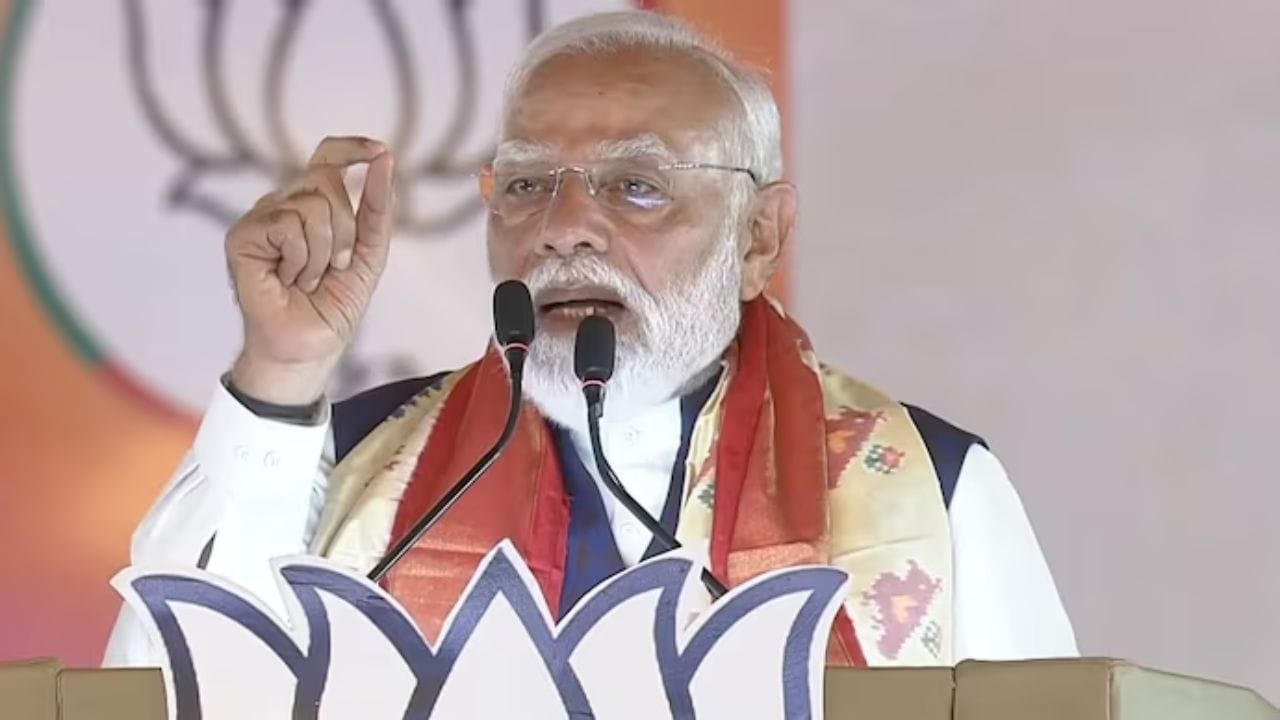
Prime Minister Narendra Modi on Sunday called on Indians to revive work-from-home practices, reduce fuel consumption and postpone gold purchases for weddings as the global oil shock triggered by the ongoing West Asia conflict intensifies pressure on energy-importing economies.
Speaking at an event in Secunderabad, Telangana, the Prime Minister framed fuel conservation as a national responsibility at a time when crude prices have surged sharply and governments across the world are struggling with rising energy costs.
His remarks came amid growing indications that India could soon witness an increase in petrol and diesel prices for the first time in nearly four years, according to sources cited by India Today TV.
“During the Corona period, we adopted work from home, online meetings, video conferences and developed many such systems. We had also become accustomed to them,” PM Modi said during the event.
“Today, the need of the hour is that we restart those practices, as it would be in the national interest, and we must once again give them priority,” he added.
The Prime Minister’s comments reflect mounting concern within the government over the economic fallout from the global energy crisis, especially as tensions in West Asia continue to disrupt crude supply routes and push prices higher.
Crude rally raises pressure on India
Global crude oil prices have climbed from nearly USD 70 per barrel to around USD 126 per barrel amid fears of prolonged disruption around the Strait of Hormuz, one of the world’s most critical oil transit chokepoints.
Nearly one-fifth of global oil trade passes through the route, which has witnessed heavy disruption due to the ongoing conflict in the region.
While countries such as Bangladesh have introduced fuel rationing and Sri Lanka has reduced working days to curb energy consumption, India has so far avoided major supply shortages or long queues at petrol pumps.
However, officials and industry executives are increasingly warning that the financial burden on India’s oil marketing companies is becoming difficult to sustain.
According to sources quoted by India Today TV, Indian Oil Corporation, Bharat Petroleum Corporation and Hindustan Petroleum Corporation are collectively facing under-recoveries of nearly Rs 30,000 crore every month due to elevated crude prices.
At current international rates, oil companies and the government are effectively absorbing losses estimated at nearly Rs 24 per litre on petrol and Rs 30 per litre on diesel to shield consumers from the full impact of the surge.
Fuel price revision likely
Government and industry sources told India Today TV that petrol and diesel prices may be revised upward before May 15 if crude prices remain elevated.
Key estimates discussed by officials include:
• Petrol and diesel prices may rise by around Rs 4 to Rs 5 per litre
• Domestic LPG cylinder prices could increase by Rs 40 to Rs 50
• Oil companies are currently absorbing steep monthly losses
• Global crude prices have nearly doubled from recent levels
Although PM Modi stopped short of directly announcing a fuel price increase, his repeated emphasis on conservation signalled growing concern over India’s import bill and foreign exchange outflow.
“Petrol-diesel has become so expensive across the world. It is the responsibility of all of us that the foreign exchange spent on purchasing petrol-diesel should also be saved by conserving petrol-diesel,” he said.
PM Modi asks citizens to reduce discretionary spending
In one of the most striking parts of the speech, the Prime Minister urged citizens to avoid purchasing gold for weddings for one year in order to reduce pressure on India’s foreign exchange reserves.
“I would appeal to people not to buy gold for weddings for one year,” he said.
India remains one of the world’s largest gold importers, making the commodity a major contributor to the country’s import bill during periods of elevated global prices and currency volatility.
PM Modi also widened his appeal beyond fuel savings, asking households to reduce edible oil consumption and farmers to cut dependence on imported chemical fertilisers.
“The same is true for edible oil. We have to spend foreign currency on its import,” he said.
“If every household reduces the use of edible oil, it is a huge contribution to patriotism. This will improve the health of the national treasury and the health of every family member.”
On agriculture imports, the Prime Minister said India spends heavily on chemical fertilisers sourced from overseas markets and called for a transition towards natural farming practices.
“We should reduce our consumption of chemical fertilisers by half and move towards natural farming. This way, we can save foreign currency and protect our farms and Mother Earth,” he said.
India ramps up energy measures
Officials said India has already intensified measures to manage the impact of the global energy shock.
According to government officials cited in the India Today report:
• LPG production has increased from 36,000 tonnes per day to 54,000 tonnes per day
• Crude sourcing has expanded across Russia, the US and West Africa
• Refineries are operating at more than 100 per cent capacity
• The Centre had earlier reduced excise duties to cushion consumers from rising prices
The government’s balancing act is becoming increasingly complex as it attempts to contain inflationary pressure while limiting the fiscal impact of subsidising fuel costs.
The Prime Minister’s appeal also signals the possibility of broader demand-management measures if global crude prices remain elevated over an extended period.
For now, India has managed to avoid the severe shortages seen in some neighbouring economies. But with geopolitical tensions continuing to disrupt oil markets, policymakers appear to be preparing the public for a period of higher energy costs and tighter consumption discipline.