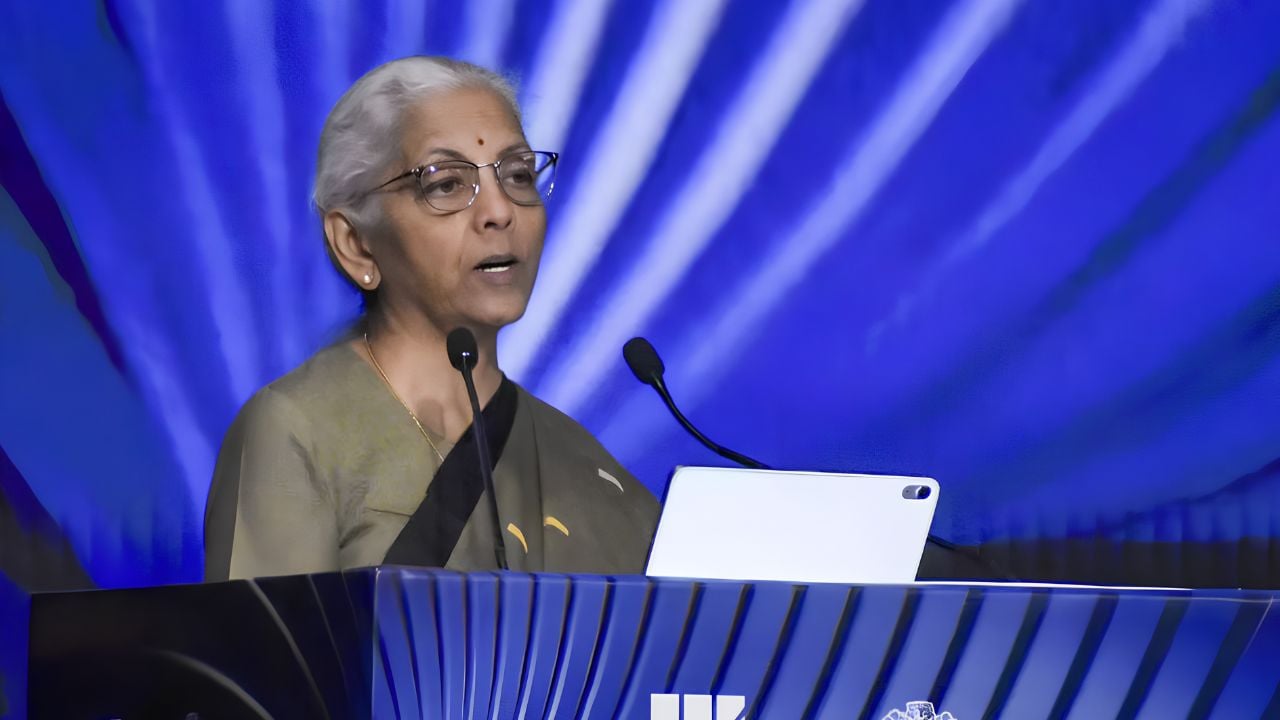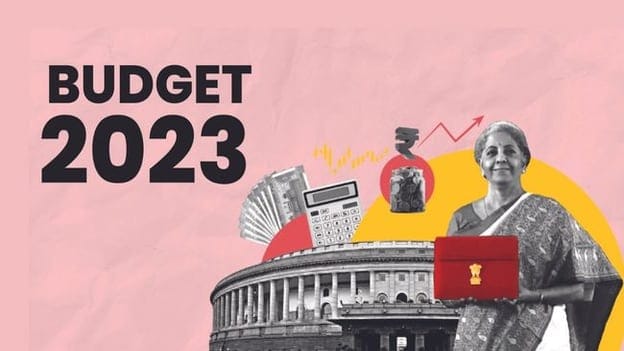
Finance Minister Nirmala Sitharaman has reached the parliament to present the Union Budget 2023-2024 in a paperless format. She was seen carrying a digital tablet wrapped in a traditional Bahi-Khata style pouch with the national emblem embossed on it. This is honourable finance minister’s fifth budget presentation since she took the charge of the Finance Ministry in 2019.
Prior to the Union Budget, on 31 January, the FM had tabled the Economic Survey for the Financial Year 2022-23. According to the survey, India’s economic recovery from the pandemic is complete and the economy is expected to grow in the range of 6% to 6.8% in the coming financial year 2023-24.
The survey also suggested that the country is holding the position of the fastest-growing major economy in the world. However, the Reserve Bank of India projected 6.8% inflation this fiscal.
Free food grain scheme
As Nirmala Sitharaman presents the first budget in Amrit Kaal, she stated that despite the challenging time, the Indian economy is heading toward a bright future. The government ensured schemes to supply foodgrains that I will be implemented from January 1, 2023, a scheme to supply free foodgrains to priority households for one year.
The economy’s size increased from 10th to 5th biggest
In the past nine years, the Indian economy increased in size from the 10th biggest to the 5th biggest. For further growth, the 2023 budget’s priorities are inclusive development, digital public infrastructure for agriculture, green growth, and growth of the financial sector. The FM revealed the country has made significant progress in sustainable goals, while also achieving many milestones in Swachh Bharat, PM Suraksha Bima Yojana, Direct benefit transfer, and Jan Dhan accounts.
In the current technological era, the focus has also been put immensely on the advancement of existing technology. An agriculture accelerator fund will be set up to support agri-tech startups in rural areas. This is meant to bring modern technologies to Indian farms. The government will also enable self-help groups to reach the next level of economic empowerment.
Health, education, and skilling
When it comes to the progress the country has made so far, the FM said India has made significant progress in sustainable goals and achieved many milestones in Swachh Bharat, PM Suraksha Bima Yojana, Direct benefit transfer, and Jan Dhan accounts. In the health, education, and skilling sectors, the government is planning to make:
- National digital library for children and adolescents
- New program to promote R&D in pharma
- 157 nursing colleges
- Recruitment of 38,800 teachers
- PM awas yojana to be enhanced by 66% to over ₹79,000 crores.
Capital investment
Capital investment increased by 33% to ₹10 lakh crore. This is 3.3% of GDP, said Finance Minister Nirmala Sitharaman and shared that more than 39,000 compliances have been reduced and more than 3,000 legal provisions have been decriminalised.
Artificial Intelligence
The world has entered the era of Artificial Intelligence and the Indian government is gearing up for establishing three centers of excellence for Artificial Intelligence. These will be set up in top educational institutions. For furthering trust-based governance, the Indian government introduced the Jan Vishwas Bill to amend the 42 Central Act. This budget proposes a series of measures.
Green growth
The Union Budget 2023 is highly focused on sustainability and green growth. The government will invest in lab-grown diamond production that will be encouraged via grants to an IIT. Also, 35k cr will be given for priority capital investment for the Energy transition. Since replacing old polluting vehicles is an important part of greening the economy, the FM revealed they have allocated adequate funds to scrap old vehicles of Centre and State governments. Over the next three years, the government will facilitate 1 crore farmers to adopt natural farming. For this 10,000 bio-input resource centers will be set up. Mishti scheme for mangrove and wetland conversation and Ámrit Dharohar for wetlands will also be set up. Some other reforms toward green growth include:
- National Green Hydrogen Mission to facilitate the transition of the economy to low-carbon intensity.
- Rs. 35,000 crores towards energy transformation and achieving net zero goals.
- Green credit programme for sustainable living
Youth progress
India has more than 50% of its population below the age of 25 and more than 65% below the age of 35, hence, the focus on youth development is significant. The FM announced formulating the National Education Policy and PM Kaushal Vikas Yojana 4.0 to skill lakhs of youth. The scheme will also cover new-age courses like drones and 3D printing.
Also, a total of 30 Skill India International centres will be set up across states, along with the launch of a Unified Skill India Platform. The government also stated to provide a stipend to 47 lakh youth in three years, direct benefit transfer under a Pan-India national apprenticeship scheme.
Finance
While most economies are facing a cut-throat recession, India is planning ahead and has decided to revamp the credit guarantee scheme. It will be launched for MSMEs through the infusion of Rs 9,000 crore from April 1. This will enable collateral-free borrowings worth Rs 2 lakh crore. The cost of credit will be reduced by about 1% and a National Financial Information repository to be set up. In order to meet the needs of Amrit Kaal and facilitate optimal regulation of the financial sector, the government has decided to introduce public consultation process.
Indirect Taxes
The Union Budget 2023 aims to promote exports and enhance domestic manufacturing and mobility. The Finance Minister proposed:
- To reduce the number of customs duty rates on goods except for textiles
- Minor changes in cess and levies on products such as toys, naphtha, and automobiles.
- Reduction in customs duties for batteries used in EVs including lithium-ion.
Startups
In the past couple of years, India has emerged as the third-largest startup ecosystem in the world. Therefore, entrepreneurship becomes crucial for a country’s economic development. The tax benefits on their incorporation are being extended by another year and the carry forward of losses to set off against future profits will now be allowed for 10 years instead of 7 years.
New tax slabs
- 0-3 lakh - nil
- 3-6 lakh - 5%
- 6-9 lakh 10%
- 9-12 lakh 15%
- 12-15 lakh 20%
- Above 15 lahks 30%