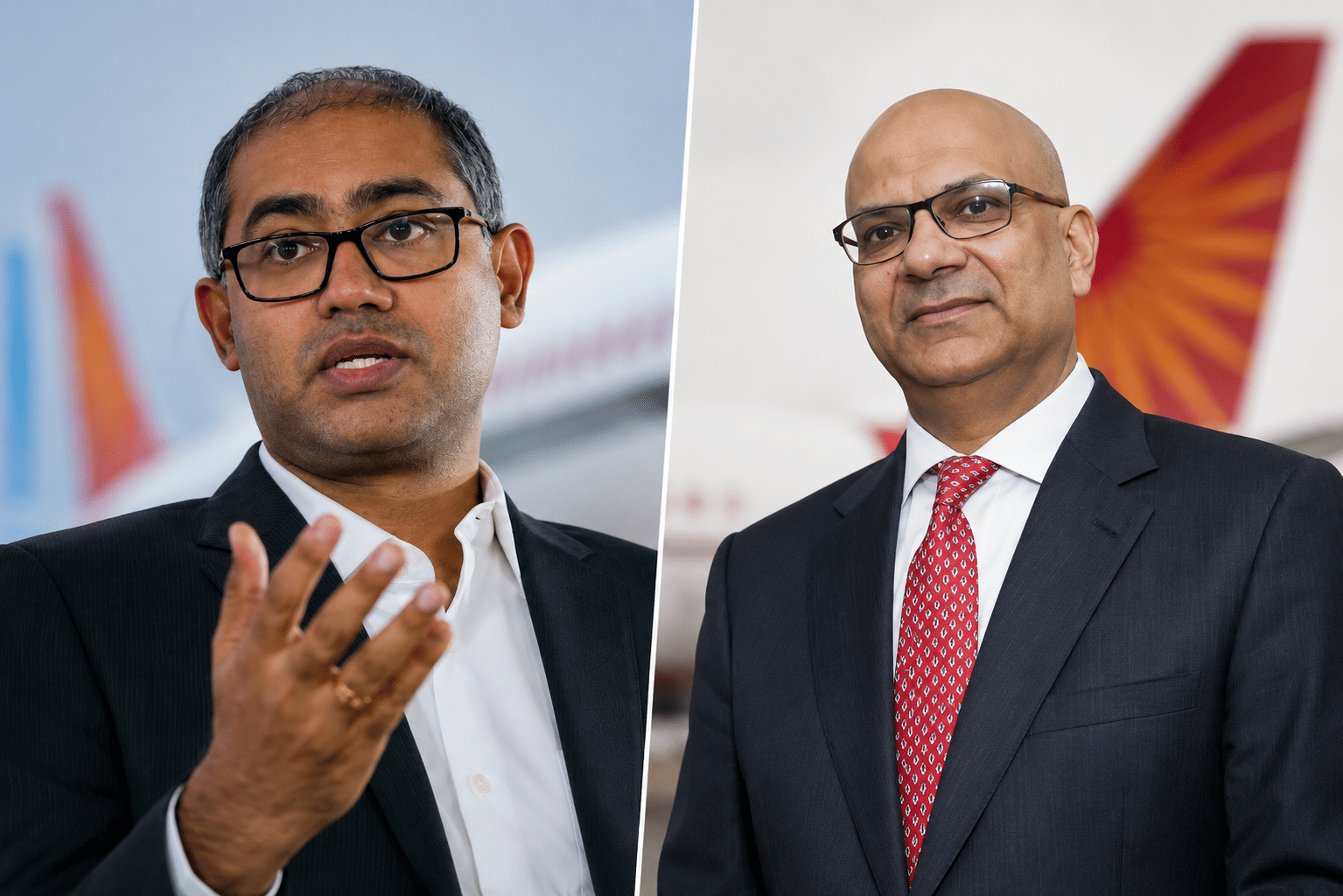
Air India's search for a new chief executive has narrowed to two leading contenders, with Chief Commercial Officer Nipun Aggarwal and former Vistara CEO Vinod Kannan emerging as the frontrunners to lead the airline's next phase.
The succession process comes at a critical juncture for the Tata Group-owned carrier, which is managing a large-scale transformation programme while grappling with operational disruptions, fleet delays and ongoing scrutiny following last year's Boeing 787 Dreamliner crash in Ahmedabad.
The search accelerated after Campbell Wilson announced his resignation in April. Multiple people familiar with the discussions told the Financial Times that Aggarwal and Kannan have become the two most prominent candidates under consideration.
Two candidates, two different strengths
The reported shortlist reflects a choice between internal continuity and extensive airline leadership experience.
Nipun Aggarwal, Air India's Chief Commercial Officer, is regarded as a key figure behind the airline's ongoing transformation efforts. According to the Financial Times, supporters view him as a disciplined executive with a strong focus on cost control and operational efficiency.
However, some industry observers have questioned whether Aggarwal has sufficient experience running a global full-service airline. One person familiar with the matter told the Financial Times that while financial discipline was important, leading an airline required a broader set of capabilities. A former Air India director also questioned his experience in managing a full-service international carrier.
Vinod Kannan, meanwhile, remains a strong contender due to his operational credentials. The former Vistara chief led the premium airline before its merger with Air India in 2024 and is widely regarded within the aviation sector as an experienced airline operator.
His track record has helped keep him firmly in contention as Tata evaluates the leadership qualities required for the airline's next chapter.
Leadership decision complicated by Tata succession debate
According to the Financial Times, the decision-making process has been influenced by uncertainty within Tata Sons itself.
Sources cited by the publication said Aggarwal is believed to have the support of Tata Sons Chairman N Chandrasekaran. However, Chandrasekaran has reportedly been cautious about making a final decision amid questions surrounding his own future at the conglomerate.
His current tenure is scheduled to conclude in February 2027.
The report said most Tata Sons board members support extending Chandrasekaran's term, while Noel Tata, chairman of Tata Trusts, has opposed another extension. Tata Trusts remains the principal shareholder of Tata Sons.
Questions remain over Campbell Wilson's departure
The leadership search has also reignited discussion about the timing of Wilson's exit.
According to people familiar with the matter cited by the Financial Times, Wilson had indicated a willingness to step down as early as December. One source said New Delhi's severe air pollution was among the factors he cited during discussions with Chandrasekaran.
Another individual told the publication that Wilson, who joined after the Tata Group acquired Air India from the Indian government in 2022, had always intended to remain in the role for approximately four years.
The succession challenge is also being shaped by a limited pool of experienced airline leaders within India.
Former Air India Executive Director Jitender Bhargava told the Financial Times that there was no obvious candidate groomed within either Air India or the wider Indian aviation industry to lead the carrier, making the selection process more constrained.
Incoming CEO faces a demanding agenda
Whoever ultimately takes charge will inherit an airline dealing with a complex mix of operational, financial and reputational challenges.
Key issues facing Air India include:
• Flight capacity reductions of up to 20% this year due to geopolitical tensions in West Asia and higher operating costs
• The continued closure of Pakistani airspace to Indian carriers, which Air India has reportedly estimated could cost nearly $600 million annually
• Ongoing scrutiny following the Ahmedabad Boeing 787 Dreamliner crash, which claimed 260 lives
• Delays to fleet expansion plans due to supply chain constraints and rising costs
• Continued profitability pressures despite an extensive transformation programme
• Integration and modernisation efforts following major aircraft orders and fleet renewal initiatives
India's Aircraft Accident Investigation Bureau has yet to release its final report into the Ahmedabad crash. The agency recently said the investigation would be completed only after all reviews, consultations and procedural requirements had been concluded.
A preliminary report found that fuel supply to the aircraft's engines was cut shortly after take-off. The findings have since been challenged by a pilots' association and family members of one of the pilots, who have sought a more comprehensive investigation through the Supreme Court.