








The long-running conflict between Elon Musk and Sam Altman has entered a decisive phase, shifting from public exchanges to a federal courtroom in California. At stake is not only the control and direction of OpenAI, but also broader questions about how artificial intelligence should be governed.
A month-long trial will examine Musk’s claims that OpenAI abandoned its founding principles and unfairly benefited from his early backing. Altman and OpenAI have rejected those allegations, setting the stage for one of the most closely watched disputes in the technology sector.
Origins of a partnership that turned contentious
Musk and Altman co-founded OpenAI in 2015 as a non-profit with the stated aim of ensuring that artificial general intelligence benefits humanity.
At the time, Musk was already a prominent figure through ventures such as Tesla and SpaceX, while Altman was leading the startup accelerator Y Combinator.
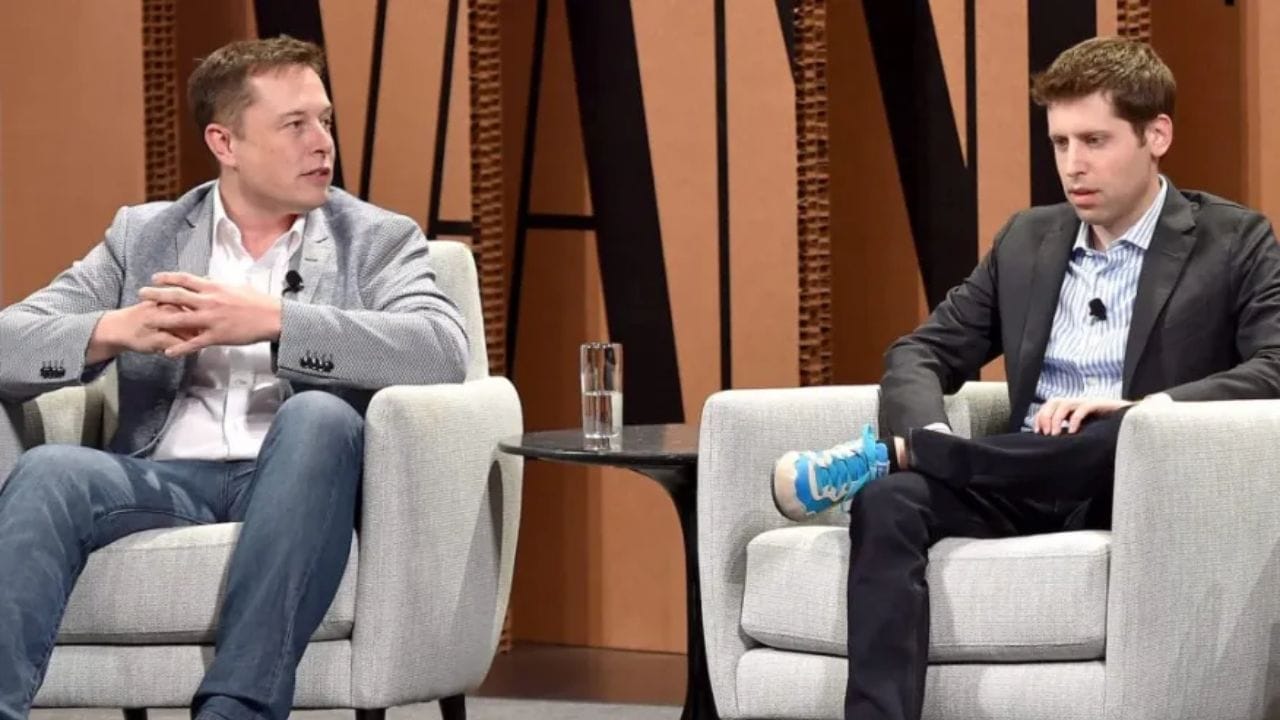
Their collaboration reflected a shared concern about the risks and opportunities of AI. Musk described the technology as transformative but “fraught with difficulty” during a joint appearance in 2015.
The relationship began to strain as OpenAI evolved.
Key early developments:
- OpenAI founded as a non-profit in 2015
- Shift towards a for-profit structure proposed in later years
- Musk exits the organisation in 2018 following reported disagreements
Musk has argued that the transition to a for-profit model violated the original mission. OpenAI maintains that the move was necessary to advance its goals and that Musk had previously supported the direction.
Legal battle moves into focus
The dispute is now being tested in court, where Musk is suing OpenAI, Altman, co-founder Greg Brockman and Microsoft, alleging that they improperly commercialised the organisation.
Musk is seeking billions of dollars in damages, which his legal team has described as “wrongful gains”, and has called for structural changes at OpenAI, including leadership changes.
OpenAI has countered that Musk’s claims are driven by competitive motives and dissatisfaction after leaving the company.
A nine-member jury has been empanelled, with the proceedings overseen by Judge Yvonne Gonzalez Rogers, who stated that the stature of the individuals involved would not influence the court’s approach, according to the BBC.
Public feud adds to legal complexity
The courtroom battle follows years of public friction between the two executives, often playing out on social media.
Musk has repeatedly criticised Altman and OpenAI, including referring to him as “Scam Altman” in a recent post. Altman has also responded publicly, including dismissing a takeover bid led by Musk and investors.
Notable flashpoints in the feud:
- Musk’s reported $97.4 billion offer to acquire OpenAI assets, which was rejected
- Public exchanges between Musk and Altman on social media platforms
- Disagreements over OpenAI’s commercial partnerships and structure
Legal experts cited in BBC reporting have suggested that Musk’s past attempts to acquire or influence OpenAI could complicate perceptions of his motivations.
The role of AI competition
The dispute is unfolding against the backdrop of an accelerating race to develop advanced AI systems.
OpenAI gained global prominence with the launch of ChatGPT in 2022, which reached 100 million monthly users within months, according to widely reported data.
Musk has since launched his own AI venture, xAI, which competes in the same space.
Key competitive context:
- OpenAI positioned as a leader in generative AI
- xAI emerging as a rival platform
- Strategic partnerships, including with Microsoft, shaping the market
OpenAI has argued that Musk’s legal challenge is an attempt to hinder a competitor as the race towards artificial general intelligence intensifies.
What the trial could determine
The case brings into focus competing interpretations of OpenAI’s founding purpose and governance.
Musk has stated in court, as reported by the BBC, that “it’s not okay to steal a charity”, framing the issue as one of principle rather than competition.
OpenAI’s legal team has countered that Musk left the organisation after failing to gain control and is now attempting to undermine it.
The proceedings are expected to include testimony from key figures in the AI ecosystem, including senior executives and former OpenAI personnel.
A moment with wider implications
Beyond the individuals involved, the trial highlights broader tensions in the technology sector between non-profit ideals, commercial realities and competitive dynamics.
The outcome could influence how AI organisations are structured and governed, particularly as the technology becomes more central to economic and social systems.
As the case unfolds, it is likely to shape perceptions not only of Musk and Altman, but also of how power and responsibility are balanced in the development of advanced AI.
A verdict is expected later this month, but the impact of the dispute may extend well beyond the courtroom.
With both sides deeply embedded in the global AI race, the outcome could affect competitive positioning, partnerships and regulatory scrutiny in the sector.
For now, what began as a shared vision has evolved into a defining conflict over control, credibility and the future direction of artificial intelligence.