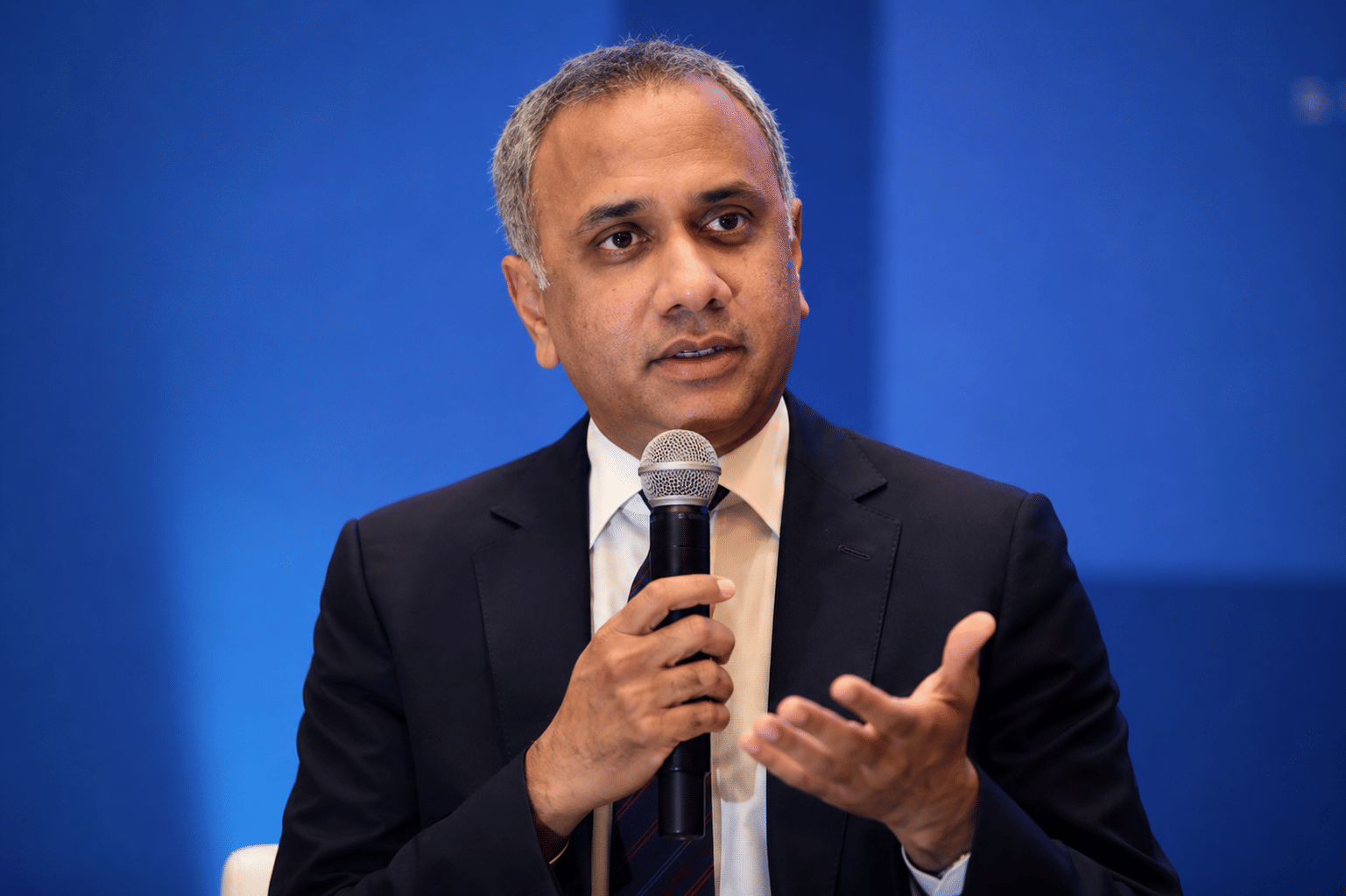
Infosys Chief Executive Officer Salil Parekh earned ₹82.6 crore in total remuneration during fiscal year 2026, marking a modest increase from the ₹80.6 crore he received in the previous year, according to the company's annual report.
The increase was largely driven by gains from exercised stock awards, underscoring the growing role of equity-linked compensation in executive pay packages across the technology sector.
The disclosure comes in a year when Infosys crossed $20 billion in annual revenue, expanded its artificial intelligence initiatives and returned more than $4 billion to shareholders through dividends and buybacks.
Stock awards account for majority of compensation
According to the company's annual report, the largest component of Parekh's remuneration came from exercised restricted stock units (RSUs).
His FY26 compensation included:
- ₹50.75 crore in perquisites from exercised stock options
- ₹8.5 crore in fixed salary
- ₹23.35 crore in variable pay and incentives
- Total remuneration of ₹82.6 crore, compared with ₹80.6 crore in FY25
Infosys reported that Parekh exercised 272,400 RSUs under the company's 2015 stock incentive plan and 64,690 RSUs under the 2019 plan during the fiscal year.
The company also granted additional stock-based incentives linked to financial performance, environmental, social and governance (ESG) targets, total shareholder return metrics and annual performance objectives.
Pay ratio highlights scale of executive compensation
Infosys disclosed that Parekh's remuneration amounted to 742 times the median employee remuneration during FY26 when exercised stock incentives were included.
Excluding stock-option exercises, the ratio stood at 289 times the median employee pay.
The disclosure provides insight into the impact of equity-linked rewards on executive compensation, particularly in years when stock awards are exercised.
The remuneration figures were released as the company continues to evaluate employee salary revisions for FY27.
According to comments previously made by Chief Financial Officer Jayesh Sanghrajka, Infosys has not yet finalised either the timing or the magnitude of wage increases, citing an uncertain macroeconomic environment.
Growth milestones underpin performance year
The compensation disclosure coincides with a year of significant operational milestones for Infosys.
In his annual letter to shareholders, Parekh highlighted several achievements recorded during FY26:
- Annual revenue crossed $20 billion
- Adjusted operating margin reached 21%
- More than $4 billion was returned to shareholders through dividends and buybacks
- AI programmes were deployed across 90% of Infosys' top 200 clients
- The company recruited more than 20,000 college graduates
- Global workforce strength exceeded 325,000 employees
The company continued to position artificial intelligence as a central pillar of its growth strategy during the year.
AI remains a strategic priority
In his message to shareholders, Parekh said Infosys was strengthening its position in AI-led enterprise transformation through its Infosys Topaz platform.
He noted that AI programmes are now being deployed across the vast majority of the company's largest client relationships as enterprises increasingly seek productivity and efficiency gains from generative AI technologies.
The developments reflect a broader shift within the global IT services industry, where technology providers are investing heavily in AI capabilities while balancing shareholder returns, workforce growth and executive compensation structures.
As Infosys enters FY27, investors will be closely watching the company's growth trajectory, AI execution strategy and upcoming decisions on employee wage revisions amid continued economic uncertainty across key global markets.