








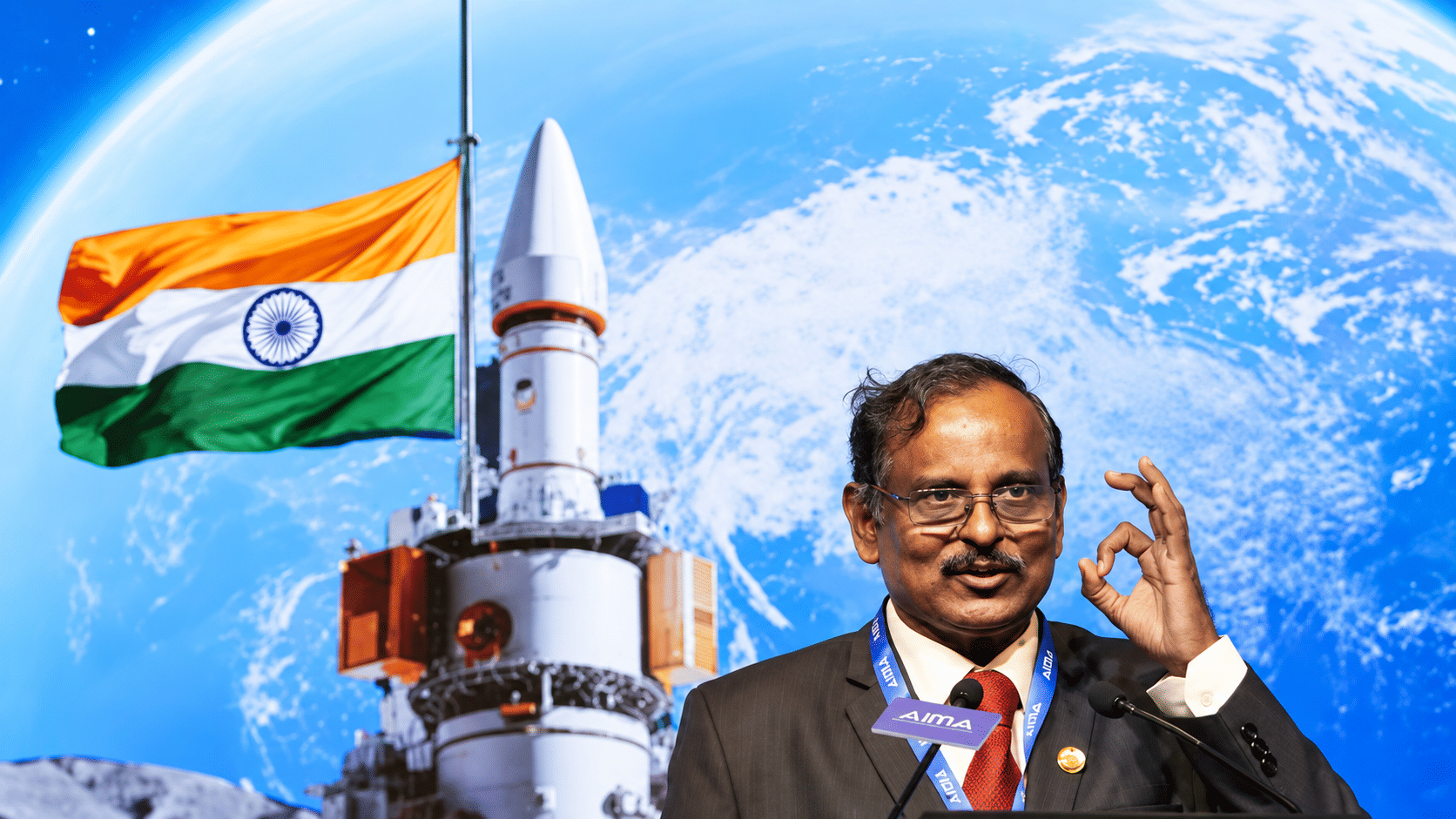
ISRO Chairman V Narayanan has sought to calm concerns within the Indian space agency, stating unequivocally that ISRO is not being privatised despite the government's continued push to deepen private sector participation in the space ecosystem.
Speaking on the sidelines of the Bengaluru Space Expo, Narayanan responded to concerns raised by employee groups that have sought clarity on the long-term implications of India's space sector reforms for ISRO's role, workforce and recruitment.
“The space sector reform was rolled out six years back. As per that, we are supposed to handhold the private sector and grow the space ecosystem,” Narayanan said.
Reassurance amid workforce concerns
The clarification comes as sections of ISRO employees have expressed concerns over the government's efforts to encourage greater private sector involvement in space activities.
Employee associations from several ISRO centres have sought official clarification on policy changes and their potential impact on the organisation's future responsibilities and capabilities.
Narayanan stressed that private industry has long been embedded within India's space programme, particularly in manufacturing and supply chain operations.
He said Indian companies already play a major role in supporting launch vehicle production and related activities.
“Whenever a PSLV or a GSLV is lifting off, don't think that everything is done by ISRO. Almost 80% of the budget is invested by Indian industries. Around 450 industries are working for us,” he said.
Private participation seen as capacity builder
Narayanan positioned the reforms as an effort to expand India's overall space capabilities rather than reduce the importance of the national space agency.
India's growing launch ambitions will require significantly deeper collaboration between ISRO and industry to scale manufacturing capacity and mission readiness.
He noted that India's demand for launch services is expected to rise substantially in the coming years.
“The country's requirement is around 50 launch vehicles per year,” Narayanan said.
Meeting such demand would require a broader industrial ecosystem alongside ISRO's existing capabilities, he indicated.
Key points highlighted by the ISRO chief
- ISRO is not being privatised, Narayanan said.
- Space sector reforms were introduced around six years ago to strengthen private participation.
- Around 450 Indian industries currently work with ISRO.
- Narayanan said nearly 80% of launch programme spending flows through Indian industry partners.
- India could require around 50 launch vehicles annually, necessitating greater ecosystem capacity.
- Employee concerns regarding policy changes will be addressed, according to the ISRO chairman.
No formal written clarification planned
Narayanan also addressed demands for an official written clarification on the government's policy direction.
He said issuing a formal response solely because a limited number of individuals or groups had submitted representations would not be appropriate.
At the same time, he acknowledged employee concerns and said the organisation would engage with its workforce.
“We are 20,000 employees. But we will address the employees,” he said.
Focus remains on ecosystem growth
The chairman's remarks form part of a broader effort by ISRO leadership to reassure employees as India's space sector undergoes structural change. The government has increasingly encouraged private companies to participate in satellite manufacturing, launch services and other space-related activities as it seeks to build a larger domestic space economy.
For now, ISRO's leadership maintains that the agency will remain central to India's space ambitions while private industry expands its role in supporting future growth and meeting rising launch requirements.