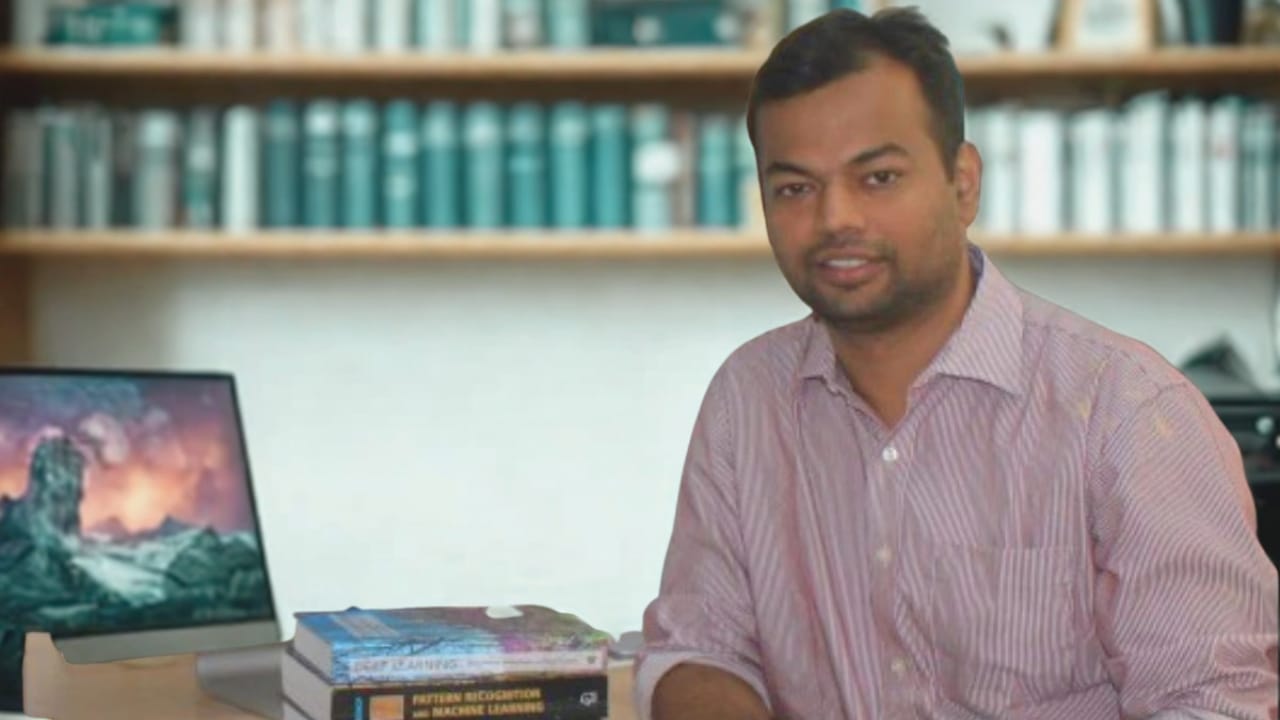
TIME magazine has named Mitesh Khapra, associate professor at the Indian Institute of Technology (IIT) Madras, among its 2025 list of the 100 most influential people in artificial intelligence. The recognition places Khapra alongside some of the most prominent global figures in the field, including OpenAI’s Sam Altman, Meta founder Mark Zuckerberg and xAI’s Elon Musk.
The annual list, released by TIME this week, highlights individuals shaping the development and governance of artificial intelligence. Unlike many of the executives featured, Khapra was recognised for his academic research and his leadership in advancing open-source resources for Indian languages.
Focus on Indian languages
Khapra’s research spans natural language processing and machine learning, with particular emphasis on the creation of datasets and tools for under-represented languages. In 2019, he co-founded AI4Bharat, a research initiative at IIT Madras dedicated to building publicly available datasets and models for India’s diverse linguistic landscape.
TIME noted that “almost every Indian startup working on voice technology for regional languages uses the datasets created by Khapra and his team”. This contribution has helped shift the trajectory of Indian research. As Khapra explained, “Fifteen years ago, an average PhD student in India working on language technology would mostly focus on English-related problems. But now, with the availability of these datasets, I see a shift. Indian students are increasingly working on challenges specific to Indian languages.”
AI4Bharat’s projects have spanned nearly 500 districts across India, collecting thousands of hours of speech from people of varied educational, cultural and economic backgrounds. The work covers all 22 constitutionally recognised languages, creating one of the largest repositories of its kind.
These datasets have already been embedded in national infrastructure. According to TIME, around 80 per cent of the data powering the Government of India’s Bhashini programme—a flagship initiative to make digital services available in local languages—originated from AI4Bharat. The resources have also been used by the Supreme Court of India to translate documents and by agricultural platforms that allow farmers to register subsidy concerns in their local languages. Global technology companies have incorporated the datasets to improve performance in Hindi, Marathi and other widely spoken languages.
Career and recognition
Before joining IIT Madras, Khapra worked at IBM Research India on machine translation and deep learning. He earned his MTech and PhD degrees at IIT Bombay. His research has been presented at leading conferences including NeurIPS, AAAI and the Association for Computational Linguistics, where he has also served as an area chair.
Over his career, Khapra has received honours such as the IBM PhD Fellowship, the Microsoft Rising Star Award and the Google Faculty Research Award in 2018. These accolades, together with the TIME recognition, underscore his growing impact on global AI scholarship.
A generational shift
In its profile, TIME observed that Khapra’s work has helped catalyse a generational shift in India’s approach to artificial intelligence. By creating high-quality, open-source resources in multiple Indian languages, he has enabled both academic researchers and start-ups to focus on challenges directly relevant to the country’s population.
For India, the implications extend beyond research. The availability of language datasets has become central to ensuring that AI systems can support inclusive access to services, bridging the gap between English and local languages.