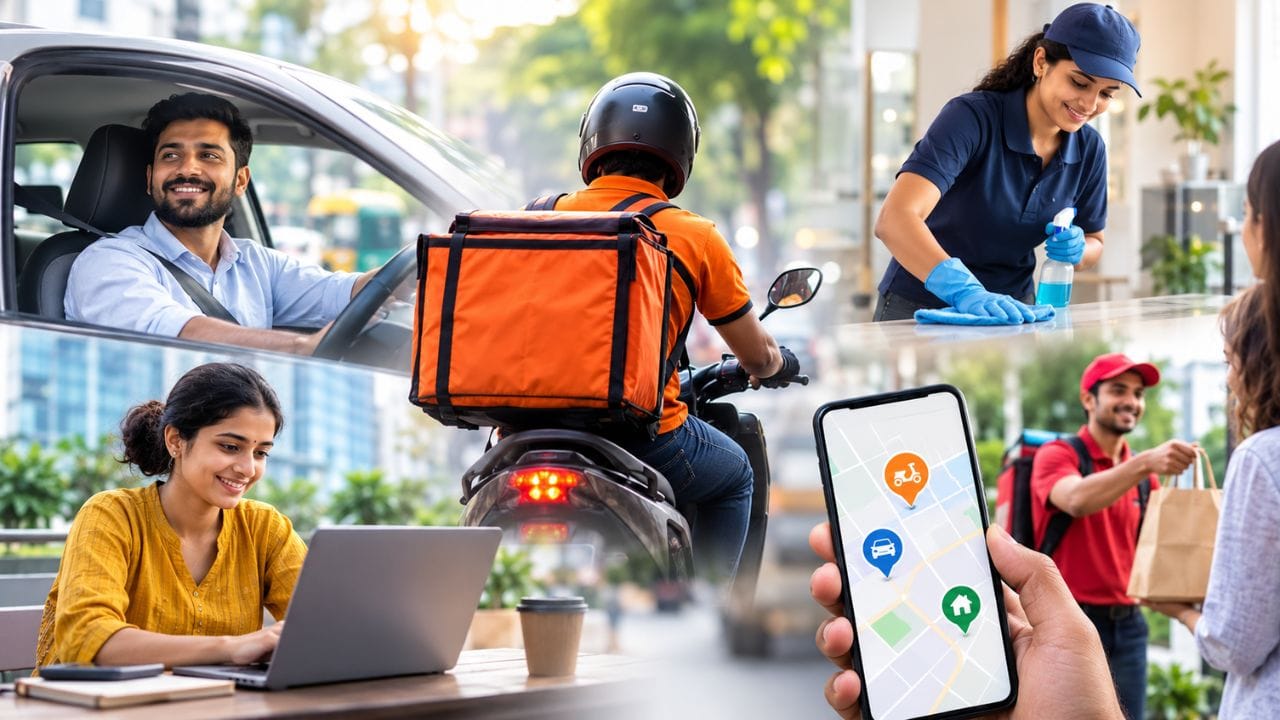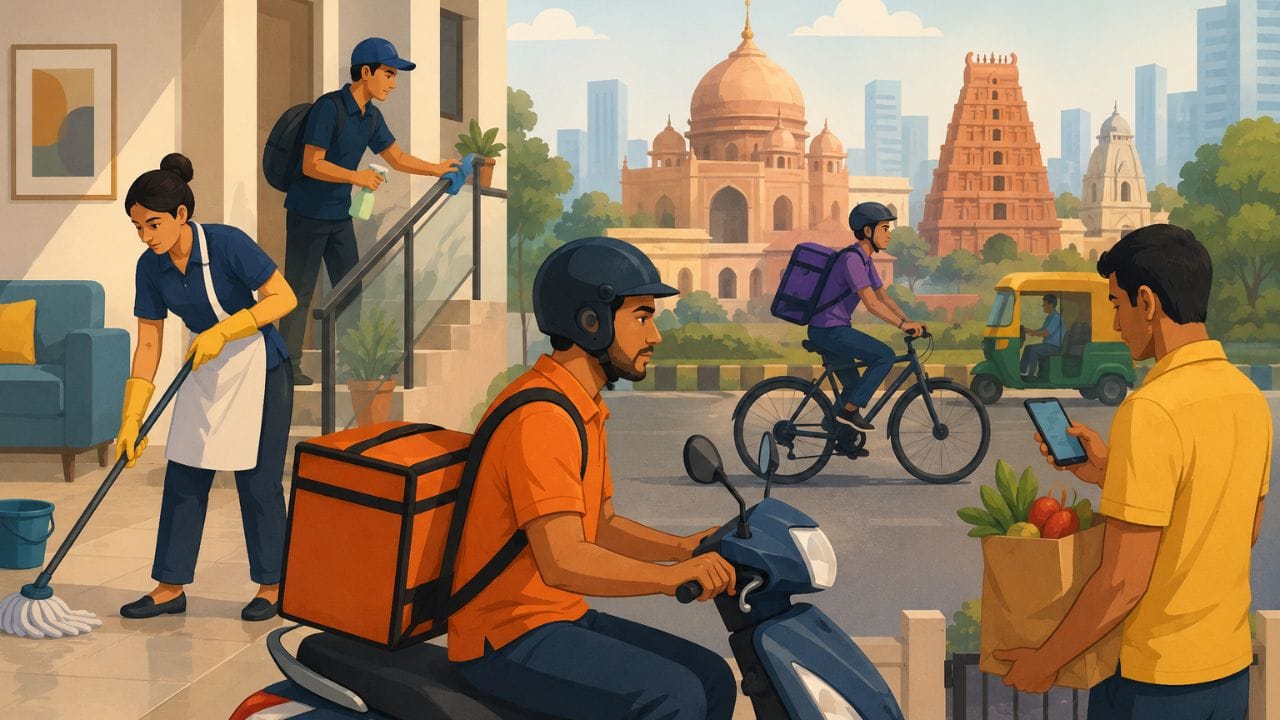
Gig work is being recognised as a significant source of income for Indian workers, with platform-based workers earning around 2.5 times more per hour than people in comparable formal and informal occupations, according to a new report by Redseer Strategy Consultants.
The report, Gig Internet Workforce in India, estimates that gig internet work could help bridge nearly 70% of India’s non-farm employment gap by 2030.
It also highlights flexibility, low entry barriers and growing welfare coverage as key reasons workers are turning to the sector.
Gig work delivers higher hourly earnings
Workers across delivery, ride-hailing and home services earn an average net hourly income of around Rs 138, compared with approximately Rs 54 across comparable formal and informal occupations, the report found.
The earning advantage is coupled with greater control over working hours. More than 90% of monthly active gig workers participate part-time, allowing them to combine platform work with education, another job or other responsibilities.
Redseer identifies three broad groups within the gig workforce. Some depend on gig work as their primary source of income, while others use it to supplement regular earnings. A third group uses gig work temporarily during periods such as education, migration or career transitions.
Flexibility drives participation
For many workers, the appeal of gig work extends beyond earnings.
A factory worker cited in the report earns Rs 15,000 from his main job and supplements it with around Rs 6,000 from weekend ride-hailing. A nursing student uses gig work to help fund her education, while a Bengaluru cook drives a taxi during evenings and weekends and sometimes earns more from gig work than from cooking.
The flexibility allows workers to fit income generation around their existing commitments rather than replacing them entirely.
Gig work can open new career paths
The report also points to the longer-term value of platform work.
Around 70% of surveyed workers said their gig experience had improved their future earning opportunities. Skills such as customer handling, time management, navigation and using digital tools were among those developed through platform work.
A demonstrable work history and exposure to customers and professional networks could also help workers move into higher-paying gigs, formal employment or entrepreneurship.
Kushal Bhatnagar, Partner, Redseer Strategy Consultants, said, “For India, the value of gig work lies in the room it creates for people to earn around the realities of their lives. A regular salary can be supplemented over a weekend, college fees can be funded without giving up an education, and a period between jobs need not become a period without income.”
He added, “These choices matter in a country where people enter the workforce from very different circumstances and with very different ambitions. As earnings, skills and social protection become stronger, gig work can play an important part in improving household resilience and widening participation in India’s economic growth, while bridging the unemployment gap.”
Welfare coverage is expanding
Worker protection is also becoming a larger part of the gig economy, with accident insurance, emergency assistance and skills development available across many platforms.
Other benefits, including health insurance, maternity support, medical assistance, loss-of-pay insurance and credit facilitation, are available across parts of the sector.
The overall breadth of welfare coverage for gig workers is comparable with formal salaried employment and exceeds that available across several traditional informal occupations.
Public policy is also adding to the emerging safety net, although the report highlights the need to continue strengthening support as the sector expands.
Gig work could help close India’s jobs gap
India needs to create millions of non-farm jobs each year, while traditional employment models are struggling to absorb the growing workforce.
Redseer estimates that gig internet work could bridge up to around 70% of this employment gap by 2030.
The findings suggest that gig work is increasingly becoming more than a short-term income option. For workers balancing jobs, education, family responsibilities or career transitions, the combination of earning potential, flexibility and growing social protection could make platform work a more important part of India’s livelihood economy.