









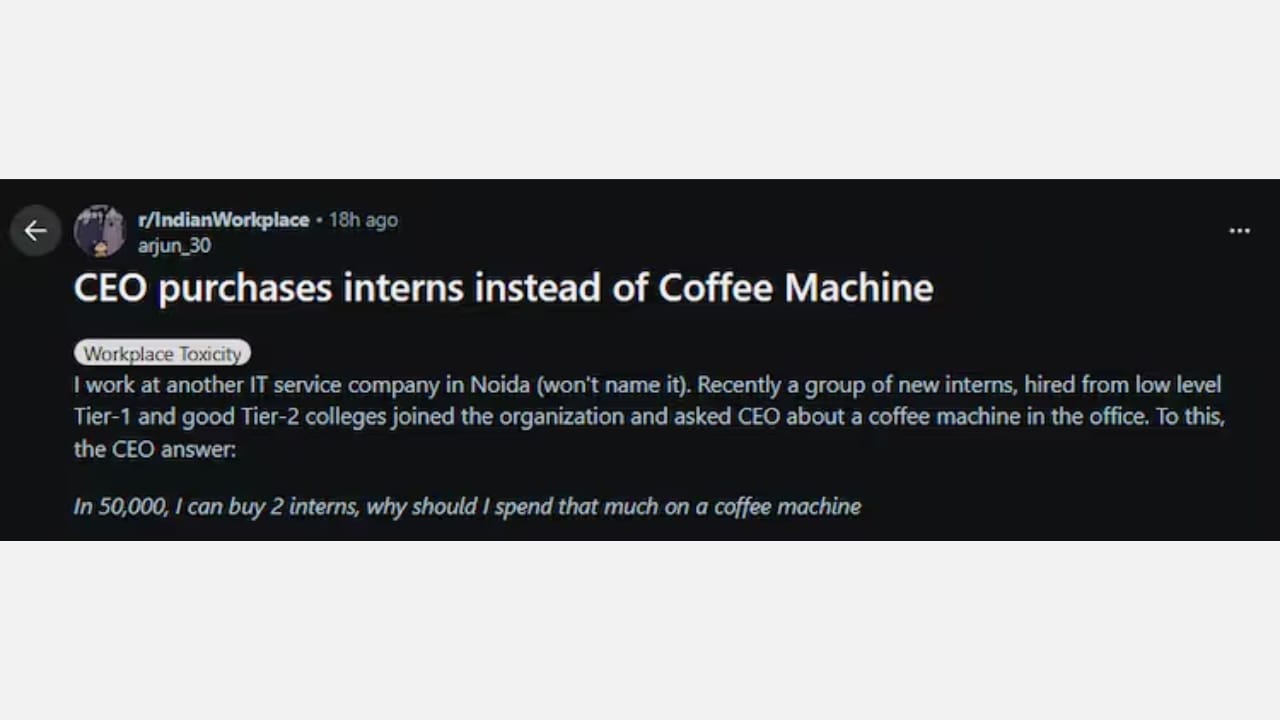
A Noida-based IT services CEO has drawn widespread criticism after telling employees he could “buy two interns” for ₹50,000 instead of installing a coffee machine in the office, according to a post shared on the online forum r/IndianWorkplace.
The employee who posted the incident wrote that a group of newly joined interns had asked the CEO whether the company could provide a coffee machine. The interns, he said, came from Tier-1 and Tier-2 engineering colleges and were still familiarising themselves with the workplace.
The CEO allegedly dismissed the request, saying, “In ₹50,000, I can buy two interns. Why should I spend that much on a coffee machine?” The employee said the remark circulated quickly within the organisation before it appeared online, where it sparked strong reactions.
A window into workplace culture
The incident has reopened debate about how some Indian employers value young talent. The employee who shared the account said the CEO’s response reflected “the exact mindset” that views interns as low-cost labour rather than long-term contributors to the organisation.
Users on the subreddit reacted with anger and sarcasm. One commenter wrote that it was “another day, another bizarre Indian company story.” Others argued that attitudes devaluing early-career talent contributed to India’s struggle to keep pace with the United States and China in advanced technology sectors.
Several users also highlighted a pattern across parts of the IT industry: long hours, low pay for interns and freshers, and limited access to basic workplace facilities. Some said such experiences push skilled graduates to seek opportunities abroad or shift careers entirely.
While the incident involves one company, the reaction reflects broader anxieties in India’s technology workforce. Firms have increasingly relied on low-cost entry-level workers to manage competitive pressures, even as attrition rates among young engineers remain high.