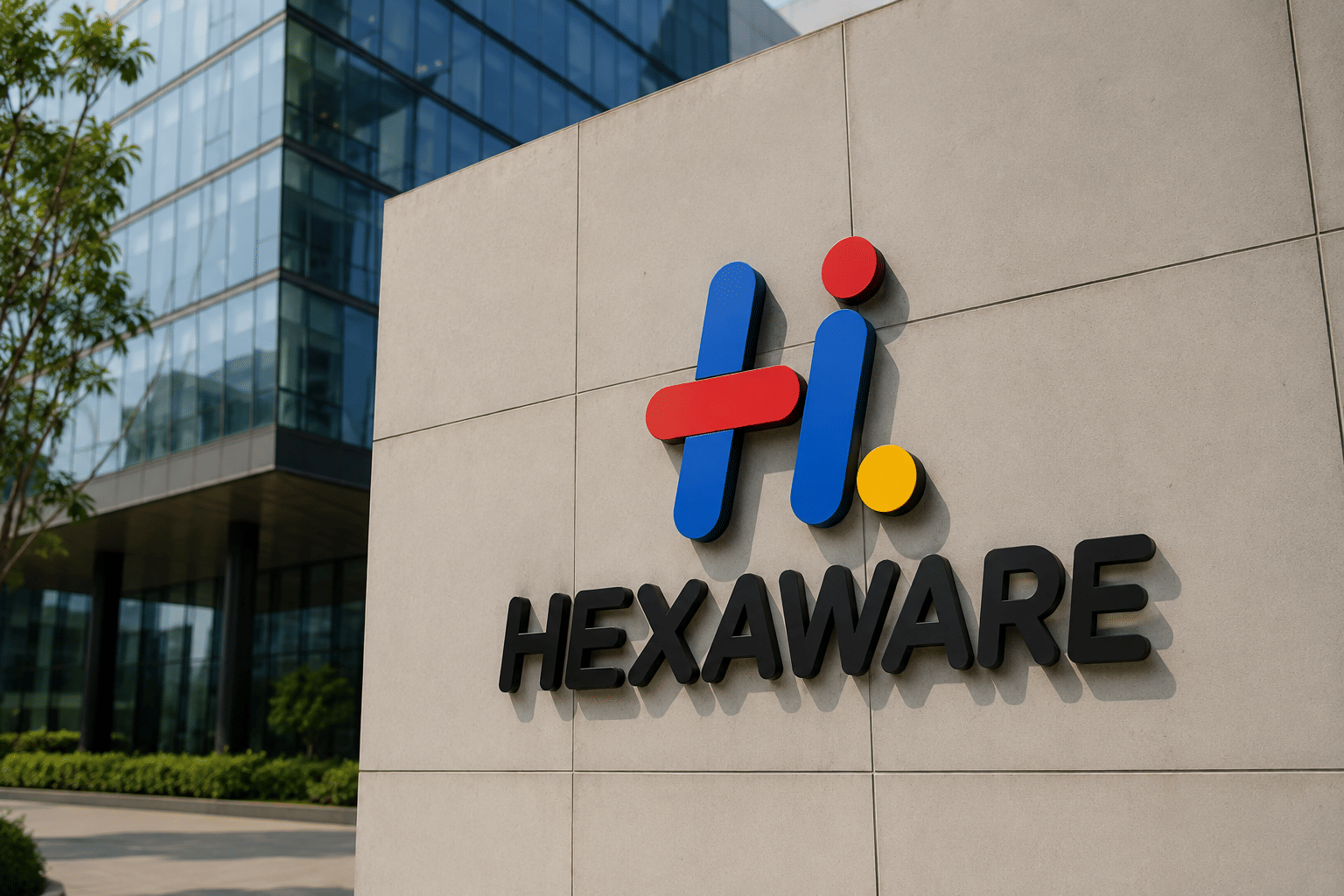
Hexaware Technologies has outlined plans to grow its workforce at its newly inaugurated GIFT City TechFin centre from around 250 employees to 1,000 over the next three years, as the IT services provider strengthens its presence in financial technology services for international clients.
The new facility, inaugurated by Gujarat Chief Minister Bhupendra Patel, will serve banking, financial services and insurance (BFSI) customers, particularly in the United States and Europe, which together account for the majority of Hexaware’s business.
Speaking at the new centre in Gandhinagar, Vikash Kumar Jain, Chief Financial Officer of Hexaware, said the company remains committed to scaling its operations at GIFT City despite adopting a phased expansion approach.
“This is a 400-seater office. We are starting with a modest number of close to 250 employees. But our ambition is to scale up to 1,000 employees in the next three years,” Jain said, according to reporting by BusinessLine.
New hub to support global financial services clients
The GIFT City centre has been established as a delivery hub focused on technology services for BFSI customers across international markets.
According to Jain, the facility will support projects spanning:
- Software engineering
- Cloud transformation
- Data engineering
- AI-led transformation initiatives
The company expects the centre to primarily cater to clients in the United States and Europe, two regions that represent a significant share of Hexaware’s revenue base.
“The work is primarily information technology,” Jain said, noting that the facility's focus will remain centred on banking, financial services and insurance clients.
Expansion forms part of a phased growth strategy
The hiring target comes amid questions over whether Hexaware had revised earlier ambitions for its GIFT City operations.
In December 2024, businessline reported that Hexaware, in its application to the International Financial Services Centres Authority (IFSCA), had proposed creating around 2,000 jobs and occupying approximately 4,925 square metres of office space within GIFT City.
The newly opened office currently spans around 2,500 square metres.
Addressing comparisons with the earlier plans, Jain said the current expansion should be viewed as part of a phased strategy, with the immediate priority being the establishment of a delivery centre serving international customers.
He added that the company intends to continue expanding beyond the 1,000-employee milestone.
International markets remain the primary growth engine
While Hexaware is expanding its footprint in India, the company continues to derive most of its business from overseas markets.
According to Jain:
- Around 70% of business comes from the United States
- Approximately 20% comes from Europe and the UK
- About 6% comes from Asia-Pacific and the Middle East
- India contributes roughly 2% of global revenue
“Only recently has India been a focus area for us. Primarily we have been focused on markets outside India,” Jain said.
He described the GIFT City operation as the company’s first financial services centre established from an International Financial Services Centre perspective in India and said the location offered advantages for cross-border business operations.
Talent retention and operating efficiency influence location choice
Beyond its role as a financial services hub, Hexaware believes GIFT City and Ahmedabad offer operational benefits compared with larger metropolitan technology centres.
Jain said salary levels are broadly comparable with cities such as Bengaluru, Chennai, Mumbai, Pune and Hyderabad. However, he pointed to differences in living costs, commute times and employee retention.
According to the company, lower attrition rates in Ahmedabad and GIFT City could provide long-term advantages by reducing recruitment and training costs while improving workforce stability.
The strategy reflects a broader trend among technology companies exploring emerging business hubs beyond India's traditional IT centres as they seek access to talent while managing operational costs.