








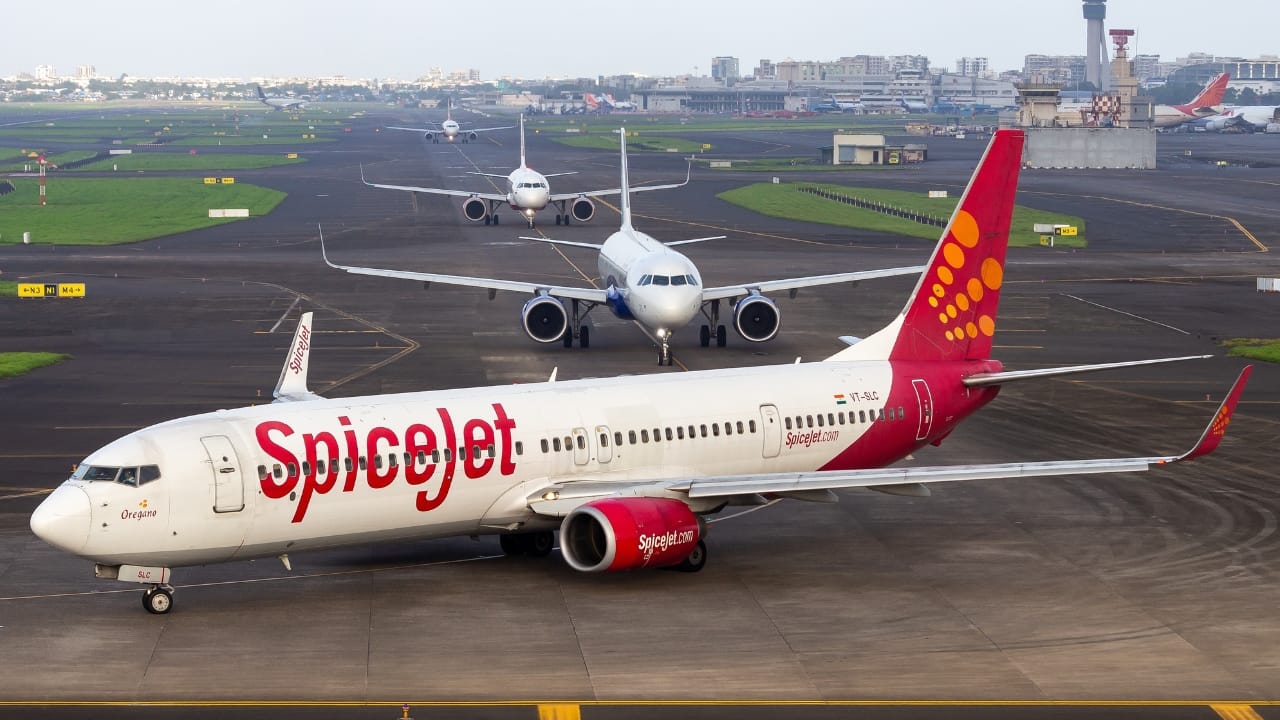
SpiceJet has delayed salary payments for a large section of its workforce, a move that underlines the persistent financial pressure on one of India’s most fragile airlines.
According to a report by Press Trust of India, staff earning up to ₹55,000 per month were paid on time for August, while those in assistant manager roles and above are still awaiting salaries. Employees in this bracket are facing delays of between 10 and 15 days. The airline, based in Gurugram, did not respond to requests for comment.
The carrier employed 6,484 people in FY25, including nearly 4,900 permanent staff, according to its annual report. With pay now staggered across levels, senior employees are bearing the brunt of the liquidity squeeze. The situation has created visible frustration among staff, many of whom have already endured cycles of uncertainty linked to the airline’s finances.
Employee morale is particularly sensitive given the scale of cuts the airline has already made. SpiceJet has been operating with fewer than 20 planes in active service — out of a fleet of 53 — as of mid-September, data from Planespotter.com shows. This compares with its repeated announcements in the past year about adding aircraft to the fleet.
Finances under pressure
The airline posted a net loss of ₹238 crore in the June quarter, weighed down by high operating costs and subdued capacity. Revenue dropped by more than a third year-on-year to ₹1,106 crore.
The shortfall has translated directly into the ability to meet obligations. Analysts say delays in paying staff highlight a liquidity crunch that threatens to erode confidence at a time when the airline is already struggling to convince investors of its turnaround story.
“Salary delays in aviation are not just a financial red flag but an operational risk,” one consultant told PTI. “Retention of skilled staff is critical when the airline already has most of its planes grounded.”
Questions over governance
The payment delays have coincided with disclosures about financial arrangements with management. The FY25 annual report revealed that Ajay Singh, SpiceJet’s chairman and managing director, received an interest-free advance of ₹32 crore earlier this year. The loan, approved by the board, was later adjusted against Singh’s salary for April and May. The airline insisted the advance was not prejudicial to shareholders’ interests.
Still, the optics are difficult to ignore: an airline delaying payments to senior employees while extending large sums to its promoter raises questions about financial priorities. Governance standards at SpiceJet have previously been criticised in investor circles, and the new disclosures are likely to sharpen scrutiny.
Legacy issues not behind it yet
SpiceJet has attempted to signal that it is clearing its legacy obligations. In August it repaid $24 million to Credit Suisse after a protracted dispute, with executives suggesting the airline had put its “legacy issues” behind it.
But the combination of salary delays, continuing losses and a grounded fleet tells a different story. The mismatch between promises and operational realities is becoming more acute. At the time of its ₹3,000 crore qualified institutional placement in September 2024, the airline pledged to use fresh capital to revive grounded aircraft, invest in technology and expand into new markets. Twelve months later, the operational fleet remains largely unchanged.
The delayed salaries will sharpen concerns over SpiceJet’s ability to stabilise its finances and retain critical staff. In a hyper-competitive domestic market dominated by IndiGo and a resurgent Air India, labour unrest could further erode its standing.