Over the past decade, Global Capability Centres (GCCs) have transformed from cost-efficient delivery centres into strategic hubs that drive innovation, own products, and influence enterprise-wide decisions. Today's GCCs are no longer just executing work; they are shaping business strategy, leading global transformation programmes, and partnering directly with stakeholders across the world.
As this role evolves, so does the definition of leadership. Technical expertise remains essential, but it is no longer enough. The leaders who thrive in global organisations are those who can communicate with clarity, build trust across cultures, influence without authority, and bring diverse teams together around a common goal.
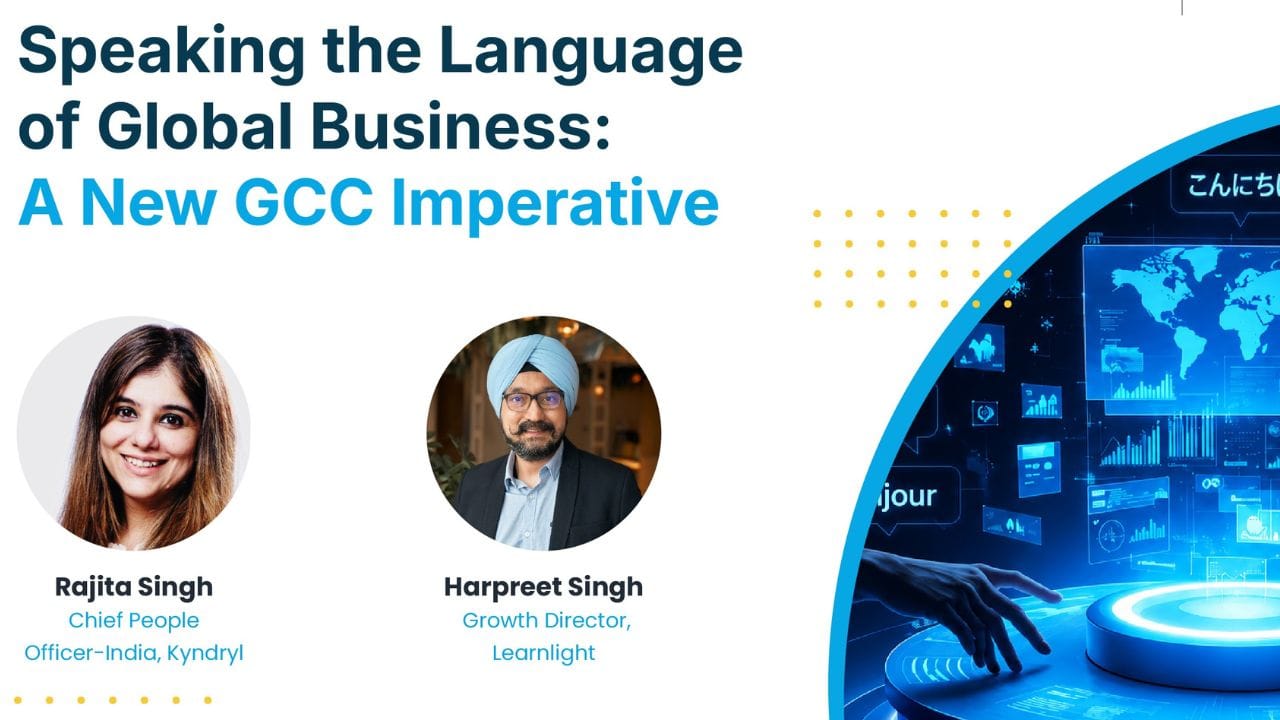
These themes formed the centrepiece of a recent People Matters webinar, held in partnership with Learnlight, featuring Rajita Singh, Chief People Officer - India at Kyndryl, and Harpreet Singh, Growth Director at Learnlight. Moderated by Smriti, the discussion explored how organisations can prepare GCC talent for an increasingly interconnected and AI-enabled future.
From execution to influence
One of the strongest themes that emerged during the discussion was that communication has evolved from a support skill into a strategic business capability.
As GCCs take ownership of products, innovation, and customer-facing responsibilities, professionals are expected to do much more than deliver technical excellence. They must explain complex ideas to global stakeholders, influence decisions, lead virtual teams, and collaborate across cultures and time zones.
Rajita Singh captured this shift perfectly: "Technical excellence is now a commodity. Every GCC can code, analyse and execute. The real differentiator is communication that cannot be automated." The conversation highlighted that future-ready leaders are not simply experts in their domain, as they are individuals who can inspire confidence, build relationships, and influence business outcomes.
Communication is more than language
One misconception organisations often make is treating communication as language training alone. The panel highlighted that effective communication develops in stages.
Harpreet Singh introduced a simple framework that resonated strongly with the audience - the Communication Pyramid. At its foundation are Language Skills, which enable people to express ideas clearly. The next layer is Intercultural Skills - understanding different approaches to hierarchy, feedback, decision-making, and collaboration across cultures. At the top are Interpersonal Skills, including executive presence, influence, negotiation, empathy, coaching, and conflict resolution.
"Communication isn't one skill - it's a progression. We first learn to communicate, then collaborate across cultures, and finally influence people."— Harpreet Singh.
As GCC professionals take on more strategic responsibilities, developing all three layers becomes essential.
AI can scale learning - but not leadership
Artificial Intelligence is transforming how organisations develop communication capability.
AI can personalise learning journeys, identify skill gaps, simulate business conversations, and provide immediate feedback, making high-quality learning accessible at scale.
However, both speakers agreed that AI has limits. Leadership is built on judgment, empathy, trust, and the ability to navigate context. Rajita illustrated this with a memorable analogy: "Learning with AI is like learning to drive. It helps you master the fundamentals, but nobody truly learns to drive until someone sits beside them in real traffic. That is the passenger seat AI will never occupy."
The discussion concluded that AI should be viewed as an accelerator rather than a replacement. The most effective organisations will combine AI-powered personalisation with coaching, mentoring, and real-world practice.
Making the business case for communication
Another important discussion centred on how HR leaders can justify investment in communication capability. The panel agreed that communication should no longer be positioned as a "soft skill." Instead, it should be viewed as a business capability that directly influences organisational performance.
Poor communication slows decision-making, creates misunderstandings, weakens customer relationships, and delays execution. Strong communication, on the other hand, improves collaboration, accelerates projects, strengthens stakeholder confidence, and prepares employees for larger global leadership roles.
As Harpreet explained: "AI can certainly make people more productive, but communication makes organisations more effective. Technology gives organisations speed, but communication gives them alignment."
Preparing the next generation of global leaders
Looking ahead, the panel agreed that the most successful GCCs will be those that invest equally in technology and human capability.
That means moving beyond one-off communication programmes and embedding communication, intercultural awareness, and leadership development into everyday work.
AI will continue to transform the workplace, but the capabilities that distinguish future leaders will remain deeply human: communication, curiosity, adaptability, cultural intelligence, empathy, and the ability to influence across diverse teams.
As GCCs continue their journey from delivery centres to global business leaders, these capabilities will become a defining competitive advantage. Because while AI can improve productivity, people will continue to create trust, inspire action, and drive transformation.