







AI & Emerging Tech
AI adoption to organisational redesign: Udayan Dutt on the CHRO’s evolving mandate



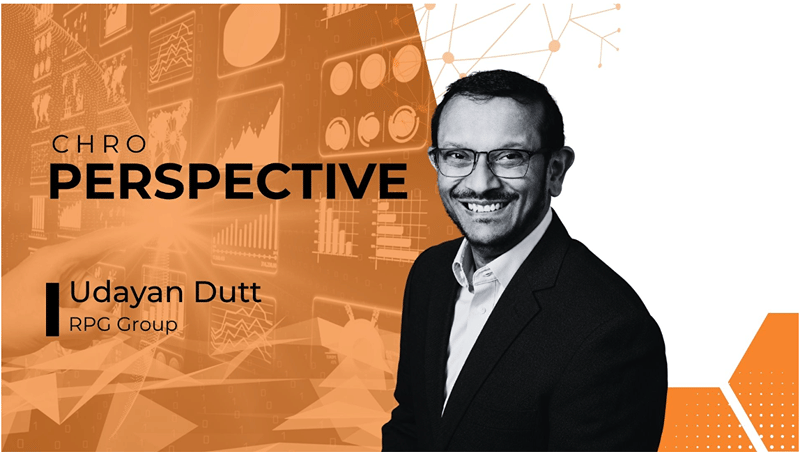
RPG Group’s Udayan Dutt explains how HR can align AI, business priorities and workforce capabilities while preserving human judgement and institutional knowledge.
Artificial intelligence is changing how organisations allocate work, build capabilities and make decisions. For HR leaders, the challenge is integrating AI into business operations while keeping people central to organisational transformation.
At RPG Group, this effort includes structured AI learning for employees and managers, asking leaders to experiment and bring to practice AI-based solutions on critical business problems, and supplementing the same with appointing a group-level Chief AI Officer to help build capabilities and supplement efforts on finding solutions using AI for the business. The approach focuses on augmenting employee capabilities rather than replacing the institutional knowledge built over years.
In this conversation with People Matters, Udayan Dutt, President-Group Human Resources, RPG Group, discusses the values guiding his approach to people, the role of HR in AI adoption, the difficulty of measuring returns on AI investments, and the need to connect business strategy with technology and workforce capabilities.
Edited excerpts:
People philosophy and the changing role of HR

Looking back at your career across industries, which values about people have remained unchanged, and what aspect of HR have you had to rethink over time?
I believe a common set of values remains consistent across professionals, irrespective of their function or industry. The first is honesty, ethics and governance. People want to work for organisations that uphold these principles and expect employees to demonstrate them consistently.
The second is care and respect for one another. These expectations remain consistent across industries and geographies. People want to feel respected and expect the same consideration for others.
The third is growth and prosperity. In the corporate world, people seek a larger purpose linked to both. The definition may change over time, but the underlying aspiration remains. Finally, there is the satisfaction that comes from achieving something.
One assumption I have continually revisited is the use of demographics to predict employee preferences. Age, gender and life stage may suggest certain choices, but actual preferences can differ from expectations.
Ultimately, we are solving for people and serving people. HR must remain open-minded rather than assume it already knows what employees want.
As the definition of the workforce evolves to include people and AI, does HR continue to serve people, or does its role extend to people and technology?
One thing that drives me in HR is the impact we create. I often say that HR does not affect just one life through an employee entering the organisation; it can potentially affect four lives around that person.
If an HR partner supports 100 employees, the impact could extend to 400 lives. Employees may have partners, children, siblings, parents or other dependants. Their workplace experience and everyday interactions can influence how they feel and behave.
How we make employees feel can also affect their interactions with people at home, consciously or subconsciously. The experience extends beyond the workplace.
HR must continue serving and solving with people and for people. We should remember to talk about people in the first person, rather than the third person.
Preparing employees for an AI-enabled workplace
As AI changes how work is performed, how should organisations prepare their people for new ways of working?
I am excited about the prospect of AI making us more effective in our work and increasing the impact we create.
Across RPG Group, we are engaging and equipping managers and employees with AI. This includes sponsoring initiatives that transform how work gets done, encouraging employee ideas and making AI part of everyday working life.
We are not looking to replace anyone. We are looking to augment everyone with AI.
We have introduced a training curriculum comprising classroom sessions, self-learning modules, action-learning projects and coaching from experts within the group or externally. Employees are expected to progress through multiple learning levels, beginning with a foundational level for everyone.
We have also appointed a Group Chief AI Officer to lead the agenda across RPG Group. The role includes establishing the group's AI philosophy and working with individual companies, their technology teams and their workforces.
Zensar is different in some respects because AI is already central to its business as an IT company. Across the rest of the group, the focus is on integrating AI into everyday work.
I am optimistic about the positive changes AI can bring. However, I do not see it as necessarily replacing decades of institutional knowledge that remain crucial to the organisation.
AI has intensified the choices around building, buying, borrowing or using technology to meet talent needs. How do you balance developing existing employees with hiring for skills that are not currently available?
Our approach is to equip the existing workforce and augment its capabilities with AI. We are investing in learning and development so employees can understand the technology and apply it effectively in their roles.
The institutional knowledge employees have accumulated over decades is important to the organisation. The opportunity lies in combining this experience with AI capabilities, rather than treating one as a replacement for the other.
Our focus is on helping people work more effectively while developing the capabilities required for the future.
Measuring AI's organisational impact

What must HR leaders do to ensure AI adoption translates into meaningful change across the organisation?
HR leaders must lead from the front and develop their own AI literacy. I often use the phrase “AI for HR and HR for AI” to describe the relationship between the two.
HR leaders must provide leadership and sponsorship for this transformation. Understanding how AI will affect work, the workplace and the workforce is essential.
Data, tasks and activities will increasingly be automated. However, the human element will remain important, particularly in judgement, influence, leadership, dealing with ambiguity, motivation, encouragement, coaching and development.
HR must help leaders and employees navigate this changing environment while recognising where human capabilities remain essential. This is where HR's contribution will come in.
How should organisations evaluate returns on AI investments when the benefits extend beyond conventional productivity measures?
I have not yet come across a robust model that measures AI's return on investment in monetary terms. At RPG Group, we are comfortable investing at this stage.
When we appointed our Chief AI Officer, we did not set a specific return on investment as the primary objective. We wanted to explore how the group could become AI-first.
We have implemented AI tools in areas such as recruitment and performance management to improve effectiveness. These applications may also generate productivity gains, such as reducing time to hire, but productivity has not been the primary objective.
Connecting business strategy, technology and people

How does HR at RPG Group connect business strategy, technology and workforce capabilities across a group of independent businesses?
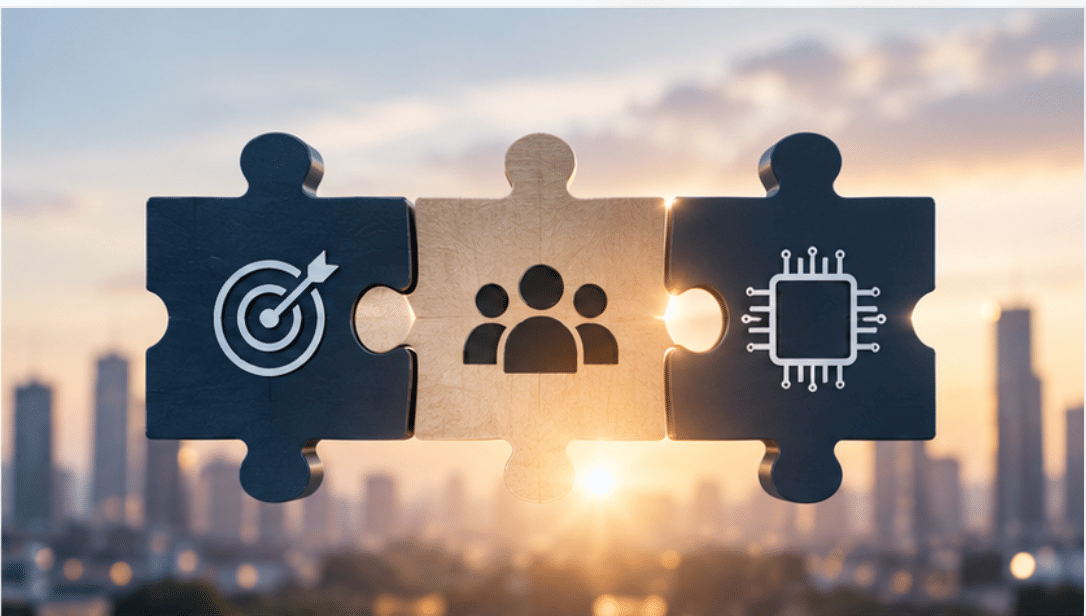
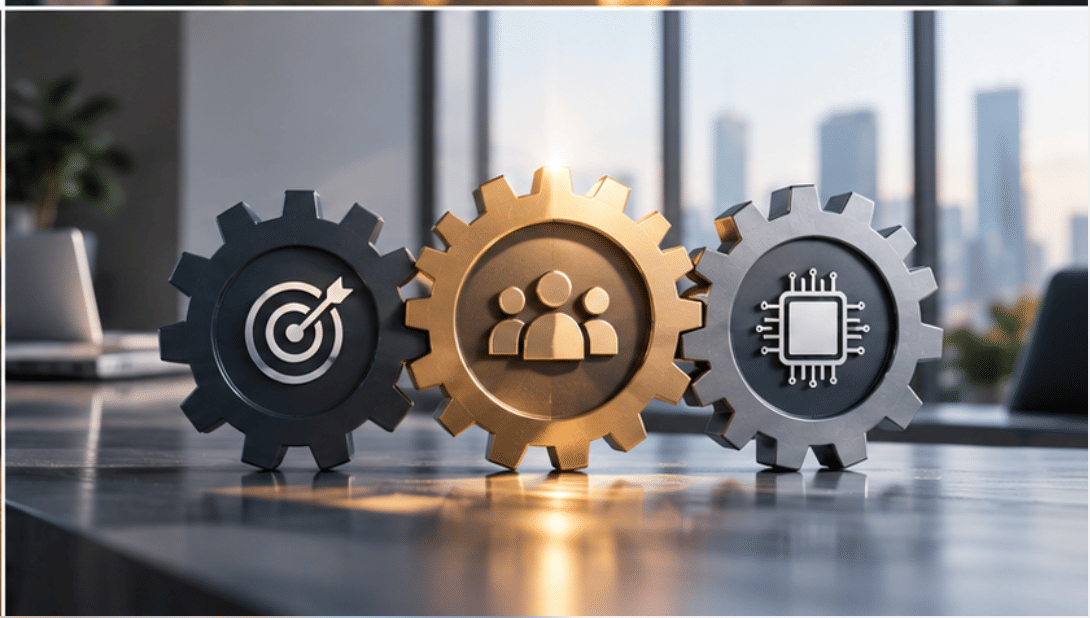
Each company within the group has its own strategy. I see HR's role at the intersection of three elements: organisational strategy, technology, and people capabilities and culture.
Organisational strategy defines what the business wants to achieve. Technology encompasses AI, data, processes and systems, while the people dimension includes the skills, capabilities and culture required to deliver the strategy.
The intersection of these three elements is where employee experience is ultimately shaped. It is also where organisations can connect business priorities with technology and workforce capabilities.
This is not simply about collaborating with another function that operates in a silo. These functions are as much a part of HR as HR is part of their teams.
I would welcome a day when traditional functional silos are broken down. AI can democratise and organise information, presenting it in different ways so people can access and use it more effectively.
For example, a business leader does not necessarily need to be a finance expert to prepare a budget. AI tools can help people access and use information beyond their traditional areas of expertise.
Until then, we have to be each other's best friends. CXOs must work together.
Maintaining common values across diverse workforces
As a multi-sector conglomerate, RPG Group has varied workforce segments. How do you tailor talent strategies while maintaining a common culture across businesses?
We operate in a very federated environment, where each company is independent. However, we have a common set of RPG values that defines who we are and how we do business, irrespective of the sector.
These values serve as the unifying element across the group. Doing business the right way is important to us, as are respect for people, good governance and care for employees, customers, partners and suppliers.
These principles apply across different workforce environments, whether in manufacturing or IT. The demographics and roles may vary, but the underlying values remain consistent.
Each company also has its own set of values. These reflect how the CEO and leadership team articulate the way the company's strategy should be delivered.
There is the “what” of the strategy, defined by targets, milestones and ambitions, and then the “how”. As long as a company's values align with RPG Group's values and the organisation's broader identity, each business is encouraged to develop its own values.
The CHRO's expanding mandate
Dutt's perspective places AI adoption within a broader organisational transformation. Employee training and technology deployment are important, but their value depends on how effectively they support business priorities and changing work requirements.
For CHROs, the mandate increasingly involves connecting workforce capabilities with business strategy and technology. It also requires helping employees navigate change while preserving institutional knowledge and the human judgement needed for complex decisions.
As AI becomes more embedded in business operations, the CHRO's role will depend on bringing business leaders, technology teams and people functions closer together. The next phase of transformation will require organisations to strengthen these connections while keeping employee experience central to how work evolves.
This story is part of CHRO Perspective, a People Matters series featuring ideas and real-world insights from India's leading CHROs. Stay with us for more perspectives on the future of work.
Author
Loading...