







AI & Emerging Tech
AI Ambitions vs fragmented HR Technology: Here’s what must change






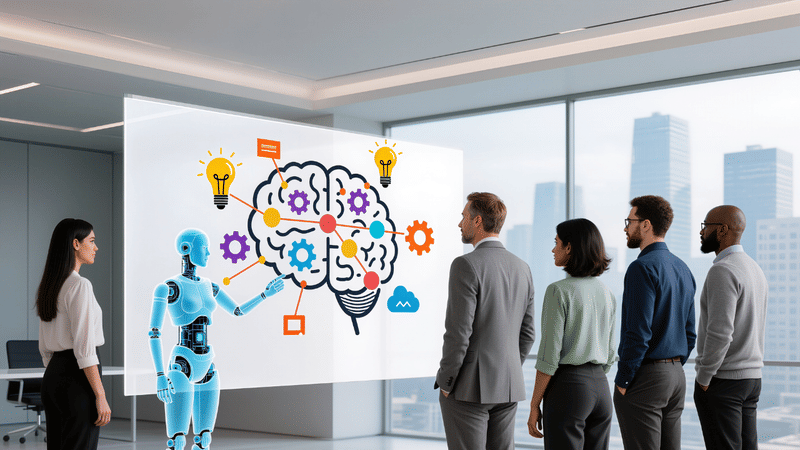
AI adoption is accelerating, but fragmented HR operations are preventing intelligence from delivering real business value.
HR leaders may be over-indexing on AI before fixing foundational problems. 88% of HR leaders say their organisations have not realised significant business value from AI tools, according to recent research.
From predictive attrition models to AI copilots, HR leaders are under pressure to demonstrate visible progress on the AI front. Yet payroll discrepancies, attendance mismatches, delayed approvals, and compliance risks are still major issues.
This gap is not necessarily a failure of AI integration but operational foundations. Technology value depends on work redesign, data integrity, and operating model readiness. In fact, only 8% of HR leaders believe their managers have the skills to effectively use AI, according to recent surveys. This is a key indicator of the lack of organisational readiness.
Where HR transformations break
Most HR technology transformations fail quietly at the operating core. Research shows that only about 24% of HR employees believe their current tech stack delivers maximum value, while two-thirds of HR leaders fear their systems are not effectively supporting organisational goals.
HR teams spend disproportionate time reconciling data, fixing exceptions, and coordinating across systems. What was meant to simplify work ends up slowing decisions, increasing dependency on vendors, and eroding trust among employees and managers. This is where many HR transformations stall.
Indian organisations operate in one of the most complex workforce environments globally. Multi-location operations, shift-based work, frontline-heavy employee populations, varied employment types, and evolving statutory requirements place great demands on HR systems. Managing compliance variability, attendance complexity, and distributed workforces is a major operational challenge for HR leaders in India, as per the SHRPA State of the HR Industry 2025.
Intelligence is built on reliable inputs
Most tech investments fail due to a lack of foundational data and skills to support them. Insights built on unreliable inputs will still produce unreliable outputs. It is only when HR data, workflows, and decisions flow through a unified system that intelligence becomes actionable.
By bringing recruitment, onboarding, core HR, attendance, payroll, performance, and exits into an integrated operating layer, hire-to-retire platforms establish the data discipline and process consistency required for intelligence to deliver value.
In this shift from fragmented tools to integrated platforms, all stages of the employee lifecycle become connected, wherein actions in one area inform outcomes in another. Hiring decisions influence onboarding effectiveness. Attendance patterns shape workforce planning. Performance and mobility data guide development and retention.
Integration as a strategic choice, not a technical one
Choosing an integrated HR platform is often viewed as a technology decision. But it is a strategic choice that shapes how effectively HR can support the business. For organisations managing multi-location, shift-based, and frontline-heavy workforces, reliability has a direct impact on employee trust and organisational risk. Here, integrated foundations enable better operations, workforce management and sustainable scaling.
End-to-end, India-native HR platforms like Spine HR Suite, for instance, are focused on building a robust, vendor-independent hire-to-retire HR ecosystem that brings recruitment, onboarding, core HR, attendance, payroll, performance management, and statutory compliances on to a single platform with an intuitive UI/UX. Designed to be highly configurable, they adapt easily to evolving business needs. By reducing dependency on multiple disconnected systems and moving away from an inflexible, one-size-fits-all framework, such platforms enhance data accuracy, simplify compliance management, and provide HR teams with greater visibility, control, and operational efficiency.
Platforms such as Spine HR Suite, which have spent over two decades building end-to-end, hire-to-retire HR systems for Indian organisations, reflect this evolution. Rather than positioning AI as the starting point, the focus is on operational reliability. Payroll accuracy, attendance integrity, compliance readiness, and unified employee data prove more transformative than layering advanced analytics on top of fragmented systems, especially in complex, multi-location environments.
The future HR stack: AI as an outcome, not a starting point
As organisations rethink their HR technology strategies, the role of HR leaders is changing. The focus is now on architecting coherent workforce ecosystems.
Studies show that HR operating models and technology readiness are still key barriers to realising AI’s promise. HR teams need new skills and operating practices to effectively embed intelligence into workflows.
Only by strengthening the HR operating core, integrating systems end-to-end, and embedding reliability into everyday workflows can the evolving needs of workspaces be met. According to SHRPA, nearly 70% of organisations face gaps in HR process maturity and system integration, underscoring why AI-led transformation remains elusive. Platforms like Spine HR Suite show that transformation begins with getting the basics right at scale. AI will undoubtedly play a powerful role in the future of work, but only when it is built on HR foundations that actually work.
Author
Loading...