







AI & Emerging Tech
AI, Skills, and Self-Driven Careers: The blueprint for Firstsource’s next-gen talent model
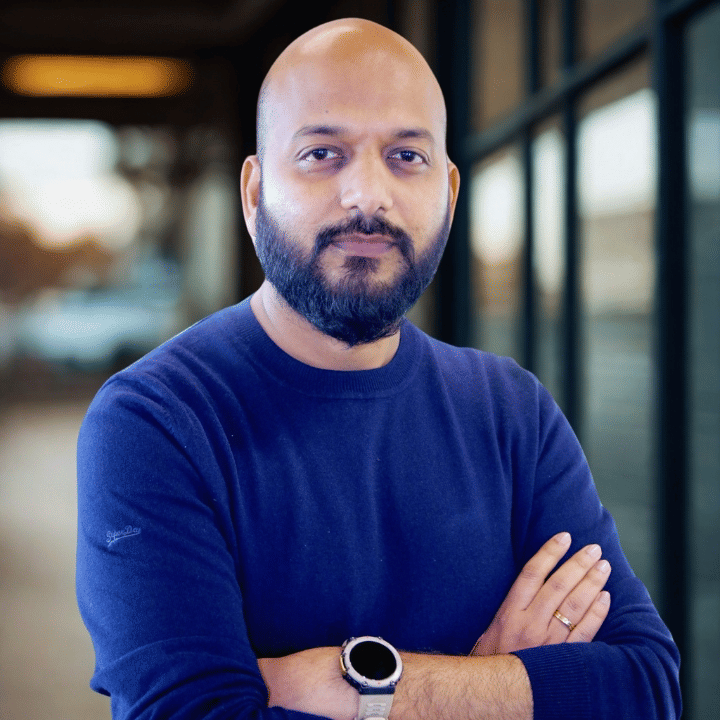





In my mind, all roles will fundamentally change, and this will sweep across every enterprise. Roles that have traditionally focused on pulling data together, analysing it, processing documents, or researching the market are already seeing significant productivity gains through AI, says Shamita Mukherjee, CHRO at Firstsource.
In less than a year at Firstsource, Shamita Mukherjee has already begun to leave an indelible mark on the company’s culture and approach to people management. Stepping into the role of Chief Human Resources Officer less than 12 months ago, Mukherjee brings a fresh perspective, one shaped by years of experience, but energised by the excitement and challenges of joining a new organisation in a rapidly evolving industry.
In this wide-ranging conversation, Mukherjee shares what it’s like to step into an established organisation and immediately tune in to its people's hopes, anxieties, and ambitions. She talks candidly about the unique challenges of leading change as a new leader, from building trust with teams to quickly understanding the nuances of Firstsource’s diverse, global workforce. Mukherjee emphasises the importance of listening first—spending time learning the stories and aspirations that drive the company, and using those insights to shape more inclusive, people-centric policies.
She reflects on how technology is transforming the HR landscape, and how she is leveraging digital tools to create stronger connections and streamline processes, without losing sight of the human element. The conversation also touches on her commitment to fostering inclusion, encouraging open dialogue, and ensuring that every employee, regardless of tenure or role, feels a genuine sense of belonging.
From navigating hybrid work realities to reimagining leadership in times of change, Mukherjee’s insights are thoughtful, honest, and practical. Edited excerpts
What is your overarching strategy for embedding AI into your workforce planning and talent management?
We believe AI is reshaping everything we do at work, from how we define roles to how we design workflows to how we identify and grow talent. At Firstsource, this sits at the heart of our UnBPO philosophy, reimagining how work gets done, not just automating it.
The question we keep asking ourselves is: what does human contribution look like when machines can do so much more, and how do we design roles that maximise uniquely human impact? The answer to that shapes everything we do in HR.
Our talent program, UnBound, underpins how we rethink work in an AI-enabled world and ensures our people build the evolving skills required to deliver greater impact. This architecture allows workforce planning to shift from role-based headcount planning to capability planning.
How do you foresee AI reshaping the skill sets required within your organisation? Are there roles that you anticipate will become obsolete or fundamentally change?
In my mind, all roles will fundamentally change, and this will sweep across every enterprise. Roles that have traditionally focused on pulling data together, analysing it, processing documents, or researching the market are already seeing significant productivity gains through AI.
These roles won’t necessarily disappear, but they will evolve. AI is dramatically reducing the time required to build information-based domain knowledge while increasing the value of judgment, interpretation, and contextual understanding. As a result, the work people do will shift from assembling information to making sense of it and applying it meaningfully.
The premium is moving from processing information to validating, interpreting, and acting on AI-generated insights.
What we are really seeing is a shift in what humans are valued for at work. The roles and organisations that thrive will be the ones that lean into this redesign rather than resist it.
What initiatives has Firstsource undertaken to upskill or reskill employees to stay relevant in an AI-augmented workplace?
We are moving away from a traditional job-based setup to one built around skills — this is foundational to our evolving operating model. We have mapped all tasks to the skills needed to perform them and are building learning paths that let people move from skill to skill over time. Groups of related skills will form new roles, meaning some older roles will fade, but the people who have built those skills will be able to take on what comes next.
The bigger shift is cultural. We are moving ownership of career growth increasingly to the individual, while equipping them with structured pathways, AI-enabled learning tools, and internal mobility opportunities to make that possible.
The bigger shift here is moving ownership of career growth from the company to the individual and giving them the tools to do so. We are not just training people for today's tools; we are building their confidence to keep reinventing themselves.
In a world where skills become outdated faster than ever, the ability to continuously reskill becomes a strategic capability for the person and the organisation.
How are you managing the balance between automation and the human touch, especially in client-facing roles?
In services, the real opportunity is not removing humans from the interaction but elevating them. We therefore design client-facing roles around AI-supported decision-making rather than task execution. The human touch will be more, not less, important going forward, but the human will be more efficient, better informed, and therefore able to bring more genuine care to each interaction, not less.
For example, in a customer retention scenario, AI may identify churn risk, recommend offers, and surface account patterns. But the human still decides whether the offer is appropriate, how to conduct the conversation and when to override the AI recommendation.
The result is fewer manual steps but higher-value human engagement in each interaction.
The simple idea behind this is that when AI takes care of the routine, people are freed up to focus on what actually matters – solving complex problems, showing empathy, and creating differentiated client experiences. When you are not hunting for information or navigating systems, you have the time and headspace to truly listen, to think, to build trust. That's where humans are irreplaceable, and that's where we want our people focused.
Have you observed any changes in employee engagement or morale as AI tools are introduced into daily workflows?
There is anxiety in certain pockets, where curiosity for new tools is low, and honestly, that's not surprising. Major shifts naturally create uncertainty.
The biggest divide we see is not generational or hierarchical; it is cognitive orientation. Employees who are naturally curious tend to adopt AI very quickly because they experience immediate productivity gains. Others feel uncertain because technology challenges long-held assumptions about expertise and job security.
Our response has been to focus on exposure rather than persuasion. We encourage teams to experiment with tools in real workflows, redesign tasks collaboratively, and share productivity gains openly.
Once people see how much time can be reclaimed from routine work, the conversation shifts from fear to possibility.
What are the biggest challenges you've faced in driving AI adoption across the workforce, and how have you addressed resistance to change?
The biggest challenge is simply keeping up – a new tool, feature, or capability appears every single day. If you build a training program today, it can feel outdated in weeks. So the real challenge isn't designing the perfect course, it’s building a culture where learning velocity matches technology velocity. It's building the habit of continuous learning and helping people take ownership of their own growth. The top-down approach won't cut it anymore. We must move from "the company will train you" to "the company will set you up to learn on your own."
That's a very different relationship between employer and employee, and getting people to genuinely embrace that shift is the real challenge here.
How do you ensure transparent communication with employees about the impact of AI on their roles and career trajectories?
Our job as leaders is to be absolutely clear about the change that is coming. The communication must focus on the changes we are making, the behaviours we need to see, and why continuous learning is no longer optional.
We focus on making capability visible through our skills architecture so employees can see which skills they currently have, which adjacent skills they could build, and which roles those skills could enable. That visibility is what gives people real agency over their careers.
We are also transparent about what we don't know. We can't tell people exactly what every role will look like in three years, and pretending otherwise would only erode trust. However, that transparency also means aligning performance expectations with this shift, recognising and rewarding adaptability, experimentation, and skills growth, not just output.
What we can do is be honest about the direction, clear about what we expect, and consistent in building an environment where people can adapt and grow into whatever comes next.
What governance frameworks are in place to ensure responsible and equitable use of AI in HR processes?
We are building a governance layer in every department and client account to ensure AI is used correctly and that the right checks are in place. Given that we operate across regulated industries, our governance model includes human oversight, explainability standards, and client-aligned compliance checks embedded into deployment.
But for us, governance isn't just about managing risk; it's about building trust. People need to know that when AI plays a role in decisions about their careers, those decisions are fair, explainable, and not quietly biased. If someone feels an algorithm decided their future without any human accountability, you lose something very fundamental – the basic trust that holds a team together. Our approach to governance is as much about being open and explainable as it is about having the right controls.
In your view, what does the "future of work" look like at Firstsource with the accelerating adoption of AI?
The future of work will be more fluid and less defined by rigid structures. Experience will matter less than the ability to adapt, past performance will matter less than future potential, and what you can do will count for more than what your job title says. Our UnBound talent program is a key enabler of this shift, creating fluid career pathways aligned to skills rather than titles.
At Firstsource, the future of work isn’t about reducing human involvement; it’s about elevating it. We are building an organisation where technology amplifies talent, and where adaptability becomes our most valuable asset.
More broadly, I think we're moving towards a world where talent moves more freely across projects and priorities, where the lines between different kinds of work blur, and where the most valuable thing anyone has is not a title but a set of genuinely useful skills. That's the world we're building for.
What lessons have you learned from your AI journey that you would share with other CHROs in the industry?
As a services organisation partnering with global clients on their own AI journeys, we realised early that credibility starts internally. You can’t advise clients on transformation if your own workforce isn’t transforming. So, my biggest lesson is that leaders have to go first. I use AI in almost everything I do today. I follow new developments personally; I try things out myself.
Because this isn't just new technology, it's a new way of working and living. Leaders can't stand at a distance and expect their teams to embrace something they haven't touched themselves. Once you actually use it, you can inspire adoption in a way no target or KPI ever could. The second thing I'd say is: don't wait for the dust to settle. It won't. The organisations doing well here are the ones comfortable with not having all the answers, willing to learn out loud, and quick to adjust. Being okay with that uncertainty, I think, that's one of the most important things a leader can bring right now.
Topics
Author
Loading...