







AI & Emerging Tech
Before scaling AI, HR must solve the data architecture problem






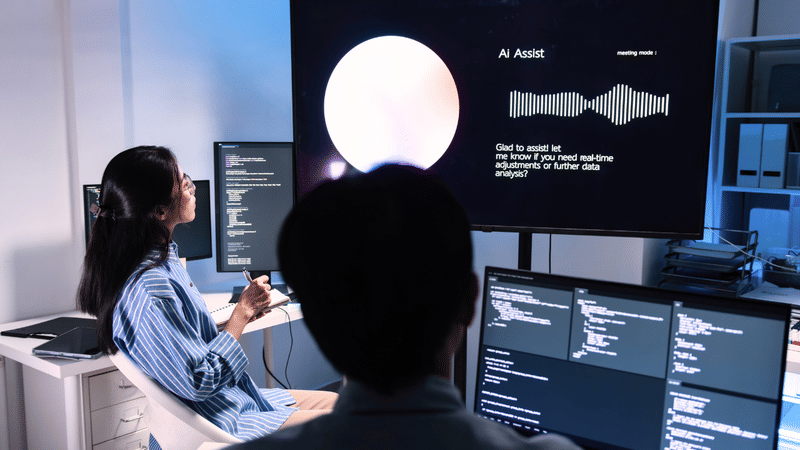
Research from Omni HR shows that Southeast Asian organisations seeing real impact are not just deploying AI but fixing the data foundation that powers it.
Every conversation about AI in HR arrives at the same question: where to start? For many organisations, the instinct has been to look outward at tools, vendors and use cases. But the constraint is internal. It is whether the underlying data environment is equipped to support scale.
Across Southeast Asia, organisations are actively embedding AI into workflows, from hiring to employee services. Yet many are doing so on fragmented systems, inconsistent data and disconnected processes.
As AI moves from supporting decisions to shaping and increasingly executing them, readiness has fundamentally shifted. It is no longer defined by access to tools, but by whether the underlying environment can sustain intelligence reliably.
Omni HR’s 2026 State of AI in HR report, drawing on responses from HR leaders across Singapore and the Philippines, brings this shift into focus. AI readiness, it suggests, is emerging first as a data problem, before it becomes a technology one.
AI ambition is rising. But readiness is uneven.
As OmniHR’s 2026 State of AI in HR survey shows, the scale of ambition is strong, with 82% of HR leaders already using AI or planning to within the next 12 months. Adoption is strongest in analytics (61%) and employee service functions (60%), with performance management, recruiting and onboarding close behind.
The momentum is genuine and is being reinforced by investment. Organisations across the region are actively consolidating their HR tech stacks, with 71% having reduced the number of tools they use in the past two years and 82% planning further consolidation ahead.
On the surface, this looks like progress, with fewer tools, more focus, and faster adoption. But the underlying question remains more complex. Are organisations simplifying technology, or redesigning how their data actually works? This is because AI does not operate on tools alone, but on data at its core.
The real barrier sits below the AI layer.
The real barrier is not AI adoption, but the quality and coherence of underlying HR data. When HR leaders were asked to identify the top prerequisites for AI to deliver meaningful value, the answer was unambiguous. Data accuracy ranked first, cited by 70% of respondents, followed by system integration at 64%. Skills, training and change management, while still relevant, were secondary.
HR leaders across Southeast Asia understood, even if intuitively, that AI’s value is not constrained by ambition or capability, but by the reliability of the foundation beneath it. Fragmented systems, duplicate data entry, and manual workarounds do more than create inefficiency and operational friction. They create inconsistent, incomplete and delayed data environments.
Furthermore, 50% of respondents agreed that data spread across multiple systems was limiting their ability to adopt AI meaningfully, making the problem clear.
Left unresolved, this not only slows AI adoption but also risks embedding flawed decision-making at scale. The challenge goes beyond implementation to architecture itself.
Trust in AI starts with data integrity
Omni’s research revealed a pattern among organisations reporting the highest confidence in AI recommendations. Organisations reporting higher confidence in AI outputs were also those with more integrated data environments.
Trust, in this context, becomes structural, reframing how HR leaders should think about AI readiness.
When data is accurate, current and connected, leaders are more willing to act on AI-driven insights. When it is not, hesitation persists, regardless of how advanced the tools may be. Trust in AI is often framed as a change management challenge, but in practice, it is a data quality one.
Why consolidation is becoming a strategic lever
Organisations across the region are already responding. 37% are operating on unified HR systems, while another 54% are planning to move in that direction.
This is not simply about reducing tool sprawl. It reflects a deeper recognition that AI requires a different kind of architecture, one where data flows seamlessly across processes rather than sitting in silos.
Unified platforms are gaining traction because they enable this shift. By bringing employee data, workflows and processes into a single environment, they improve data integrity, reduce duplication and create real-time visibility. These are the conditions essential for AI to function effectively.
This is the principle underpinning a new generation of unified HR platforms, which build intelligence on top of real-time, integrated data foundations rather than layering it across disconnected systems.
In that sense, consolidation is no longer an IT clean-up exercise. It is becoming a strategic prerequisite for scaling AI.
AI ROI will be defined by data, not deployment speed
This shift also changes how organisations should think about value. AI returns are often framed through efficiency, whether it is faster processes, reduced administrative effort, or lower operational cost. While important, it remains incomplete.
With AI becoming core to shaping hiring decisions, workforce deployment and employee experience, the larger question is what these efficiencies will enable. Do they enable faster decision-making, better resource allocation, reduced execution risk, and stronger organisational responsiveness?
This is where value moves from operational improvement to business impact. It also suggests that the organisations seeing the most meaningful returns are not those moving fastest on AI, but those investing earliest in the foundations that support it.
From deploying AI to enabling it
What is emerging across Southeast Asia is not a slowdown in AI adoption, but a shift in what it takes to make AI work.
The organisations pulling ahead are not simply deploying more use cases. They are strengthening the conditions that make those use cases viable, whether it is prioritising data accuracy and integrating systems, or treating consolidation as a business decision.
AI in HR is not a technology problem waiting for the right tool. It is an infrastructure problem waiting for the right foundation. The data suggests that HR leaders already know this.
The challenge now is not awareness, but execution. The question is no longer where AI can be applied, but whether the organisation is structurally prepared to support it.
Those who build strong data foundations will define what AI in HR delivers in practice. Those who do not risk scaling tools without ever scaling impact. And increasingly, that distinction will separate organisations experimenting with AI from those defining how it delivers value at scale.
Author
Loading...