







AI & Emerging Tech
Bharti AXA Life’s Dhanashree Thakkar on AI, Agility & Insurance Inclusion






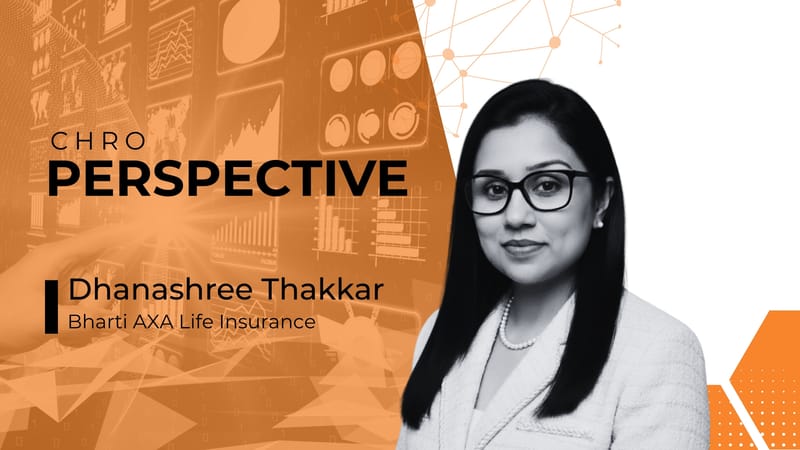
Bharti AXA Life’s Dhanashree Thakkar on how AI, inclusion, and agility are reshaping insurance talent, culture, and financial access in India.
In India’s fast-evolving insurance sector, where trust and transformation go hand in hand, Dhanashree Thakkar is helping rewrite the rules of HR. As Head - Human Resources & Distribution Training at Bharti AXA Life Insurance, she brings a rare blend of psychological insight, cross-sector experience, and digital fluency to the table. From mentoring startups to deploying GenAI in hiring and engagement, Thakkar’s approach is both strategic and deeply human. In this conversation, she shares how HR can be a business engine and a moral compass—driving inclusion, agility, and ethical leadership in an AI-powered world.
Q. Your background in psychology gives you a unique lens on human behavior. How has this shaped your approach to developing adaptive and emotionally intelligent talent at Bharti AXA Life?
My educational background in psychology helps me understand human behaviour at a deeper level. It’s not just about skills—it’s about mindset, adaptability, and emotional intelligence. Combined with my cross-sector experience, I’ve been able to design HR practices that attract and grow talent from diverse industries. At Bharti AXA Life, nearly 60% of our employees in the talent pool have experienced role rotations or expansions. This fosters authentic engagement and builds a culture of agility, which is critical in today’s dynamic environment.
Q. Having worked across FMCG, BFSI, and automotive sectors, what behavioral patterns or cultural insights have you observed that inform how you align people practices with business strategy?
HR is often seen as transactional—focused on hiring, engagement, or compliance. But observation is a powerful diagnostic tool. It helps me understand how a business truly functions, from product development to customer experience. This insight allows us to align people practices directly with business outcomes. It’s about connecting the dots between strategy, structure, and behaviour. Cross-sector exposure has taught me that every business has its own rhythm, and HR must tune into it.
Q. The insurance industry is navigating both digital disruption and regulatory changes, such as GST cuts and new IRDAI norms. How is Bharti AXA Life preparing its workforce to stay agile and customer-focused amid these shifts?
These changes are opportunities to deepen insurance penetration and drive financial inclusion. From an HR standpoint, we’re hiring and upskilling digital talent, innovating product categories, and designing training programs tailored for diverse markets. A good example is our initiative in Odisha, where we trained an all-women workforce to engage with local communities. It reflects how HR can create solutions that are both business-aligned and socially impactful.
Q. What critical skills—digital, financial, and behavioral—are you prioritizing to build an agile and ethically grounded insurance workforce?
Beyond digital and AI fluency, we’re focusing on agility, financial prudence, and tolerance for ambiguity. In insurance, especially when serving first-time buyers in tier-two and tier-three cities, empathy and ethical awareness are just as important as technical skills. We want our employees to be digitally equipped but also emotionally intelligent. Soft skills, critical thinking, and ethical decision-making are central to our talent strategy.
Q. How does the HR function at Bharti AXA Life collaborate with business leaders to translate customer and regulatory insights into people strategy?
HR at Bharti AXA Life works hand-in-hand with all CXOs—from marketing and finance to sales and operations. We’re deeply involved in initiatives like product-led campaigns, renewals, and cost management. I see HR as the strategic conscience of the organisation—ensuring that our talent strategy and culture not only drive performance but also uphold ethics, compliance, and customer-centricity.
Q. You’ve implemented GenAI-led assessments and engagement analytics within HR. What measurable impact have these AI tools had on retention, hiring efficiency, and employee experience so far?
One of our most impactful use cases has been in employee engagement. We’ve been using a digital platform that checks in with employees across their lifecycle—gauging engagement levels and identifying factors that may affect their experience. The system proactively reaches out, gathers feedback, and flags employees who may need additional support. Among those flagged as “at-risk,” we’ve achieved 45% retention, which is a strong validation of data-driven engagement. We’ve also begun using GenAI-led talent assessments to enhance hiring. The goal is to use predictive analytics to identify the most productive profiles, thereby reducing interview time and improving the quality of hire.
Q. Beyond HR, how is AI transforming customer onboarding and claims processes—and what new roles or capabilities are emerging as a result?
The organisation is undergoing a broad digital transformation spanning underwriting, customer onboarding, servicing, and sales. Our biggest focus has been on AI-led customer onboarding, where we aim to make the journey completely paperless and seamless. Similarly, we’re implementing GenAI in underwriting, which is a complex yet transformative shift. We’ve also created a cross-functional GenAI Task Force, led by one of my colleagues, that explores how AI can be used to solve business challenges, upskill employees, and drive overall efficiency across functions.
Q. As automation and AI reshape roles, how are you managing workforce transitions—especially for customer-facing and legacy functions?
Transformation of this scale is always about people readiness. A large part of our effort goes into upskilling and reskilling employees to adapt to new tools and workflows. Interestingly, even as our overall headcount has increased, our HR headcount has remained almost constant—thanks to the efficiency and automation that technology has brought. In customer-facing areas like underwriting and onboarding, the transition is more gradual since it involves redefining frontline roles and redeploying employees to new functions. It’s a work in progress, but we’re approaching it carefully to ensure sustainability.
Q. How are you using people analytics and AI dashboards to inform workforce planning and decision-making?
That’s a major focus for us. We’re working with partners who bring AI-based predictive analytics expertise to forecast productivity trends and support workforce planning. Within HR operations, we’re also evaluating GenAI-powered chatbots integrated into our HRMS to handle repetitive employee queries—like leave policies or salary information. This improves response time, enhances employee experience, and allows HR teams to focus on strategic priorities.
Q. For effective analytics, maintaining clean and integrated data is essential. How are you ensuring data integrity across platforms?
We follow stringent data governance and audit norms every quarter. Our IT and HR teams work closely to ensure seamless integration across platforms—HRMS, talent acquisition systems, and analytics dashboards. What’s particularly inspiring is that within our IT function, we have a woman who heads both GenAI and analytics, which is quite rare. She’s spearheading the creation of a unified data lake that helps us generate real-time, intelligent insights for better decision-making.
Q. Inclusivity seems central to Bharti AXA Life’s philosophy. How do your AI and digital initiatives reflect that commitment—especially for women and non-technical talent?
Inclusivity is truly at the heart of everything we do. Two years ago, women represented around 27% of our workforce; today, it’s 33–34%, and in sales, it’s as high as 40–44% in some channels. We’ve consciously brought more women into senior and technical roles. For instance, our Direct-to-Customer channel and our GenAI and Analytics function are both led by women. We also run initiatives like the “1000 Women Leaders” program, through which 90 women at Bharti AXA Life are being mentored and prepared for leadership positions. Our upskilling programs are gender-agnostic, ensuring equal access to digital and AI learning opportunities.
Q. The UN Gender Gap Report 2025 notes that women’s representation declines sharply at senior levels, and that AI may disproportionately affect women’s jobs. What’s your perspective?
These challenges are complex and can’t be solved by one sector or policy alone—they’re rooted in broader social constructs and the way roles have historically evolved. Women often exit the workforce at mid to senior levels due to structural and personal factors. At Bharti AXA Life, we’re consciously addressing this by providing flexibility, career support, and mentorship. Interestingly, I believe AI can be a great equalizer—it removes bias, democratizes access to knowledge, and provides data-driven transparency. The key is to ensure equitable access to upskilling, so women and underrepresented groups can lead—not lag—the AI transformation.
Q. Finally, what advice would you give HR leaders striving to build future-ready organizations and advance financial inclusion?
First, deeply understand your business, product, and customer—that’s non-negotiable. Second, know your cost structures so you can design HR strategies that deliver both efficiency and impact. Third, be people-centric while staying lean. And finally, nurture empathy and ethics—not just internally, but in how employees engage with customers. In industries like insurance, trust and inclusion are built through human connection.
(This story is part of CHRO Perspective. A People Matters series featuring bold ideas and real-world insights from India’s top CHROs. Stay with us for more perspectives that power the future of work.)
Topics

Loading...