







AI & Emerging Tech
Building the right talent equation in the age of AI





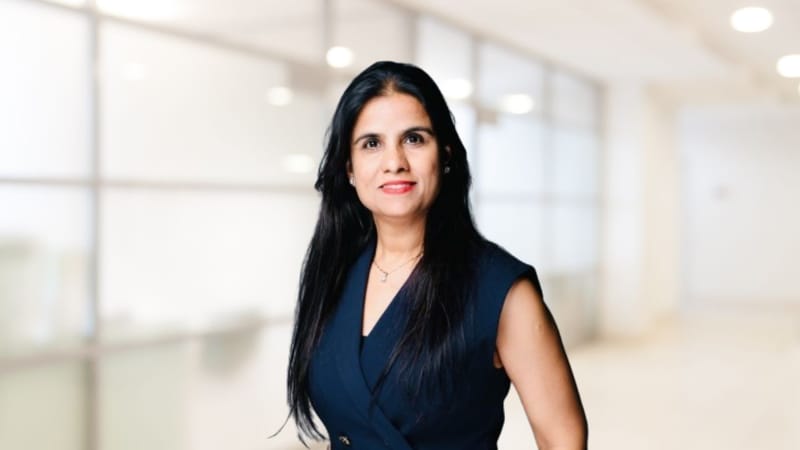
Priyanka Anand explores how organisations can harness AI while putting skills, culture and trust at the centre of talent strategies to build a future-ready workforce.
What makes an organisation truly stand out? For me, the answer always comes back to people - and to how intentionally we build around their capabilities, aspirations and potential.
As HR and people leaders, we sit at the intersection of business ambition and human possibility. The choices we make about talent - who we hire, how we develop, how we support people through change - shape not just organisational performance, but careers and lives.
Today's workplace is evolving at an unprecedented pace, driven by technological innovation, shifting expectations and new ways of working. India has become a strategic technology hub, building remarkable depth in 5G, cloud, software and AI and now moving towards AI-native networks. This progress has been enabled by organisations that consistently invest in talent and give people room to grow alongside technology.
At Ericsson, our 150-year journey is a testament to what can happen when you keep investing in people. Technology has moved through several eras – from telegraphy to mobile broadband to AI-driven networks – and our people have had to learn, adapt and reinvent themselves through every transition. When I think about the "talent equation" in the age of AI, it is clear: put skills at the centre, build a culture where those skills can flourish, and use technology with intent to help people learn continuously.
Three priorities sit at the heart of that equation: skilling, culture and an AI-first approach to HR.
From headcount to capabilities
Workforce planning has traditionally leaned heavily on numbers: how many people we need, which roles must be filled and where we should hire from. Over the years, I have come to see skilling differently. It belongs to the individual first. People own their growth, and organisations that navigate disruption successfully tend to be those where learning has never been treated as optional.
Across Ericsson’s history, our people have stayed close to the evolution of technology. That ability to keep learning – to build new skills as old ones become less relevant – is what has carried the organisation through each transition.
In the AI era, this matters more than ever. The instinct in many organisations is to equate transformation with hiring people who already possess the newest skills. Hiring will always be important. But I have seen how powerful it can be to look inward first.
Some of the strongest talent for an organisation’s next chapter may already be inside it, waiting for a pathway to make a different kind of contribution. Nearly 45% of our roles in the region are filled through internal mobility. That number speaks to the strength of institutional capability: what an organisation needs for what comes next can often already exist within – if we are willing to see it and invest in it.
This is where AI is becoming a meaningful enabler. At Ericsson, we increasingly take a skills-first approach to talent. Rather than starting with "How many people do we need?", we ask what capabilities we have today, what we will need tomorrow and how quickly we can build them – through learning, mobility and targeted hiring.
Through AI-powered platforms such as Degreed and our internal Career Hub, we are starting to answer these questions with greater precision. For employees, these tools create more personalised learning journeys and surface internal opportunities that align with their skills and aspirations.
For HR and business leaders, the same tools provide a clearer view of organisational capability. Where is skill gap? Which gaps could constrain our business six or twelve months from now if we do not act? That visibility allows us to address workforce risks early, instead of responding only when a crisis forces our hand.
In all of this, AI does not replace human judgement. Better data sharpens the questions we need to ask; it does not remove the need for leadership.
Culture: turning capability into behaviour
A workforce can have every capability on paper and still underperform if the culture around it does not encourage people to use those skills or challenge established thinking. Culture is what turns capability into behaviour.
At Ericsson, our culture is anchored in four values that have endured across generations: professionalism, respect, perseverance and integrity. Their relevance has not diminished with time; if anything, they have become even more important as technology has grown more powerful.
Professionalism, for us, means continuously building competence in a world where skills evolve faster than they once did. Respect is about creating the conditions for sharper thinking, where different perspectives can challenge assumptions and lead to better decisions. Perseverance is a reminder that transformation is not a single programme with an end date; it is a discipline practised again and again. Integrity keeps human judgement and trust at the centre of how we use technology.
Culture, therefore, is a system rather than a backdrop. It shows up in what leaders reward, what gets measured, how opportunities are created and how people experience change day to day.
Trust sits underneath all of this. People need clarity on how AI will be used and confidence that human judgement continues to shape the decisions affecting them. As leaders, when we model curiosity, make our own learning visible and help people navigate uncertainty, we give the workforce something the entire organisation can draw on.
An AI-first, human-centred HR
AI often enters the HR conversation through the lens of efficiency: faster processes, quicker recommendations, greater productivity. Those benefits are real. But the bigger opportunity, in my view, lies in how AI can help HR move from being perceived primarily as a support function to becoming a strategic decision partner.
Imagine an organisation deciding to launch an AI-led product or enter a new technology space. The strategy is approved, investment is committed and timelines are set. The critical question then becomes: do we have the capabilities to make it happen – not just enough people, but the right skills?
With AI and analytics, HR can now bring data on skills, engagement and performance into these strategic decisions in a way that was simply not possible a decade ago. We can simulate the people impact of major transformations before we launch them and provide more timely insights on the health of teams and culture.
By connecting our learning platforms, career tools and workforce analytics, we are able to see capability building as part of business planning rather than as a separate HR activity. Growth starts from within; our job in HR is to make that growth visible and possible.
Of course, with this new capability comes responsibility. We must be clear about how we use data and how employees can understand and challenge the decisions that affect them. AI can point to a capability gap, but a leader still needs to understand why it exists. An algorithm can recommend a learning path, but a manager encourages someone to actually walk it.
Technology surfaces patterns. People bring context, empathy and judgement to understanding what those patterns mean.
Looking ahead
One lesson stands out for me. Technology will keep evolving. The organisations that navigate these shifts successfully are those that enable their people to evolve alongside it.
Curiosity, empathy, courage and human judgement remain firmly in the hands of people. AI accelerates what we do. Talent determines why we do it and where we go next.
As HR leaders – in India and across the region – our responsibility is not simply to adopt AI tools. It is to ensure that AI helps every individual realise more of their potential and that our talent equation is built around skills, culture and trust.
The right talent does not simply fill roles. It fuels innovation, shapes culture and drives sustainable success. When we combine technology with trust, skills with opportunity and innovation with humanity, we do more than prepare people for the future – we empower them to create it.
About the author: At Ericsson, Priyanka Anand works as VP & Head of HR for Southeast Asia, Oceania and India. She focuses on shaping future-ready leadership, embedding diversity and inclusion into organisational decision-making, and fostering workplace cultures that enable innovation, engagement and business performance. They are particularly passionate about advancing opportunities for women and young talent in the ICT sector.
Loading...