







AI & Emerging Tech
“Failing is important in the age of AI”: Chandrashekar, UltraTech Cement




 ||
||

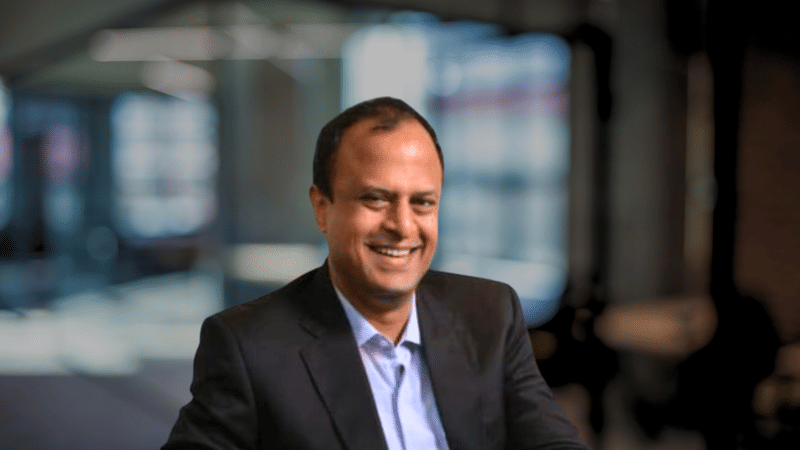
Chandrashekhar Chavan CHRO, UltraTech Cement speaks on human-centric digital transformation, capability building, and creating leaders for all seasons.
Manufacturing and infrastructure organisations operate at enormous physical scale, with distributed workforces, asset-heavy operations, and deeply embedded legacy processes. In such environments, technology transformation is not merely about digitisation, but involves credibility, capability, and culture.
At UltraTech Cement, this journey has been unfolding deliberately. In this conversation with Varun Jain, Senior Editor People Matters, at the Tech HR Pulse Mumbai, Chandrashekhar Chavan, Chief Human Resources Officer, UltraTech Cement, Aditya Birla Group, reflects on what shaped his belief in technology as an enabler of people strategy, how large-scale adoption must be approached with caution and conviction, and why the real return on investment extends beyond economics to autonomy, purpose, and empowerment. Some responses have been edited for readability and flow. Drawing from over two decades across industries, Chavan highlights the centrality of capability in driving business performance.
Q. You have led HR across large-scale, asset-heavy organisations. What moments in your career most influenced your belief in technology as an enabler for people strategy?
Over the last 25 to 30 years, I’ve worked across multiple industries - metals, cement, financial services, apparel - and in each of them, what drives business is the power of people and their capabilities. Technology, to me, plays a liberating role. It must help employees find a better, faster, and cheaper way of working. It is a means to remove repetitive, non-value-adding tasks and give employees greater control over outcomes. When monotony is reduced, productivity and performance follow.
It must make employees more productive, more performance-driven, and give them greater control. That, to me, is how technology enables people to strategise.
Q. Are organisations doing enough to leverage emerging technology, or are we still lagging behind?
There is a lot of noise around technology. Some of it is positive; some of it may be exaggerated. It does not make sense to blindly jump into something just because there is froth or action. Technology must solve meaningful problems and remain simple enough for widespread adoption.
Adoption should operate on a pull mechanism, where employees see tangible value and take ownership. When employees feel ownership and see problems being solved, they take accountability for what the organisation has invested in.
Writing a good prompt is now a capability. Knowing how to interpret the output of an AI agent and whether you can trust it is a capability. In a rapidly evolving landscape, organisations must continuously build digital literacy while staying grounded in practical use cases. Technology itself is changing at a phenomenal pace, so we have to keep dribbling the ball and trying to score.
Q. What has been your approach to implementing technology at scale?
No single agent or ERP solution can solve everything. The focus is on identifying the right assortment of solutions for the organisation’s context. You must be conscious of return on investment, while acknowledging that early bets may sometimes deliver first-mover advantage. At the same time, reduce anxiety.
There is real and exaggerated fear about what technology will do to jobs. Repetitive tasks can be automated, but creativity and reasoning remain distinctly human strengths.
Layered capability-building, comfort with experimentation, and acceptance of failure are what make scaled adoption sustainable. Ideally, every employee could have a unique ecosystem of agents tasked with specific mandates. It has to be layered, comfortable, capability-driven, and focused on solving important problems. There will be failures, so psychological safety is critical.
Q. How do you measure ROI beyond cost savings, especially in engagement and retention?
ROI extends beyond economics into the emotional contract employees have with their work. Beyond economics, there is a lot of joy, purpose and meaning to be derived from one’s work.
If technology increases autonomy and reduces supervision dependence, engagement strengthens naturally. It would be great for the employee to feel a huge sense of autonomy and a huge sense of empowerment.
When repetitive effort is minimised, and employees focus on meaningful contribution, retention and performance become downstream outcomes. Psychological safety reinforces this cycle. Failing is good. Failing is important, arguing that experimentation builds ownership rather than eroding it.
Q. What are the biggest challenges when driving technology transformation across a large workforce?
One defining tension is clarity of intent. Are you using technology as a tool? Or are you going to make technology your business? The answer shapes strategy and leadership behaviour.
Scale amplifies both opportunity and risk. If you have not made a masterpiece of that, it takes away your credibility to talk about technology and create another technology transformation. In large enterprises, credibility determines whether future initiatives gain momentum.
Capability-building must therefore operate at both mindset and skill levels - from rewiring management thinking to practical competencies such as writing prompts or effectively using co-pilots. In some cases, leaders must anchor business problems firmly in digital solutions to generate a natural pull toward adoption.
Q. How are you using technology at scale across locations?
Operating across 80-plus plant locations magnifies impact. If you get it right in one plant… There are chances of getting it right 80 times. If you get it wrong… we get it wrong 80 times.
Adoption has centred on targeted use cases. From process optimisation, safety analytics through video analytics, equipment reliability, and stronger dealer engagement, these cases are scaled with measured discipline.
Within HR, experimentation remains pragmatic. AI is being used to assess how authentically performance conversations are documented and to support succession planning decisions. Prompt workshops have also been conducted with HR teams to identify pain areas, from managing factory gate passes to improving quality of hire.
The principle is consistent: invest where there is demonstrable impact. We are open and ready to invest, but let us be convinced about a proper use case which can show impact.
Q. How are you preparing leaders and managers in a multi-generational workforce?
I won’t generalise and say that the more senior you are, the less amenable you are to technology. Exposure and immersion drive readiness. Senior leaders are introduced to external use cases and structured AI learning interventions. I recently participated in a formal AI training programme, reinforcing that digital literacy is a leadership imperative.
The organisation is layering capability-building initiatives and exploring how AI literacy could influence hiring, promotion, and succession decisions. These are early indicators of how leadership benchmarks are evolving.
Q. Where can technology create disproportionate advantage in manufacturing and infrastructure?
The advantage lies in how human-centric and “bionic” technology becomes an extension of the leader rather than a replacement. If I have to stay relevant, I can’t keep doing what I’ve done for the past 30 years. I have to repurpose myself.
Technology also sharpens organisational focus. In large enterprises where distractions multiply, digital systems can help prioritise high-value work. Technology helps you prioritise,, enabling organisations to focus on A and A+ impact areas.
The outcome is greater purposefulness that aligns digital enablement with higher-order business objectives while embedding governance and safeguards.
Q. What advice would you offer leaders hesitant about digital transformation?
Leadership has to be looked at in an overall sense. Organisations need leaders for all seasons, not leaders defined solely by technological fluency. We should be cautious about short-term thinking in long-cycle businesses and encourage decisive action. We need to worry less about knowing and more about doing.
Technology may be today’s transformation lever. Tomorrow it may be something else. What endures is mindset. It is the belief system and capability to absorb change and convert it into meaningful outcomes for both business and employees.
This story is part of The Futurists, a leadership series featuring bold ideas and perspectives from CXOs shaping the future of business across Asia.
Author
Loading...