







AI & Emerging Tech
From Skills to Capability: Rethinking workforce readiness in the age of AI





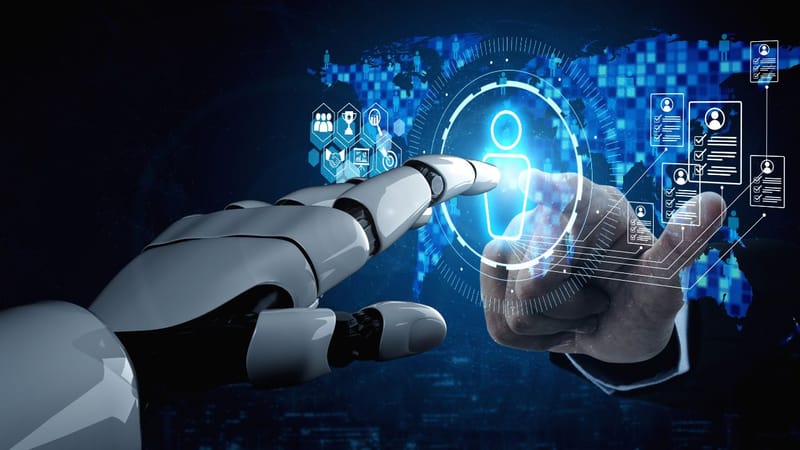
The challenge is not simply a shortage of AI skills. It is a deeper issue of adaptability. Many employees are expected to operate in environments where requirements shift continuously, yet they are supported by learning systems that are episodic, generic, and disconnected from real work.
By: Shefali Sharma Garg
Artificial intelligence is not only transforming what work gets done, but also how it gets done. It is fundamentally changing how long skills remain relevant. In many roles today, technical capabilities are expiring within 12 to 18 months. Yet most organisations are still operating with learning models designed for a far slower pace of change. This mismatch has created a growing and often underestimated risk: the human readiness gap.
The conversation around AI adoption has largely focused on tools, platforms, and productivity gains. Far less attention has been paid to whether people are prepared to work alongside intelligent systems, making decisions, exercising judgment, and continuously adapting as roles evolve. The next phase of competitiveness will not be defined by who deploys AI fastest, but by who enables their workforce to evolve with it.
The human readiness gap in the AI era
Skills are ageing faster than organisations can replace or refresh them. Automation is reshaping job scopes in real time, while new roles are emerging before old ones are fully understood. In this environment, static job descriptions and linear career paths are quickly becoming outdated.
The challenge is not simply a shortage of AI skills. It is a deeper issue of adaptability.
Many employees are expected to operate in environments where requirements shift continuously, yet they are supported by learning systems that are episodic, generic, and disconnected from real work. The result is growing anxiety, uneven capability, and a widening gap between technological ambition and human preparedness.
Why the next workforce needs more than tech training
Technical training alone will not solve this problem. As AI takes on more routine and analytical tasks, the value of distinctly human capabilities increases. Self-awareness, leadership maturity, ethical judgment, creative problem-solving, and the ability to collaborate across disciplines are no longer optional attributes. They are core operating capabilities.
Future-ready organisations are recognising that learning must address the whole professional, including how individuals think, decide, lead, and adapt in the face of uncertainty. This requires sustained investment in self-discovery, feedback, coaching, and leadership development alongside AI and cloud fluency. Without this balance, even the most advanced technologies risk underperforming in real-world settings.
What human–AI fluency actually looks like
Human–AI fluency is not about turning everyone into a technologist. It is about enabling people to work confidently and responsibly with intelligent systems. This fluency sits at the intersection of three critical capabilities.
First, analytical understanding. Employees must know what AI can and cannot do, how to interpret outputs, and where human oversight is essential. Second, creative and strategic thinking. AI should act as a partner that helps explore options, challenge assumptions, and accelerate innovation. Third, interpersonal and leadership capability. Navigating change, building trust, and making value-based decisions remain distinctly human responsibilities.
Organisations that build this balance are better positioned to scale AI responsibly, avoid blind automation, and unlock sustained value.
The rise of experiential learning models
To build these capabilities, learning itself must evolve. Leading organisations are moving away from passive, content-heavy programs toward experiential models that reflect real work.
Hands-on demonstrations, simulations, scenario-based learning, mentoring, and coaching are gaining prominence because they shorten the distance between learning and application. Employees learn not only what to do but also how to do it through experimentation, reflection, and adjustment in safe yet realistic environments.
Personalisation is equally important. As roles fragment and specialise, learning pathways must adapt to individual career journeys rather than generic job families. This shift from standardised training to immersive, modular learning ecosystems marks a fundamental change in how capability is built at scale.
Enabling continuous reinvention at an organisational level
For organisations, the implication is clear. Learning cannot be treated as a periodic intervention. It must become an always-on system that supports continuous reinvention.
This includes clear career pathways that evolve alongside emerging skills, structured tracks for AI adoption and cloud fluency, and mechanisms that embed learning into daily work. Leaders play a critical role not only as sponsors but as active participants. Their involvement signals that learning is a strategic priority rather than a remedial activity.
Data and feedback loops are also essential. Organisations need visibility into how skills are evolving, where gaps are emerging, and how learning investments translate into performance. Without this insight, even well-funded programs risk becoming symbolic rather than transformative.
The New Imperative: Building for jobs that do not yet exist
This is the most profound shift. Organisations must prepare people for roles that do not yet exist. This requires moving beyond narrow skill acquisition toward building learning agility, or the capacity to learn, unlearn, and relearn repeatedly.
In an AI-augmented future, stability will not come from static expertise, but from confidence in one’s ability to evolve. Companies that recognise this early and design their learning ecosystems accordingly will be better equipped to navigate uncertainty, retain talent, and create long-term value.
The future of work will not be defined by humans versus AI. It will be shaped by humans who know how to grow alongside it. Bridging the human readiness gap is no longer optional. It is one of the defining leadership challenges of the AI era.
(The author of this article is the Chief People Officer for India at Publicis Sapient. Views expressed are their own.)
Loading...