







AI & Emerging Tech
Human touch in a world of unemotional AI





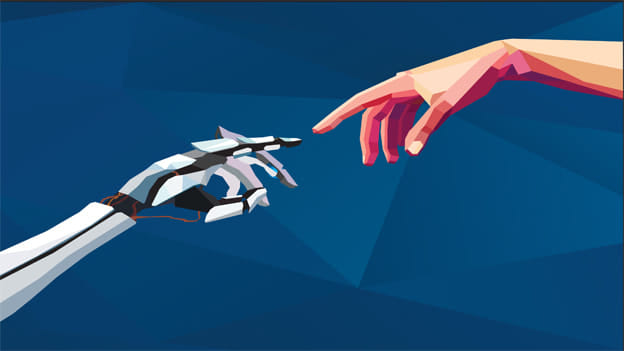
Much has already been written about how HR must change in the world of AI but not much has been said about the complementarity of the human element or the human touch and a world of the unemotional AI.
Automation is at the threshold of revolutionizing the world of work. By 2040, most routine jobs that follow set patterns of execution will be automated using Artificial Intelligence (AI) and robotics. Jobs that require higher cognitive skills, including those of analysts in politics and economics for policy-making, legal research, and healthcare, will also need to accept AI as a partner for increasing their productivity and effectiveness.
Ever since the industrial revolution, automation has become a norm of change that has created new types of jobs while destroying the ones the new forms of employment replaced. Historically, people have reskilled and up-skilled to work along with machines to increase their productivity. However, the fears of mass unemployment at the outset of every wave of automation, including the introduction of personal computers, turned out to be unfounded because new kinds of jobs replaced the old ones, labor became more productive, and economies grew as a result.
Many think that the next wave of automation, in what has been dubbed the fourth industrial revolution, could be different.
There will certainly be new jobs but not enough to replace all the old jobs that would be destroyed, and upskilling in the coming new age would mean a significant learning curve by means of highly advanced education both in the academia and the industry. I believe, this time around, mass unemployment could indeed materialize as the wolf that actually came when nobody believed the boy who had cried wolf facetiously far too often, leaving the world unprepared.
The world is conspicuously divided into two camps: the changemakers and the adapters to change – those who are moving the cheese and those who are prepared for the cheese to move lest they die of hunger. But there is also the presence of a third camp – of the unprepared, who are clueless that the cheese has moved, who could also be in majority and whose wellbeing could become the social responsibility of the first two classes because the new technologies are increasingly more labor substituting than they are labor augmenting. While the government is expected to step in to put a safety net under the third class, the first two classes largely come under the domain of how the private enterprises are to be organized for the fourth industrial revolution.
Human resource management needs to change dramatically to supply the skilled labor that is capable of adapting to the new science and technology environment being put in place by the changemakers, the innovators of the 21st century in every field of human endeavor, from agriculture to services. In the new world, besides the need to possess specific skills, the most important skill would be the skill of knowing how to learn, the process of learning itself being augmented by technologies such as virtual reality (VR) and augmented reality (AR) with mathematics and language forming the core bases for such learning to make the advanced machines which mimic human intelligence but only far more efficiently and effectively because they do not get tired or emotional as humans do and can remember and manipulate vast troves of data far more than the human brain can.
Much has already been written about how HR must change in the world of AI but not much has been said about the complementarity of the human element or the human touch in a world of unemotional AI — the Kirk and Spock or the Picard and Data dynamic in the famed television series Star Trek. Science fact is attempting to approach science fiction. As automation advances rapidly over the next few decades, it would become increasingly clear that how people ‘feel’ when they engage with other people will be a critical facet of both bringing new employees on board and training them to contribute towards building and shaping organizational cultures. Especially for senior management, leading to automate organizations and leading them after they are automated would be crucial qualities to have. In a rapidly globalizing world, the human element matters substantially when engaging organizational cultures in other societies, which no AI can replace.
Topics
Author
Loading...